
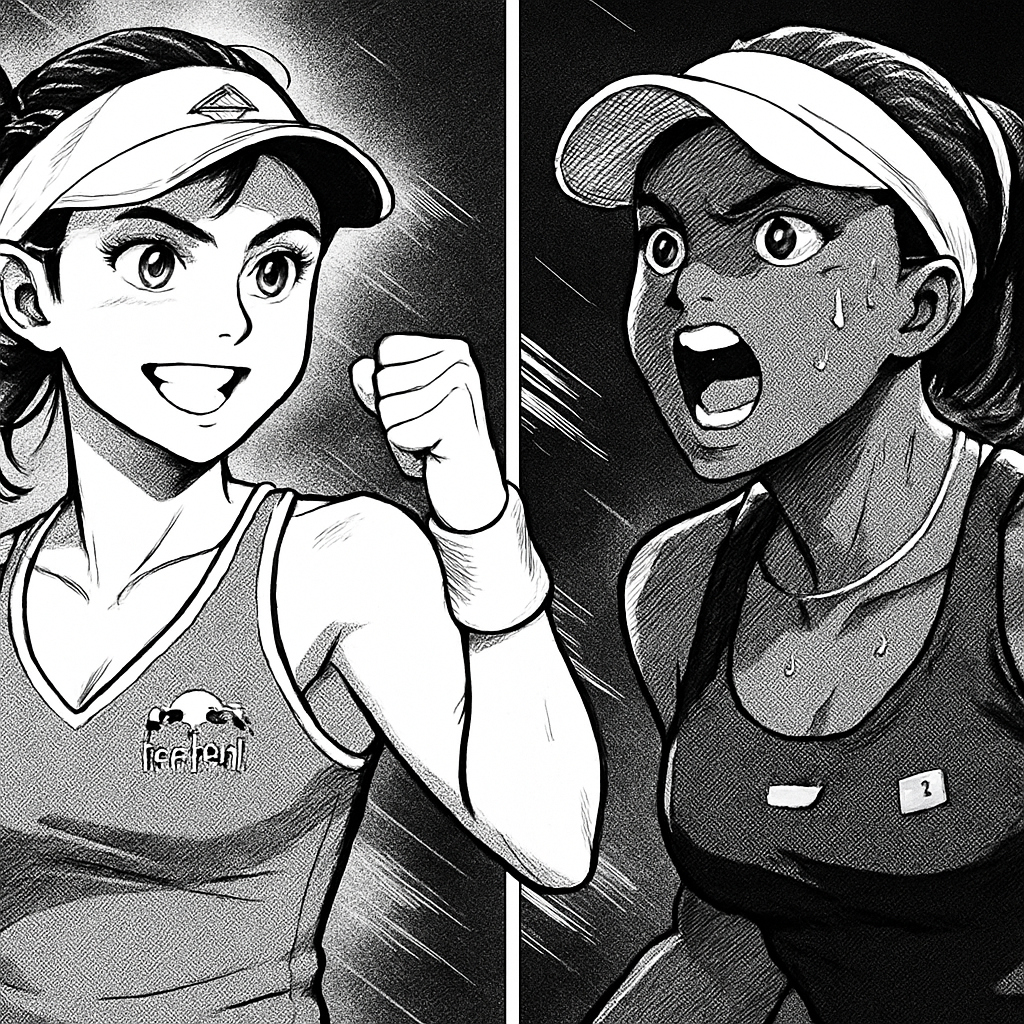
MELBOURNE — The Australian Open has long been a stage for youthful ambition, but this year, a pair of North American teenagers are scripting a particularly compelling narrative. Iva Jovic, a 16-year-old from California, and Victoria Mboko, an 18-year-old from Canada, have stormed into the fourth round of the women's doubles draw, a feat that marks a significant milestone in their burgeoning careers and signals the arrival of a new, fearless generation.
Their journey, a blend of raw talent and preternatural composure, has seen them dispatch more experienced pairings with a style that belies their years. Seeded neither by rank nor reputation, the duo has captivated fans and analysts alike, proving that chemistry and belief can be as potent as any weapon in tennis. Their success is not merely a pleasant surprise; it is a deliberate disruption of the established order, a statement that the future of the game is arriving ahead of schedule.
A Partnership Forged in Friendship and Fire
The Jovic-Mboko alliance is rooted in a familiar junior circuit camaraderie, but its on-court execution is anything but ordinary. Both players have enjoyed considerable success in singles—Jovic as the 2023 US Open girls' finalist and Mboko as a former top-5 junior—but their synergy in doubles has unlocked a new dimension. Their games complement each other seamlessly: Jovic provides blistering power from the baseline and a formidable serve, while Mboko’s exceptional net presence and tactical acumen at the forecourt create constant pressure.
Their communication, often a blend of quick nods and encouraging shouts, speaks to a deep-seated trust. After their stunning third-round victory, Jovic highlighted this intangible bond, stating, "We've known each other for years from the juniors, and we just have this understanding. We don't get nervous together; we get excited. We go for our shots, and right now, they're going in." This fearless approach has been their hallmark, allowing them to play the big points with the liberty often reserved for practice sessions.
Navigating a Gauntlet of Veterans
Their path to the last sixteen has been a masterclass in overcoming experience. In the first round, they faced a seasoned pairing, using their aggressive returning to break serve at critical moments. The second round presented an even sterner test, but they held their nerve in a match tiebreak, with Mboko sealing the victory with a crisp volley. However, it was their third-round triumph that truly announced their arrival, a straight-sets dismantling of a team that included a former Grand Slam quarterfinalist.
The key to their success against these veteran duos has been a refusal to be intimidated. They target the weaker serves, exploit the middle of the court to create confusion, and maintain relentless aggression. Mboko, reflecting on their mindset, offered, "We're not looking at the names or the history. We're just playing the ball, playing our game, and trusting each other completely on every point."
Tactical Keys to Their Success
Breaking down their play reveals a modern, aggressive blueprint for doubles that is causing problems for more traditional pairings:
- First-Strike Tennis: Both possess powerful returns, allowing them to immediately seize control of the point.
- Net Domination: Mboko, in particular, cuts off angles and finishes points with volleys.
- Fearless Serving: They go for big second serves, refusing to simply put the ball in play.
The Bigger Picture: A Wave of Teen Talent
Jovic and Mboko are not isolated phenomena. Their run coincides with a remarkable surge of teenage success across both singles and doubles draws at Melbourne Park. In singles, 16-year-old Mirra Andreeva continues to dazzle, while other teens like Brenda Fruhvirtova have also made deep impressions. This collective breakthrough suggests a shift in the women's game, where physical maturity is no longer a prerequisite for competitive success at the highest level.
The teenagers are benefiting from advanced coaching, sports science, and a professional mindset instilled from a young age. They play with a tactical intelligence and physical conditioning that allows them to compete with, and often outlast, older opponents. As one veteran coach noted, "This generation isn't waiting their turn. They have the tools, the belief, and the competitive hunger to win now. It's changing the entire dynamic of the tour."
The Road Ahead and Legacy in the Making
Standing between Jovic, Mboko, and a historic quarterfinal berth is their toughest challenge yet: a matchup against one of the top-seeded teams in the tournament. The atmosphere will be more intense, the stakes exponentially higher. Yet, if their previous matches are any indication, the moment is unlikely to overwhelm them. They have already secured valuable ranking points, a significant paycheck, and, most importantly, the belief that they belong on this stage.
Regardless of the fourth-round result, their campaign is a resounding success story. It provides a blueprint for other young players, demonstrating that a focused doubles partnership can be a viable and rewarding path to prominence on the professional tour. For Tennis Canada and the USTA, their success is a validation of developmental programs nurturing not just individual stars, but versatile athletes capable of excelling in all formats of the game.
Conclusion: More Than Just a Cinderella Story
The run of Iva Jovic and Victoria Mboko transcends the typical "Cinderella story" narrative. This is not a fluke or a fortunate draw; it is a calculated, powerful statement delivered with each synchronized poach and thunderous return. They are leading a vanguard of teen disruptors who are reshaping the landscape of women's tennis, proving that age is increasingly just a number on a draw sheet.
As they prepare for their next match, the tennis world watches with keen interest. Their journey embodies the fresh energy and fearless ambition that sports crave. In a tournament often defined by established champions, Jovic and Mboko have carved out their own space, reminding everyone that the future is not just coming—it's already here, playing dynamic doubles, and winning. "We're just getting started," Jovic said with a smile, a simple sentence that should serve as a warning to the rest of the tour.