
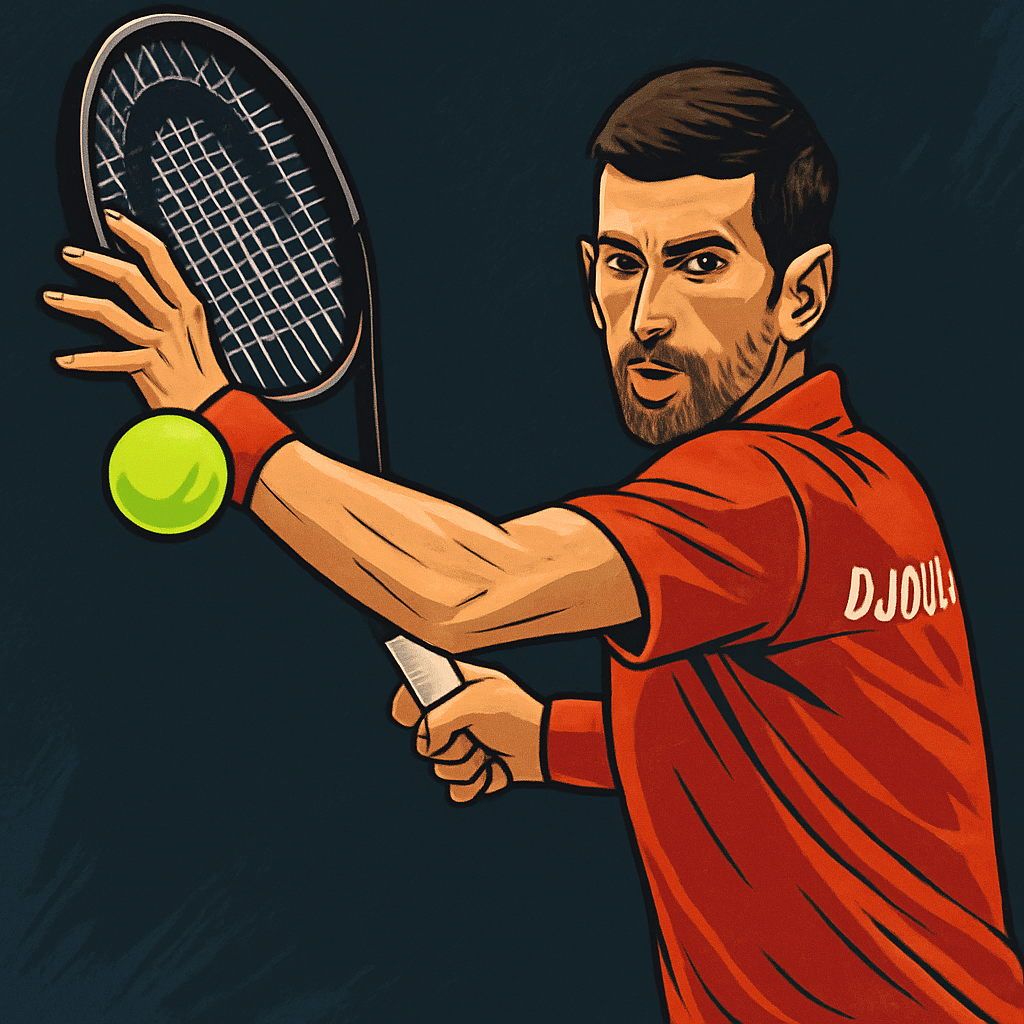
LONDON — In a significant and unexpected development for tennis governance, world number one Novak Djokovic has severed ties with the Professional Tennis Players Association (PTPA), the organization he co-founded in 2020 with Canadian player Vasek Pospisil. The Serbian superstar announced his departure, citing unresolved concerns over the body's "transparency and governance."
The move sends shockwaves through the sport, as Djokovic was not only the PTPA's most prominent and influential figurehead but also its driving force. His departure raises fundamental questions about the future of the breakaway union, which was established to give players, particularly those outside the top echelons, a stronger collective voice against the established powers of the ATP and WTA tours.
A Founding Vision Meets Practical Realities
The PTPA was born during the tumultuous 2020 season, amidst player frustrations over pandemic-related prize money cuts and a perceived lack of representation. Djokovic and Pospisil positioned it not as a traditional union seeking to organize strikes, but as a 501(c)(6) business league focused on advocacy, commercial opportunities, and ensuring players had a seat at the table in decisions affecting their livelihoods. The initial "Big Three" backing was incomplete, however, with both Roger Federer and Rafael Nadal declining to join, expressing a preference to work within existing structures.
In a statement released on social media, Djokovic framed his decision as a difficult but necessary one. "I would like to announce that I am stepping down from my position with the PTPA with immediate effect," he wrote. "I am proud of the milestones we have achieved, but I have expressed concerns that I believe need to be addressed for the association to be successful and sustainable in the long term."
While Djokovic did not elaborate on the specific governance issues in his public statement, sources close to the situation indicate the concerns revolved around several key areas:
- Decision-Making Processes: A desire for more formalized and transparent procedures for how the executive committee and player board reach decisions.
- Financial Transparency: Clarity on the allocation of funds, including legal fees and operational costs, as the organization sought to build its war chest.
- Long-Term Structure: Defining the precise role of the PTPA—whether as a pure advocacy group, a potential commercial entity, or a future collective bargaining unit.
The PTPA's Response and Road Ahead
In response to Djokovic's departure, the PTPA's Executive Director, Ahmad Nassar, issued a statement acknowledging the Serb's monumental contribution while asserting the organization's stability and continued mission. "Novak’s impact on the PTPA is immeasurable. He courageously lent his voice and stood up for players’ rights at a critical time," Nassar said. He emphasized that the PTPA's work, supported by its player board and over 650 members, would continue unabated.
The PTPA has indeed secured some notable achievements since its inception, including establishing a player board with representatives from both tours, launching a legal fund to assist players with grievances, and commissioning independent studies on tour finances. It also played a role in advocating for increased prize money at non-major events and better travel conditions. However, its relationship with the ATP, in particular, has been fraught, with the tour initially threatening sanctions against players involved and later engaging in a tense, often unproductive dialogue.
A Leadership Void and Shifting Dynamics
Djokovic's exit creates an undeniable leadership vacuum. His global stature provided the PTPA with instant credibility and a powerful megaphone. Without him, the burden of leadership falls more heavily on co-founder Vasek Pospisil and the rest of the player board, which includes notable names like John Isner, Hubert Hurkacz, and Ons Jabeur. The challenge will be to maintain momentum and player engagement without their most recognizable champion.
The timing is also intriguing, coming as the tennis landscape undergoes significant transformation. The ATP and WTA are implementing strategic reviews, the sport is grappling with the integration of Saudi Arabian investment, and discussions around a potential premium tour for top events are ongoing. The PTPA's stated goal is to ensure players benefit from these seismic shifts, but its ability to influence negotiations may be perceived as diminished without Djokovic at the forefront.
Broader Implications for Player Power
Djokovic's departure is more than an organizational hiccup; it is a pivotal moment for the modern player empowerment movement in tennis. For decades, players have attempted to organize more effectively, with mixed results. The PTPA, under Djokovic's banner, represented the most serious challenge to the status quo in a generation. His stepping away could be interpreted in several ways:
- A Setback for Disruption: It may signal that creating a parallel power structure from scratch is too difficult, potentially pushing reform-minded players back toward working within the ATP and WTA Player Councils.
- A Necessary Evolution: It could force the PTPA to mature from a movement led by iconic individuals into a more democratically robust institution with deeper systemic foundations.
- A Personal Strategic Shift: Some analysts speculate that Djokovic, eyeing the twilight of his career and other business and personal interests, may be choosing to step back from a protracted political battle to focus solely on his on-court legacy.
The reaction from the tennis establishment has been muted but notable. An ATP spokesperson simply stated, "The ATP has always believed the best way forward for tennis is through collaboration within the existing structure. We remain committed to working with all players through the ATP Player Council." This underscores the tour's long-held position that the PTPA is an unnecessary and divisive entity.
Conclusion: An Uncertain Future for a Bold Experiment
Novak Djokovic's decision to cut ties with the PTPA he helped create marks the end of a defining chapter in recent tennis history. It was a chapter born of genuine grievance and a bold vision for change. While the association continues to operate and insists its mission is unchanged, the loss of its principal founder and most powerful advocate is a profound blow.
The coming months will be critical. The PTPA must now prove it is more than just "Djokovic's association." It must demonstrate tangible value to its members, clarify its internal governance to satisfy the very concerns Djokovic raised, and find a way to effectively advocate in an increasingly complex commercial environment. As one veteran player agent noted off the record, "The idea was always bigger than one man, but that man was Novak Djokovic. Now we see if the idea can truly walk on its own."
For Djokovic, the move allows him to step away from a politically taxing role that often placed him at odds with the sport's authorities and some of his peers. For tennis, it recalibrates the ongoing struggle for player influence, leaving the future of its most audacious player-led initiative in a state of compelling uncertainty. The quest for a stronger collective voice continues, but it will now have to find a new melody without its most famous soloist.