
MALAGA — The 2023 Davis Cup final between Italy and Australia was dramatically suspended on Sunday due to a serious medical emergency in the stands, casting a somber shadow over the culmination of the prestigious international team tennis event.
A Sudden Halt in Play
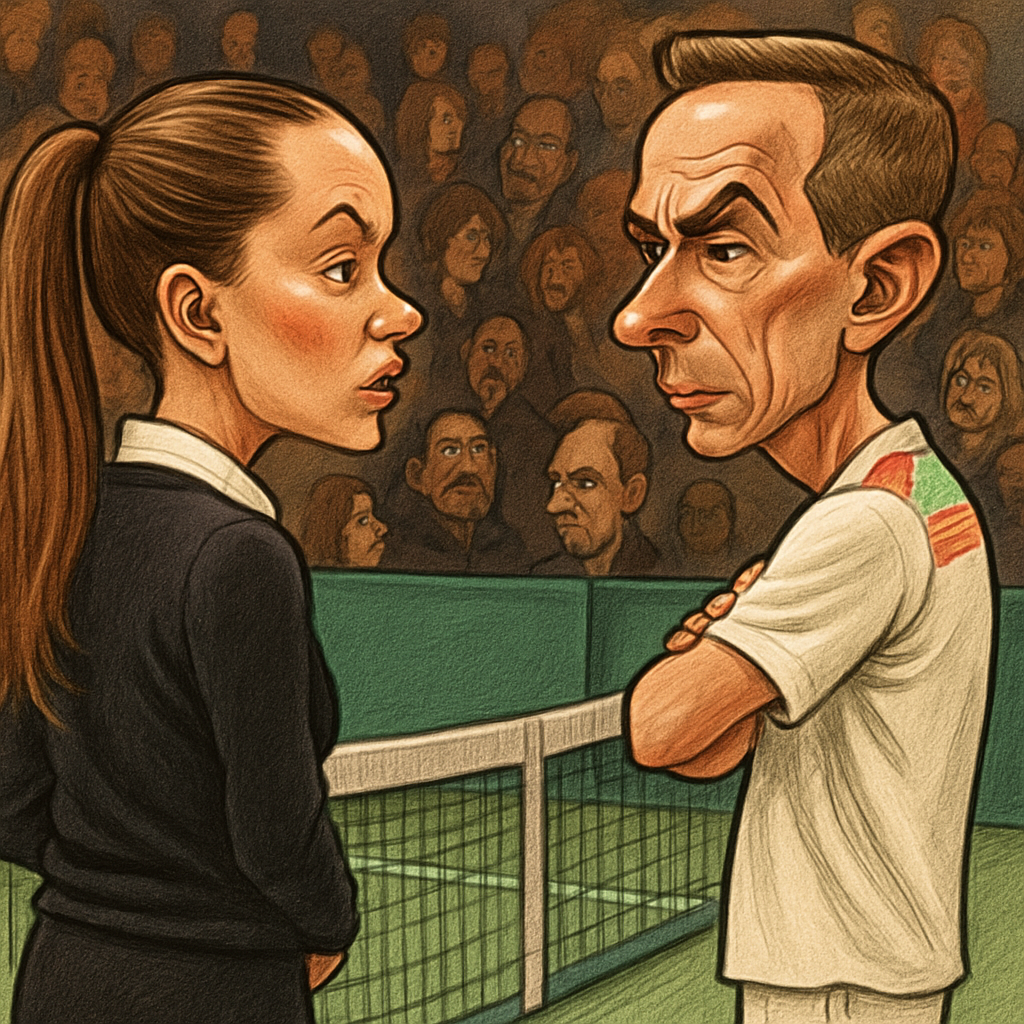
The decisive match was halted during the second set of the opening rubber, with Italy's Jannik Sinner leading Australia's Alex de Minaur 6-3, 5-5. The interruption occurred as a spectator required urgent medical attention in the Martin Carpena arena in Malaga, Spain. Chair umpire Aurelie Tourte announced the suspension to the players and the crowd, stating that play could not continue due to the situation.
The atmosphere shifted instantly from one of high-stakes sporting tension to one of grave concern. Television broadcasts showed medical personnel and event staff rushing to a section of the lower stands. A defibrillator was swiftly brought to the scene. An announcement was made over the public address system requesting that a doctor present in the arena report to the location immediately, underscoring the seriousness of the incident.
After approximately 15 minutes, the fan was carefully removed from the stands on a stretcher to a round of supportive applause from the concerned spectators. The International Tennis Federation (ITF) and Kosmos Tennis, the event organizers, released a joint statement confirming the details: "There was a medical emergency in the stands and the person was treated and then taken to hospital."
Player and Crowd Reaction
Both Sinner and de Minaur reacted with visible concern, sitting on their benches and watching the unfolding events with solemn expressions. The pause lasted for approximately 45 minutes, a significant delay in a match of such importance. During this time, the players left the court to await further news, leaving their equipment on their chairs in anticipation of a resumption.
The Australian team captain, Lleyton Hewitt, was seen speaking with officials, his focus entirely shifted from the tactical nuances of the match to the well-being of the individual involved. The typically vocal and passionate supporters of both nations fell into a hushed silence, their collective energy redirected towards hope for a positive outcome.
When the players eventually returned to the court to warm up, the applause was respectful rather than raucous. The official Davis Cup account on social media platform X (formerly Twitter) provided an update, stating, "Play will resume at 17:25 local time. The spectator has been taken to hospital and we wish them a swift recovery."
Resuming Under Difficult Circumstances
The resumption of play was a challenging prospect for both athletes, who had to refocus their minds after such a lengthy and emotionally draining interruption. The momentum of the high-quality contest had been irrevocably broken. Sinner, who had been dominant, and de Minaur, who was fighting to stay in the tie, now faced a different kind of test—a mental one.
Upon returning, Sinner needed only a few minutes to close out the match, holding his serve to win 6-3, 6-0. The comprehensive victory gave Italy a crucial 1-0 lead in the final. However, the customary celebration was muted. Sinner offered a brief, understated fist pump before a somber handshake at the net, the gravity of the preceding events tempering any sense of triumph.
The key challenge for players in such situations is the psychological shift from a life-and-death reality back to the controlled aggression of professional sport. As one sports psychologist noted in a past incident, "The human brain isn't designed to toggle instantly between profound empathy and elite-level competition."
A Broader Context of Fan Safety
This incident highlights the critical importance of emergency medical preparedness at large-scale sporting events. The swift response by the arena's medical team was a testament to the protocols in place. Major tournaments like the Davis Cup finals have detailed action plans for such scenarios, which typically include:
- Immediate access to Automated External Defibrillators (AEDs)
- Trained medical personnel stationed throughout the venue
- Clear evacuation routes for emergency services
- Pre-established communication protocols
The ITF and Kosmos were praised for their handling of the situation, prioritizing the health of a spectator over the spectacle of the final. It served as a stark reminder that the well-being of everyone in the stadium is paramount, regardless of the occasion's significance.
Conclusion: Sport and Humanity Intersect
While Italy would go on to win the Davis Cup for the first time since 1976, securing the title with a 2-0 victory after Matteo Arnaldi and Simone Bolelli won the doubles rubber, the day will be remembered for more than just the sporting result. The suspension of the final was a poignant moment where the collective humanity of players, officials, and fans took precedence.
The incident underscored that sport exists within the larger framework of life, with all its fragility and unpredictability. The hope of the entire tennis community remains with the affected fan and their family for a full and speedy recovery. As the Davis Cup moves forward, the professional and compassionate response in Malaga will stand as a benchmark for how to manage unforeseen crises at the highest level of international sport.