
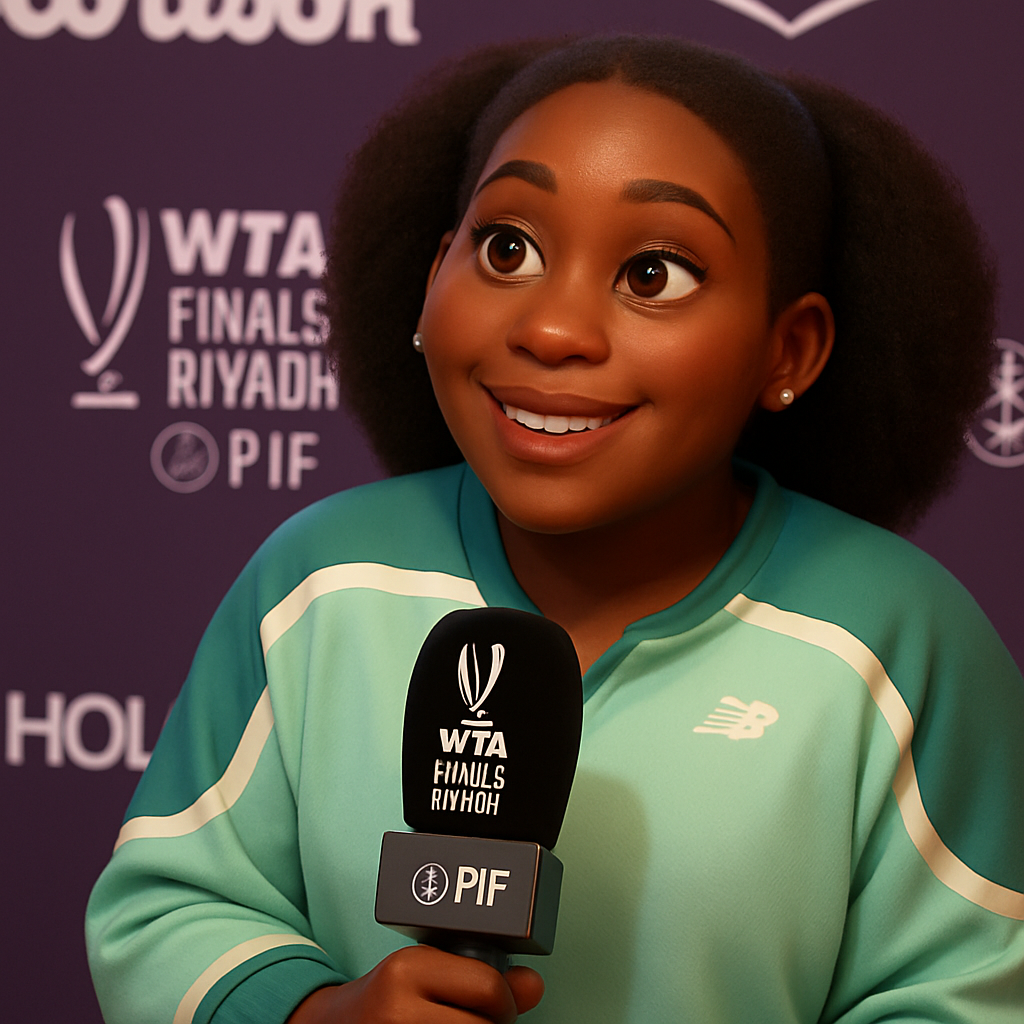
CANCÚN — As the tennis world remains captivated by the burgeoning rivalry between Carlos Alcaraz and Jannik Sinner, US Open champion Coco Gauff has offered a fresh and somewhat unconventional perspective. While preparing for her title defense at the WTA Finals, the 20-year-old American suggested that the much-hyped men's duel might not be the only, or even the most compelling, rivalry in the sport today.
Gauff's Unconventional Take on Tennis Rivalries
In a press conference ahead of the season-ending championship, Gauff was asked about the Alcaraz-Sinner dynamic that has dominated headlines throughout 2024. Her response was both diplomatic and thought-provoking. "I think it's great for the sport, but I feel like we're trying to make rivalries happen instead of just letting them happen organically," Gauff stated. She pointed to the women's tour as a prime example of organic competition, noting, "On the WTA side, I feel like any player in the top 10, even top 20, can beat each other on any given day. That, in itself, creates multiple rivalries."
Gauff's comments poke holes in the narrative that tennis needs a singular, dominant rivalry to thrive. Instead, she champions the depth and unpredictability that characterizes the modern WTA tour. Her claim underscores a fundamental difference in the current structures of the men's and women's games. While the ATP has seen a clear top tier emerge with Alcaraz, Sinner, and Novak Djokovic, the WTA has witnessed a carousel of champions, with Gauff herself becoming the fourth different major winner in 2023.
The Alcaraz-Sinner Phenomenon: Hype vs. Reality
There is no denying the quality and excitement generated when Carlos Alcaraz and Jannik Sinner meet on court. Their 2024 Australian Open quarterfinal, a four-hour and twenty-minute epic, was instantly hailed as an instant classic. Their head-to-head record is remarkably even, fueling the narrative of a true, back-and-forth battle for supremacy. The tennis ecosystem, from fans to pundits, has been eager to anoint them as the next great rivalry, following in the footsteps of Federer-Nadal-Djokovic.
However, Gauff's observation touches on a key point: the pressure of this external narrative. "When you put two players on such a high pedestal so young, it can create a different kind of pressure," she mused. Indeed, the constant media focus on their every match, even in early-round tournaments they are expected to win, adds a layer of intensity that previous rivalries developed over years, not months.
A Look at the Head-to-Head Numbers
While the rivalry is young, the statistics are compelling:
- Total Meetings: 9 (as of late October 2024)
- Alcaraz Leads: 5-4
- Grand Slam Meetings: 3 (Sinner leads 2-1)
- Most Recent: Sinner's victory in the Beijing final
The numbers confirm a tight battle, but Gauff's implied question is whether frequency and quality alone constitute a defining rivalry, or if it requires a deeper narrative woven through the fabric of multiple seasons and the constant exchange of the sport's biggest prizes.
The WTA's Web of Rivalries: A Different Kind of Drama
In contrast to the focused spotlight on the ATP, Gauff finds herself at the center of a complex web of competitive relationships on the WTA tour. Her breakthrough victory over Naomi Osaka at the 2020 Australian Open announced her arrival. Her subsequent battles with Iga Świątek, whom she finally defeated on her way to the US Open title, represent one of the tour's key storylines. Furthermore, her contests with Aryna Sabalenka, Elena Rybakina, and Jessica Pegula create a multifaceted competitive landscape.
This depth, Gauff argues, is the WTA's strength. "You look at the draw here at the WTA Finals, and there's no easy match. Every single person in this tournament has beaten every other person. That creates storylines for every round, not just a potential final." This sentiment is backed by the 2023 season, which saw:
- Four different Grand Slam champions.
- Nine different WTA 1000 champions.
- The year-end No. 1 ranking decided at the Finals.
For Gauff, this environment fosters a different kind of resilience. The pressure is more diffuse; every week presents a new challenge from a different opponent. There is no single "boogeyman" to overcome, but rather a gauntlet of elite players, each with a unique game and the proven ability to win the biggest titles.
Gauff's Own Rivalry Landscape and Title Defense
As the defending champion at the WTA Finals, Gauff is not just commenting on the state of the game from the sidelines; she is living it. Her path to a successful title defense in Cancún will likely require her to navigate through this very web of rivals. A potential round-robin match against Iga Świątek would be a rematch of their US Open semifinal, a pivotal moment in Gauff's career. A clash with Aryna Sabalenka would pit her defensive prowess and tactical intelligence against raw, unadulterated power.
When asked about her own defining rivalries, Gauff was pragmatic. "I don't really think about it like that. I have players who challenge me in specific ways, and I think my game challenges them, too. It's less about one person and more about solving the puzzle in front of you that week." This mindset reflects the modern WTA reality, where a player must be prepared for a variety of styles and threats, making adaptability as crucial as pure power or skill.
Conclusion: A Celebration of Depth Over Duopoly
Coco Gauff's unusual claim is less a criticism of Carlos Alcaraz and Jannik Sinner—whose excellence she readily acknowledges—and more a robust defense of the ecosystem she inhabits. By poking holes in the singular rivalry narrative, she champions a model of tennis where suspense is not confined to a potential final between two pre-ordained titans. Instead, it permeates every round, where an upset is never truly an upset, and any player in the draw possesses the weapons to claim the trophy.
The Alcaraz-Sinner rivalry is a gift to tennis, providing breathtaking highlights and a glimpse into the future of the men's game. But Gauff's perspective serves as a crucial reminder that the sport's health should not be measured by the intensity of a single matchup. The relentless, unpredictable competition of the WTA tour, which she now leads as a Grand Slam champion and Finals titleholder, offers a different, equally valid form of entertainment and athletic drama. As she concluded, "Rivalries are great, but so is knowing that on any given day, something new and unexpected can happen. That's what makes people tune in."