
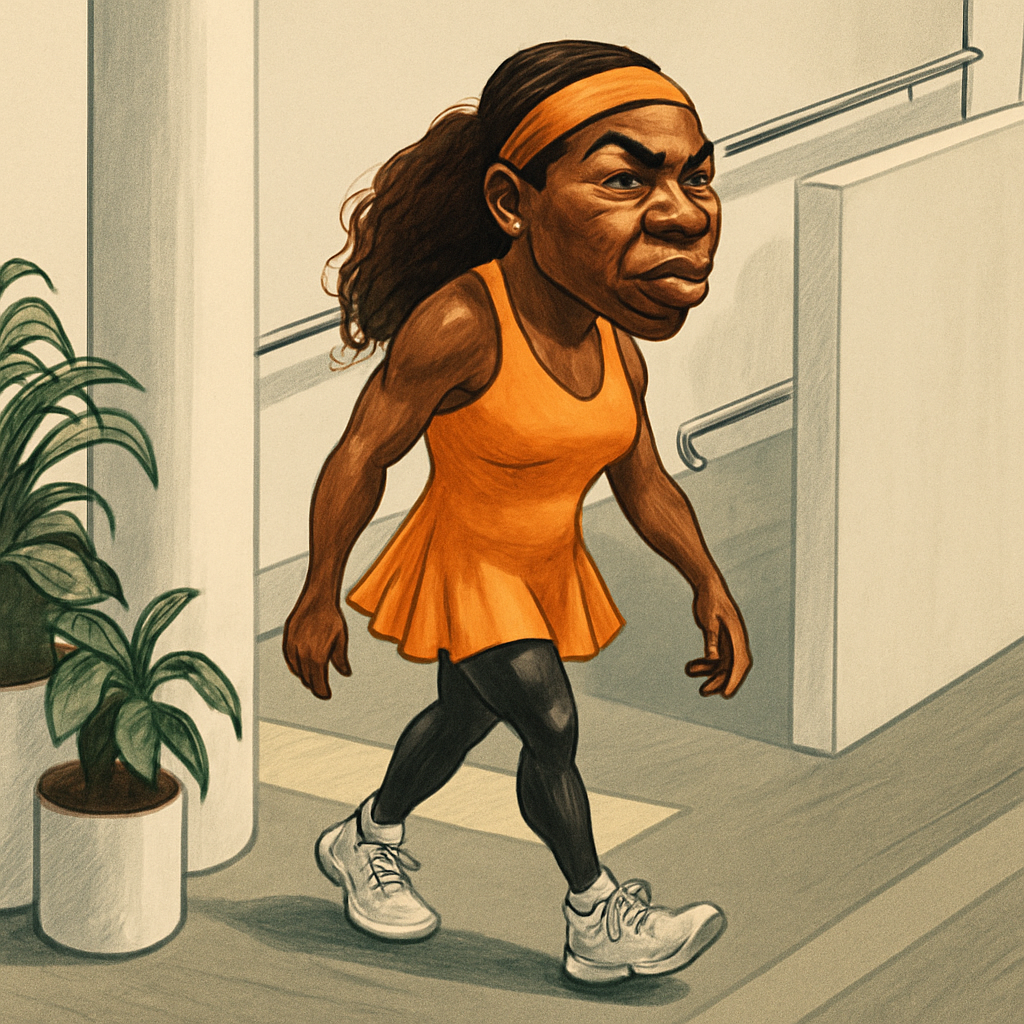
MELBOURNE — The image was one of composed disappointment. On Rod Laver Arena, a gracious Coco Gauff congratulated her conqueror, Aryna Sabalenka, after a comprehensive 7-6(2), 6-4 defeat in the Australian Open semifinals. The 19-year-old American spoke of learning from the loss and moving forward. But behind the closed doors of the player's tunnel and locker room, a very different scene unfolded, revealing the intense fire and frustration that fuels one of tennis's brightest young stars.
According to multiple reports from tournament staff and witnesses cited by The Daily Telegraph and ESPN, Gauff's calm exterior shattered moments after exiting the court. The US Open champion unleashed a torrent of anger, screaming and smashing her racket repeatedly against the floor in a raw, emotional meltdown. The outburst was so sustained and loud that it echoed through the corridor, startling officials and other players nearby, a stark contrast to her poised public persona.
The Buildup to the Breaking Point
Gauff's frustration had been simmering throughout the match against the powerful Belarusian. Sabalenka, the defending champion, played a near-flawless tactical match, exploiting a critical weakness in Gauff's game: her forehand. Time and again, Sabalenka targeted that wing with deep, heavy drives, eliciting a stream of errors. Gauff, who had been on a 12-match winning streak in Grand Slams, found her aggressive game plan stifled and her defensive brilliance stretched to its limit.
The first set was a brutal, physical battle that lasted 72 minutes. Gauff saved five set points on her own serve at 5-6, displaying her trademark fighting spirit, only to unravel in the tiebreak. The second set followed a similar pattern of intense pressure. The culmination was a final, errant forehand on match point, a symbolic end to a contest where that shot had betrayed her. The statistics were damning: Gauff committed 39 unforced errors to Sabalenka's 18, with the forehand accounting for the overwhelming majority.
A Rare Glimpse Behind the Champion's Curtain
While athletes' private reactions to defeat are seldom for public consumption, this incident offers a rare insight into the immense pressure and perfectionism driving Gauff. Since her breakthrough Wimbledon run as a 15-year-old, she has been labeled tennis's next superstar. Winning the US Open in September 2023 transformed her from a prodigy into a reigning major champion, a figure expected to contend for every title. The weight of those expectations, combined with the specific technical frustrations of the match, proved combustible.
Tennis legend and commentator Jim Courier addressed the incident on Tennis Channel, framing it not as a scandal but as a testament to her competitive drive. "What we saw on court was the professional. What happened off court is the competitor," Courier said. "That fire, that absolute hatred of losing, is a big part of what makes her great. She doesn't accept defeat easily, and she shouldn't."
The reaction stands in contrast to Gauff's typical demeanor. Known for her mental fortitude and positive court-side attitude, such visible displays of rage are uncommon. This suggests the Australian Open loss cut particularly deep, not just as a defeat, but as a blueprint for how opponents can challenge her game. The core issues that surfaced included:
- Forehand Vulnerability: Exposed under relentless pressure from a top-tier power hitter.
- Second Serve Attack: Sabalenka aggressively targeted Gauff's second serve, gaining immediate control of points.
- Controlled Aggression: Struggling to find the balance between defensive retrieval and dictating play.
The Path Forward: Channeling the Fire
In her post-match press conference, conducted after the emotional storm had passed, Gauff was analytical and forward-looking. She acknowledged Sabalenka's superior play and pinpointed the areas of her game that needed work. "I think it was just all the pressure on the forehand, to be honest. I obviously have to improve that shot and other shots if I want to keep getting better," she stated, her focus already shifting to improvement.
This ability to quickly transition from raw emotion to constructive analysis is a hallmark of elite athletes. The meltdown was not a sign of weakness, but of how much she cares. The challenge for Gauff and her coaching team, led by Brad Gilbert, will be to harness that frustration into specific technical adjustments. The tennis world saw Sabalenka undergo a similar transformation after her own well-documented struggles with composure; she channeled her emotions into a more disciplined game, which has now made her a back-to-back Australian Open champion.
A Defining Moment in a Young Career
This incident may well be remembered as a pivotal moment in Gauff's career. It underscores that despite her Grand Slam title and world No. 3 ranking, she remains a teenager in the relentless crucible of professional sports, navigating a path of constant growth. The defeat, and her visceral reaction to it, highlights the gap she still aims to close to achieve the consistent dominance of legends like Serena Williams, her idol.
The WTA tour, and her rivals, will have taken note. Sabalenka demonstrated a winning formula. Yet, Gauff's history is one of remarkable resilience and rapid adaptation. Her response to this setback will be closely watched. As one veteran coach noted anonymously, "The great ones use a loss like this as rocket fuel. The racket smash is the explosion. What comes next is the propulsion."
Conclusion: Passion, Not Petulance
Coco Gauff's "meltdown" behind the scenes at the Australian Open should not be misconstrued as petulance. It was the eruption of a fiercely competitive spirit confronted with a painful lesson at the highest level. It reveals the human being behind the champion, one who invests everything into her craft and feels losses acutely. The true measure of this event will not be the broken racket in a Melbourne tunnel, but the work it inspires on the practice courts of Florida.
As the tour moves to the Middle East swing and the upcoming North American hardcourt season, all eyes will be on Gauff's forehand and her mental response. If history is any guide, this moment of fury will be refined into a sharper, more complete game. The explosion of emotion, while startling, is merely a different facet of the same champion who captivated the world with her poise in New York. For Coco Gauff, the journey from prodigy to legend is paved with such difficult, and sometimes loud, lessons.