
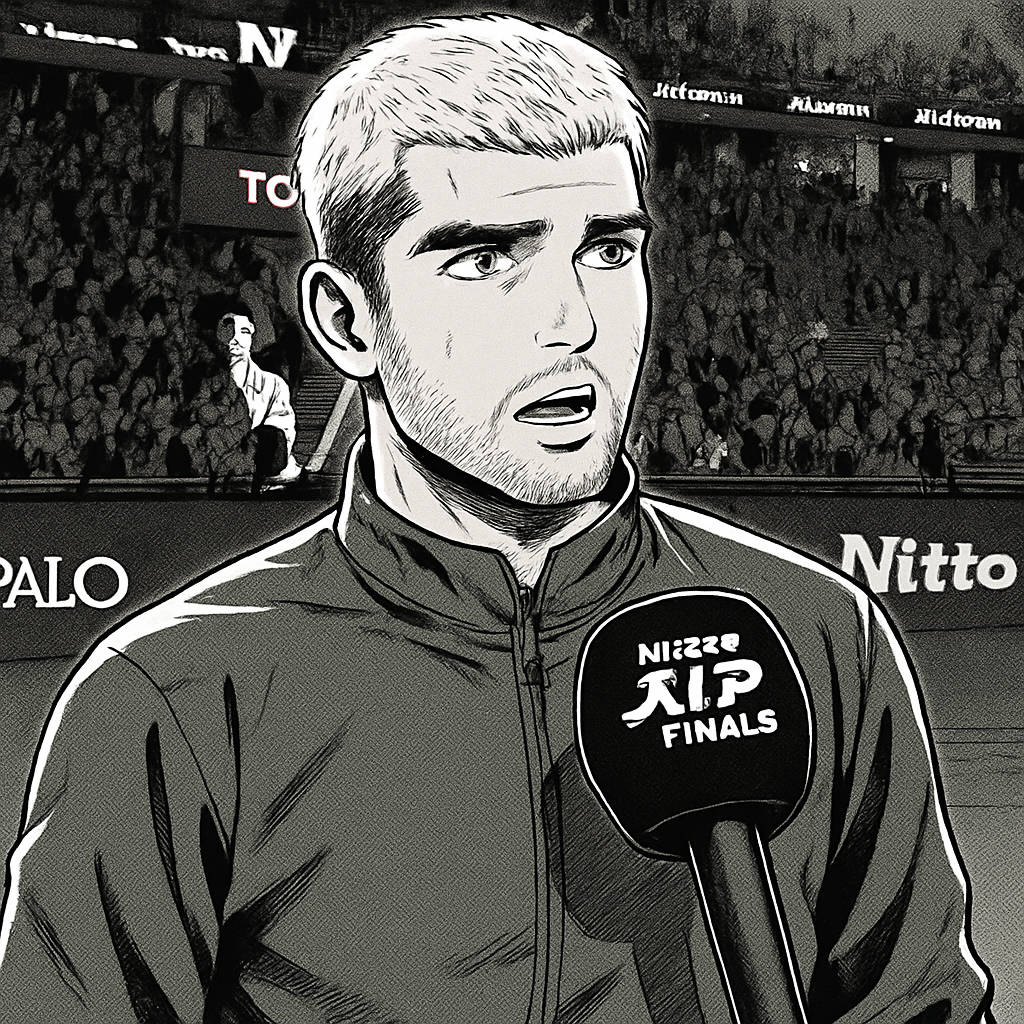
TURIN — In a hard-fought battle that kept fans on the edge of their seats, Carlos Alcaraz secured a crucial victory over Taylor Fritz at the ATP Finals, but the post-match narrative was dominated not by the triumph itself, but by the young Spaniard's startlingly candid assessment of his own performance. After a 6-3, 3-6, 6-4 win that kept his hopes of advancing from the Red Group alive, Alcaraz looked a relieved but weary man, admitting that despite the scoreline, he was the one who had truly been pushed to the brink.
A Battle of Nerves and Stamina
The match, played in front of a raucous Italian crowd, was a rollercoaster of momentum shifts. Alcaraz stormed out of the gates, breaking Fritz early and taking the first set with characteristic explosive power. However, the American, known for his formidable serve and flat groundstrokes, refused to capitulate. Fritz elevated his level dramatically in the second set, capitalizing on a slight dip in Alcaraz's intensity to break serve and level the match. The third set was a tense affair, with both players holding serve under immense pressure until Alcaraz found a breakthrough at 4-4, ultimately serving out the match. The physical and mental toll of the two-hour, nine-minute contest was evident on both players' faces, but it was Alcaraz who offered the most revealing insight into the internal struggle.
In his post-match press conference, the two-time Grand Slam champion did not mince words. When asked about the key moments in the final set, Alcaraz redirected the focus from his own brilliant winners to his psychological state. "I struggled more than him in the third set, for sure," he stated bluntly. This admission was a stark departure from the typical athlete's script of focusing on their own strengths, instead revealing a player deeply in touch with his vulnerabilities, even in victory.
The Honest Admission
Elaborating on his surprising confession, Alcaraz painted a picture of a player grappling with confidence and rhythm. "I think he was better than me in the second and the third set," Alcaraz continued. "I was really nervous. I missed some easy shots. I didn't get the rhythm in the second set, and I think in the third set, as well, he was better than me." For a player of Alcaraz's caliber, whose game is built on fearless aggression and unwavering self-belief, to speak so openly about his nerves was a testament to the unique pressure of the ATP Finals, where every match is a final in itself.
This level of self-awareness is rare in elite sports, where maintaining a facade of invincibility is often part of the psychological warfare. Alcaraz, however, seems to operate differently. His honesty is not a sign of weakness but perhaps a key component of his rapid development. By openly acknowledging his struggles, he disarms the pressure and allows himself to address his flaws head-on. The key areas where he felt Fritz had the upper hand included:
- Serving Consistency: Fritz's powerful and accurate first serve became a major weapon as the match progressed, allowing him to dictate play and save break points.
- Baseline Exchanges: For stretches in the second and third sets, Fritz was able to out-rally Alcaraz from the back of the court, using his flatter, more penetrating shots to push the Spaniard back.
- Mental Fortitude: Alcaraz admitted that Fritz handled the high-pressure moments with more composure for a significant portion of the deciding set.
The Turning Point: A Champion's Instinct
Despite feeling that he was second-best for much of the contest's latter stages, Alcaraz showcased the champion's instinct that has defined his young career. The match turned on a single, critical game at 4-4 in the third set. With Fritz serving, Alcaraz dug deep, summoning a burst of his trademark explosive energy. He began to step inside the baseline to return Fritz's formidable serve, putting immediate pressure on the American. A series of aggressive returns and a stunning passing shot on the run earned him the break, a moment that seemed to surprise even Alcaraz given his earlier struggles.
Reflecting on that pivotal game, Alcaraz highlighted the fine margins at the sport's pinnacle. "In the 4-4 game, I think I played a really good game. I put all the returns in. I was aggressive. I think that was the key," he explained. This ability to elevate his game when it matters most, even on an off-day, separates the great players from the truly legendary ones. It was a stark contrast to his feelings throughout the set, proving that his confidence, while shaken, was never broken.
Context: A Crucial Win for Alcaraz
This victory was monumental for Alcaraz's campaign in Turin. Coming into the match, he was 1-1 in the Red Group, having lost a thrilling three-setter to Alexander Zverev and defeated an already-eliminated Andrey Rublev. A loss to Fritz would have almost certainly ended his tournament. The win leveled his record at 2-1 and placed his fate in his own hands, setting up a virtual quarterfinal against the formidable Daniil Medvedev in his final round-robin match. The pressure of this do-or-die scenario undoubtedly contributed to the nerves and struggles he so openly described.
For Taylor Fritz, the loss was a heartbreaking blow to his own semifinal aspirations. He played what many analysts called one of his best indoor hard-court matches, showcasing improved defensive skills and mental resilience. In the end, it came down to a single break of serve in the final set against one of the sport's most clutch performers. Fritz's performance, however, sent a clear message that he is a force to be reckoned with on the biggest stages.
Looking Ahead: Medvedev and Beyond
The immediate focus for Alcaraz now shifts to his final round-robin match against Daniil Medvedev, a player he has a fascinating and evolving rivalry with. When asked about the challenge ahead, Alcaraz's tone shifted from introspective to determined. "It's going to be a really difficult match. I have to play my best. I have to believe in myself, and I have to try to get the rhythm that I didn't get today," he stated, already processing the lessons from the Fritz match and applying them to the next challenge.
His honest admission after beating Fritz is more than just a soundbite; it's a window into the mind of a generational talent. In an era where athletes are often media-trained to the point of blandness, Alcaraz's willingness to be vulnerable, to admit he was nervous and outplayed for long stretches, is refreshing. It demonstrates a maturity that belies his 20 years and a profound understanding that the path to improvement is paved with self-awareness. He doesn't just want to win; he wants to understand every facet of his performance, the good and the bad.
This victory, forged through struggle and sealed with raw honesty, may prove to be a defining moment in Alcaraz's ATP Finals campaign and his season. It showed that even when his A-game eludes him, his fighting spirit and intellectual approach to competition can still carry him through. As he prepares to face Medvedev, the tennis world will be watching, not just to see if he wins, but to see how he continues to grow from every experience, whether it's a brutal struggle or a flawless victory.