
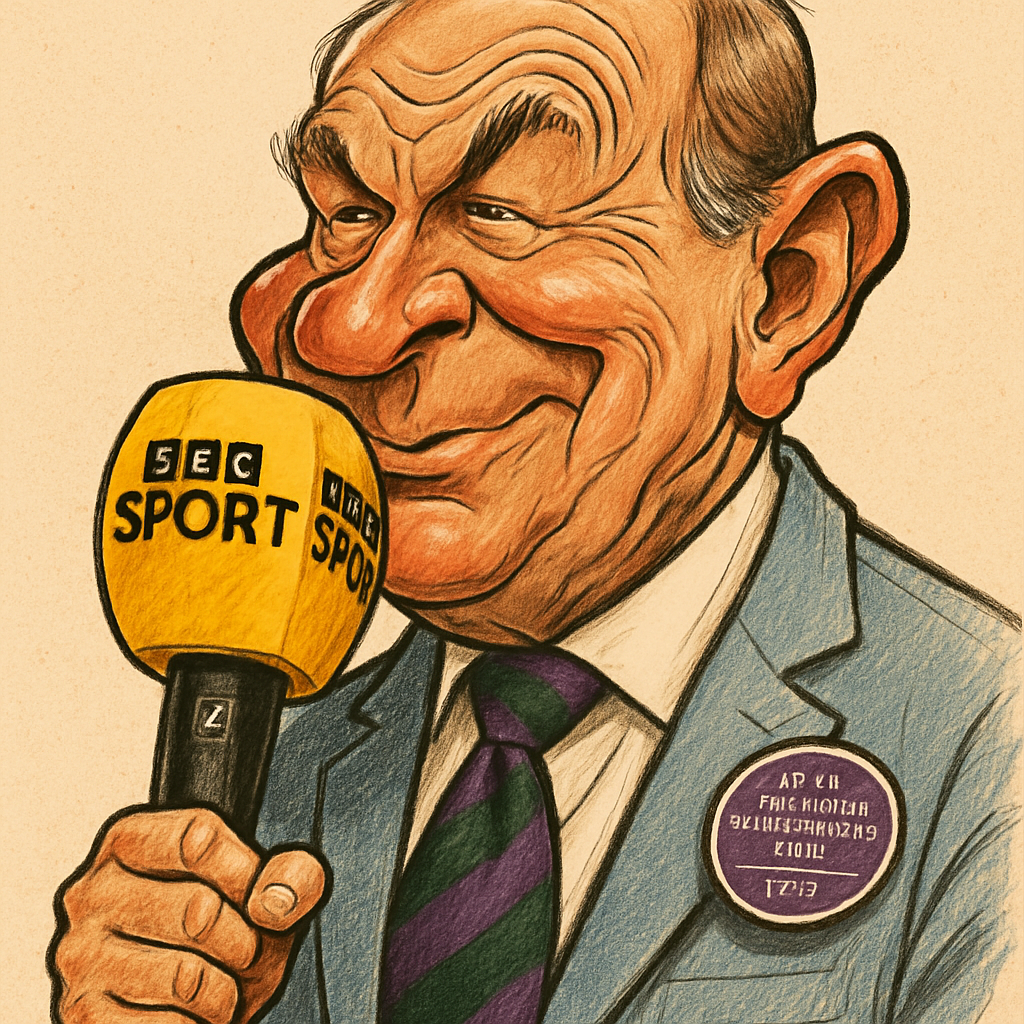
LONDON — The gentle thwack of tennis balls on pristine grass, the murmur of a respectful crowd, and the reassuringly familiar tones of a BBC commentator: for generations, this has been the quintessential soundtrack of a British summer. Wimbledon and the BBC are an institution as intertwined as strawberries and cream. But this enduring partnership, which began with the first televised broadcast in 1937, is facing its most serious threat in decades.
The BBC’s current rights deal to broadcast The Championships expires in 2027, and the landscape of sports broadcasting has been utterly transformed since the last negotiation. Streaming giants with seemingly bottomless pockets, aggressive commercial rivals, and a rapidly fragmenting audience have converged to create a perfect storm. The question is no longer just about cost, but about relevance. As one industry insider put it, "The BBC should be terrified. To survive, it needs to change, and Andy Murray could be the saviour."
The Stakes: More Than Just a Tennis Tournament
For the BBC, Wimbledon is the crown jewel of its summer sports portfolio. It is a rare, unifying event that delivers massive linear television audiences and drives significant traffic to iPlayer. In 2023, peak audiences for the men’s final topped 11 million. Losing Wimbledon would be a catastrophic blow to the corporation’s public service broadcasting remit, stripping it of a cultural touchstone that justifies the licence fee to millions. It would signal a retreat from premier live sports, a space it is already struggling to hold.
The competition is fiercer than ever. Amazon Prime Video has already muscled into UK tennis by securing the ATP Tour rights. Discovery (Eurosport/ Warner Bros. Discovery), emboldened by its success with the Olympic Games, possesses both the financial muscle and the pan-European platform to make a compelling bid. Then there is the looming spectre of a joint bid from a commercial UK broadcaster like ITV or Sky, potentially partnered with a streamer. The BBC cannot win a pure bidding war. Its bid must prove unique value beyond the cheque book.
The Murray Factor: A Unique Strategic Asset
This is where Sir Andy Murray enters the equation, not as a player, but as a potential linchpin of the BBC’s future strategy. Murray’s impending retirement from professional tennis presents a monumental opportunity. He is a beloved, two-time Wimbledon champion whose career has been narrated by the BBC. Securing him as a lead pundit and analyst would be a coup of immense proportions. As a former top player with recent tour experience, his insight is unparalleled.
More importantly, Murray represents a bridge to younger, harder-to-reach demographics. His dry humour, social media presence, and contemporary appeal could modernise the BBC’s sometimes traditionalist coverage. Imagine a dedicated "Murray’s Match Analysis" segment on iPlayer, or a podcast series deconstructing the day’s play. His involvement would send a powerful message: the BBC is not just preserving heritage; it is investing in the future voice of the sport. As one senior sports editor noted, "Signing Murray would be a statement of intent more powerful than any press release."
Modernising the "Wimbledon Experience"
Beyond star power, the BBC’s bid must radically reimagine how Wimbledon is consumed. The days of a one-size-fits-all broadcast are over. To justify its place, the BBC must leverage its public service ethos to create a multi-platform, interactive experience that commercial rivals would not prioritise. The bid needs to be a blueprint for innovation, not just a rights renewal.
Key pillars of this modernised offering must include:
- Hyper-Personalised iPlayer Streams: Offering a choice of commentary feeds (traditional, data-focused, beginner-friendly), multiple camera angles (including player POV and behind-the-scenes tunnels), and integrated real-time stats.
- True Digital-First Content: Expanding beyond highlights to create short-form tactical analysis for social platforms, immersive VR experiences from Centre Court, and documentary series following the ground staff, ball boys and girls, and umpires.
- Enhanced Accessibility and Reach: Doubling down on audio-descriptive commentary, sign-language presented coverage, and ensuring robust free-to-air availability is guaranteed in any sub-licensing deal.
This approach shifts the value proposition. The BBC would be bidding not just for the right to broadcast matches, but to become the definitive digital home and storyteller of Wimbledon, using the tournament to showcase technological and editorial innovation that benefits all licence fee payers.
A Partnership, Not Just a Purchase
The All England Lawn Tennis Club (AELTC) is not merely a rights seller; it is a guardian of tradition with an eye on global growth. The BBC’s pitch must appeal to this duality. It can argue that no other broadcaster can protect the tournament’s cherished place in British national life while simultaneously helping it engage a new, global digital audience. The BBC’s global news reach and its commercial arm, BBC Studios, could be powerful tools in promoting Wimbledon worldwide in a way that aligns with the AELTC’s brand values.
Furthermore, in an era of deepfake concerns and fragmented media, the BBC’s reputation for integrity and high production standards is a significant asset. The AELTC may see value in a trusted, stable partner amidst the volatile streaming market. The BBC’s offer must be framed as a long-term partnership for the digital age, with a joint commitment to growing the sport at grassroots level through linked initiatives and programming.
Conclusion: Adapt or Lose the Crown Jewels
The 2027 rights negotiation is a watershed moment. The BBC cannot rely on sentiment or history. To prevail, it must present a visionary, multi-faceted bid that proves its unique value in the 21st century. This means:
- Making a strategic, headline-grabbing talent acquisition like Andy Murray central to its offer.
- Presenting a bold, fully-funded plan for a digital-first, interactive Wimbledon experience across iPlayer, BBC Sport, and social platforms.
- Articulating a clear partnership vision that helps the AELTC grow globally while safeguarding the tournament’s domestic cultural status.
The threat is existential. Failure would not just mean losing a sports contract; it would be a profound symbolic defeat, weakening the BBC’s claim to be the home of national events. The time for gentle evolution is over. To keep Wimbledon, the BBC must be willing to reinvent it. The serve is in its court, and the next shot needs to be a winner.