
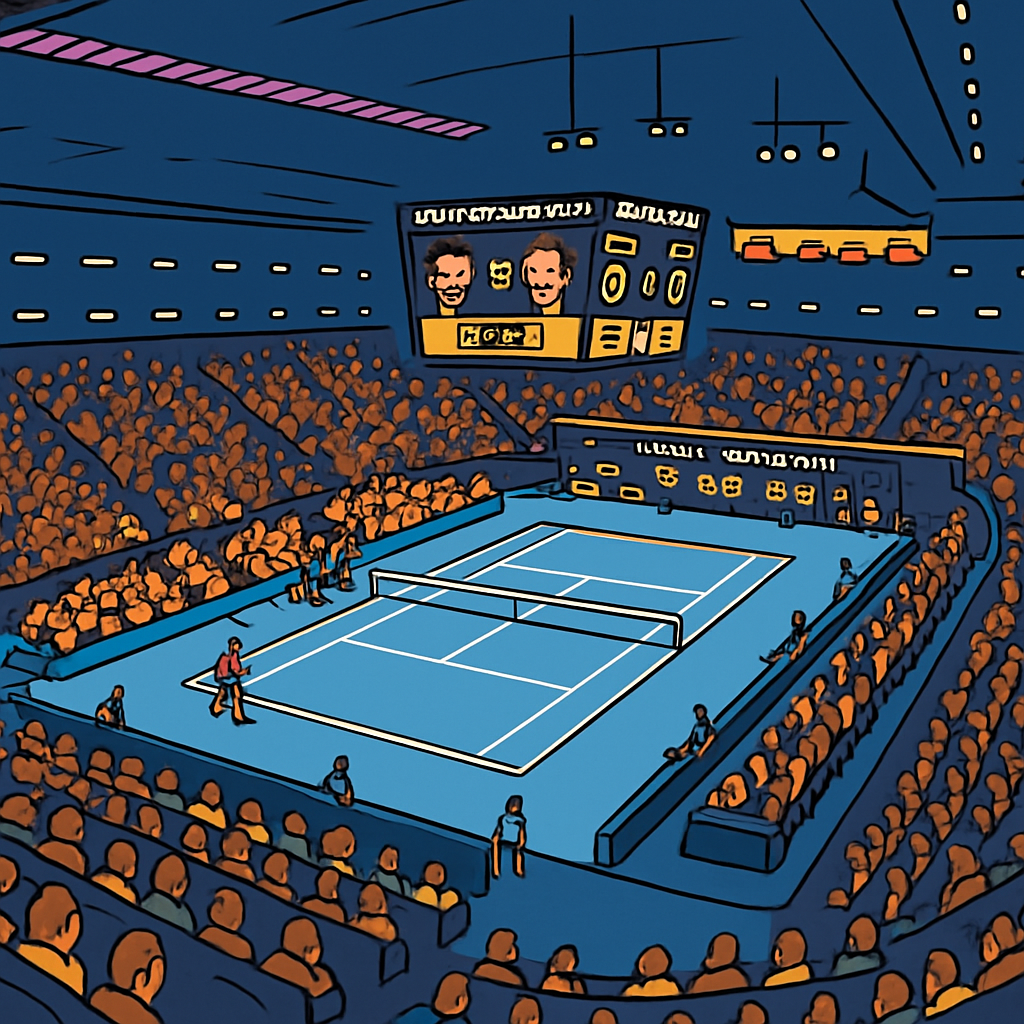
THE BBC was left red-faced and forced to issue an on-air apology after a major technical failure disrupted its live broadcast of the prestigious Battle of the Sexes tennis event, leaving thousands of fans unable to watch the highly anticipated matches.
The incident occurred during the prime-time coverage of the exhibition tournament, which saw top British stars like Katie Boulter and Cameron Norrie take on legends including Martina Navratilova and John McEnroe at London's Royal Albert Hall. Viewers attempting to stream the action via the BBC iPlayer and BBC Sport website were met with error messages and frozen screens for a significant portion of the evening session.
A Glitch at a Critical Moment
The broadcast problems began just as the marquee mixed doubles match was getting underway. With a packed arena and a national television audience tuned in, the feed cut out entirely for online viewers. For approximately 25 minutes, the BBC's digital platforms displayed a holding screen citing "technical difficulties," while the traditional television broadcast on BBC Two continued uninterrupted, highlighting a stark disparity in the viewing experience.
Presenter John Inverdale was compelled to address the issue live on air, offering a humbled apology to the frustrated audience. Looking directly into the camera, he stated, "We must apologise if you're watching on iPlayer or online, we are having a few technical problems... we hope to resolve them as soon as possible. Our apologies for that." The apology was repeated several times throughout the evening as engineers scrambled behind the scenes.
Social Media Erupts in Frustration
The outage sparked immediate and widespread anger on social media, with tennis fans taking to X (formerly Twitter) to vent their disappointment. The hashtag #BBCFail began trending in the UK as complaints poured in. Many subscribers expressed fury at having paid the mandatory television licence fee, only to be denied access to a flagship sporting event.
One user fumed: "Paid my licence fee for this? The one match I wanted to watch on the BBC and the iPlayer has completely died. Unacceptable." Another added, "The Battle of the Sexes is a brilliant event and the BBC's technical glitch has ruined it for countless fans. Sort your infrastructure out!"
The backlash was compounded by the event's unique appeal. The Battle of the Sexes offers a rare, light-hearted blend of competitive tennis and entertainment, featuring interactions between current stars and iconic figures from the sport's history. Missing a portion of this spectacle was a significant blow to dedicated fans.
The BBC's Official Response
Following the broadcast, the BBC released an official statement acknowledging the severity of the failure. A spokesperson said, "We are very sorry that some viewers were unable to watch coverage of the Battle of the Sexes on BBC iPlayer and the BBC Sport website last night due to a technical issue. We understand how frustrating this is for audiences and we are conducting a full investigation to understand what went wrong and to prevent it from happening again."
While the statement addressed the online issue, it did not comment on the specific cause. Industry speculation pointed to potential problems with the streaming servers being overwhelmed by demand, or a fault in the encoding process that sends the live television signal to online platforms. The BBC's internal review is expected to focus on these key areas of its broadcast chain.
Not the First Time: A Pattern of Problems?
This incident is not an isolated one for the BBC's sports coverage. In recent years, there have been several high-profile glitches during major events, leading to questions about the robustness of its digital broadcasting infrastructure. These include:
- Brief streaming failures during the Wimbledon Championships.
- Audio sync issues and dropouts during Six Nations rugby matches.
Each event erodes viewer confidence, particularly as the media landscape shifts increasingly towards streaming and on-demand services. The Battle of the Sexes failure is particularly damaging as it occurred during a live, exclusive event that audiences could not simply catch later on another channel.
The Wider Impact on Public Trust
The technical debacle arrives at a sensitive time for the BBC, which is engaged in ongoing debates about the future of the licence fee and its role in a crowded digital market. Critics were quick to seize on the failure as evidence of the corporation not delivering value for money. As one media commentator noted, "When a publicly-funded broadcaster cannot reliably deliver its core service—broadcasting—it fundamentally undermines its covenant with the public."
Conclusion: A Serve the BBC Couldn't Return
The BBC's Battle of the Sexes broadcast glitch was more than a minor inconvenience; it was a prominent service failure during a major sporting moment. The on-air apologies, while necessary, could not compensate fans for the lost experience. The incident serves as a stark reminder of the technical pressures facing traditional broadcasters in the live-streaming era and the intense, immediate scrutiny they face when things go wrong.
For the BBC, restoring trust will require not just a successful internal investigation, but a demonstrable and sustained improvement in the reliability of its digital platforms. Tennis fans, and the wider viewing public, will be watching closely to see if their next major live sports broadcast is a smooth ace—or another unforced error.