
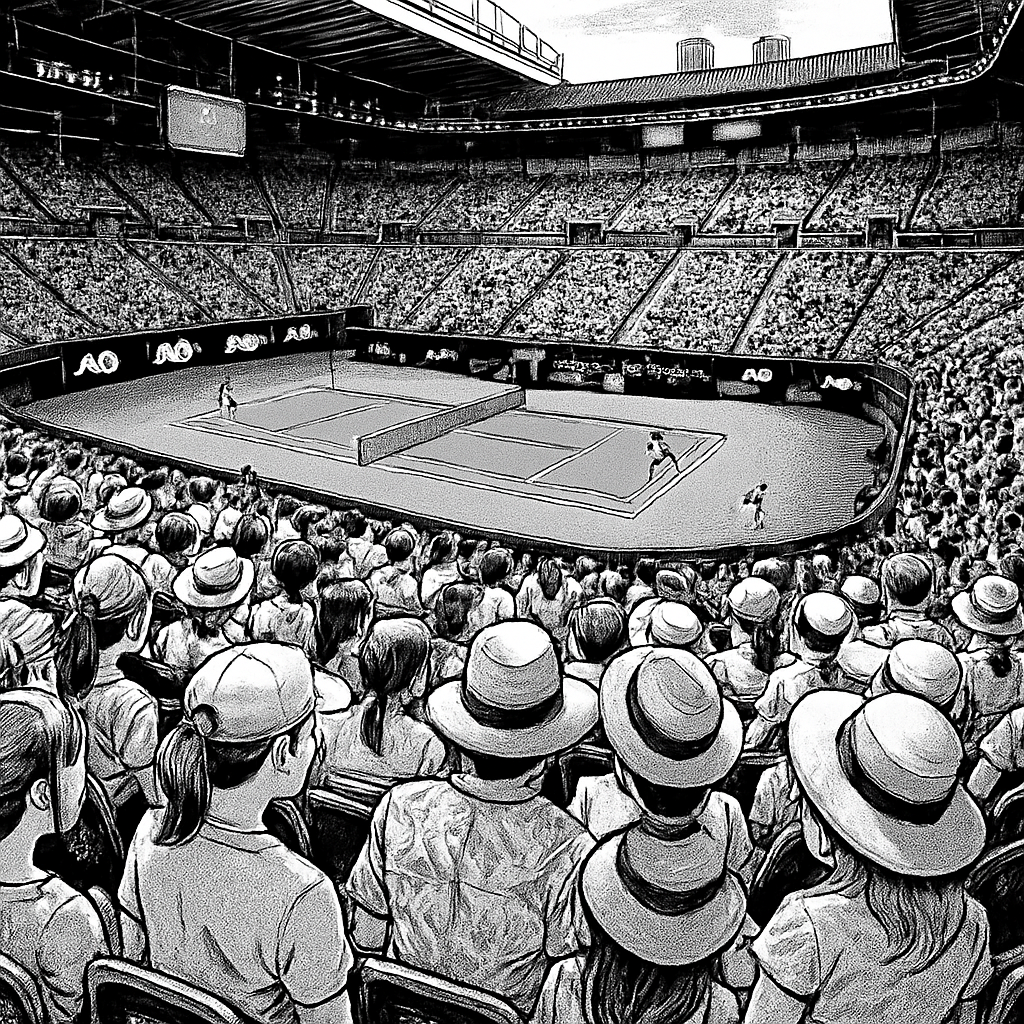
MELBOURNE — The Australian Open, renowned for its electric atmosphere and world-class tennis, has found itself in a fierce volley of criticism this year, but not for anything happening on the blue courts of Melbourne Park. Instead, the backlash is centered squarely on the tournament's concession stands, where fans have been left reeling from what many are calling "grand slam gouging" on food and beverage prices.
Images and receipts from the first week of the 2024 tournament have flooded social media, sparking outrage and disbelief. The most viral offender: a humble serving of four chicken tenders and a handful of fries, priced at a staggering AUD $28.90 (approximately USD $19). This single item has become the poster child for a broader pricing strategy that attendees argue has crossed the line from premium event pricing into outright exploitation.
The Price of a Pint and a Parma
Beyond the infamous tenders, the menu reveals a landscape of steep costs. A standard meat pie, an Australian sporting staple, will set you back $6.50. A slice of pizza costs $8.50. For those seeking a classic pub meal, a chicken parmigiana reaches $26.90. The beverage prices have drawn equal ire, with a 425ml mid-strength beer priced at $12.90 and a basic bottle of water costing $4.60.
The reaction online has been swift and merciless. One fan posted on X (formerly Twitter), "Four chicken tenders and chips for $28.90 at the Australian Open. This is an absolute disgrace. How can they justify this? It's pure greed." Another lamented, "I spent more on lunch for my family than I did on our ground passes." The sentiment has been echoed across platforms, with the tournament's official accounts inundated with complaints.
Tournament's Justification and Fan Backlash
In response to the growing furor, Australian Open Tournament Director Craig Tiley and hospitality partner Levy Australia have defended the pricing. They cite several factors, including the high cost of operating a temporary, large-scale event, increased wages, and supply chain expenses. A tournament spokesperson stated, "We work hard to provide a wide range of food and beverage options to suit different budgets."
However, this explanation has done little to placate fans who feel the balance has been lost. Critics point out that the prices far exceed not only local pub and restaurant rates but also those of other international sporting events. The backlash highlights a growing global tension between major sporting events and their attendees, where the experience is increasingly seen as being compromised by corporate profit motives.
The controversy has also drawn the attention of consumer advocacy groups. A spokesperson for Choice, an Australian consumer charity, commented, "When you're a captive audience, as you are at a major sporting event, there's a responsibility to not take advantage of that situation."
Comparing the Grand Slam Experience
To put the Australian Open's pricing in context, comparisons with its sibling Grand Slams are inevitable. While all major tournaments command premium prices, the 2024 Australian Open appears to be an outlier in several categories:
- Beer: AO ($12.90/425ml) vs. US Open (~$12/473ml) vs. Wimbledon (~$8/500ml Pimm's).
- Staple Snack: AO Pie ($6.50) vs. Wimbledon Strawberries & Cream (~$3.50).
- Water: AO Bottle ($4.60) vs. US Open (~$5.50) vs. Wimbledon (free refill stations available).
Notably, Wimbledon's famous strawberries and cream, long held as a benchmark for tournament affordability, remain a stark contrast. The All England Club has famously kept the price of its iconic dessert low for decades as a point of tradition and fan service, a gesture that resonates strongly in the current climate.
The "BYO" Loophole and Fan Strategies
In a saving grace for budget-conscious fans, the Australian Open retains a more liberal outside food policy than many other global events. Spectators are permitted to bring their own food and non-alcoholic drinks into Melbourne Park, a rule many have seized upon this year. Social media is now filled with tips and photos of elaborate homemade picnics, with fans proudly showcasing their cost-effective feasts. "The best hack is to bring your own lunch and just buy one drink inside," advised one seasoned attendee online.
This practice, while a relief for fans, inadvertently underscores the problem: when a significant portion of your audience feels compelled to bypass your vendors entirely, the pricing model may be fundamentally flawed. It creates a two-tiered experience and reduces the communal atmosphere of shared concessions that is part of the fabric of live sport.
Broader Implications for the Sport
The pricing debacle strikes at a sensitive time for tennis. The sport is working hard to grow its fanbase and make events more accessible. Exorbitant on-site costs risk alienating the next generation of fans and making a day at the tennis a prohibitively expensive family outing. As one disgruntled parent posted, "We saved for months for tickets. We didn't budget another $150 just for basic hot dogs and drinks. It leaves a really sour taste."
The issue also reflects a wider economic moment, where consumers globally are feeling cost-of-living pressures and are becoming more vocal about perceived price gouging. Sporting events are not immune to this scrutiny; they are increasingly viewed as experiences that should offer fair value, not just as commercial ventures.
In its defense, Tennis Australia, the governing body that runs the Open, is a not-for-profit organization that reinvests revenue into the sport at all levels in the country. Tournament profits fund grassroots tennis, facility development, and player pathways. However, this justification is a hard sell to a family facing a $100 lunch bill, forcing a conversation about where the line between necessary revenue and fan fairness lies.
Conclusion: An Unforced Error?
The Australian Open has built a reputation as the "Happy Slam" – a welcoming, fan-friendly event that kicks off the tennis year with vibrancy. The 2024 food and drink pricing controversy represents a significant stain on that brand. While operational costs are real, the perception of greed now overshadows the on-court brilliance. The tournament finds itself at a crossroads: will it adjust its approach to restore goodwill, or will high prices become a permanent fixture of the Melbourne Park experience? For a sport competing for entertainment dollars, this may prove to be more than a minor public relations hiccup. As the final serves are struck, the lasting memory for some may not be a championship-winning rally, but the shock of a receipt for four chicken tenders. The ball, as they say, is now in the tournament's court.