
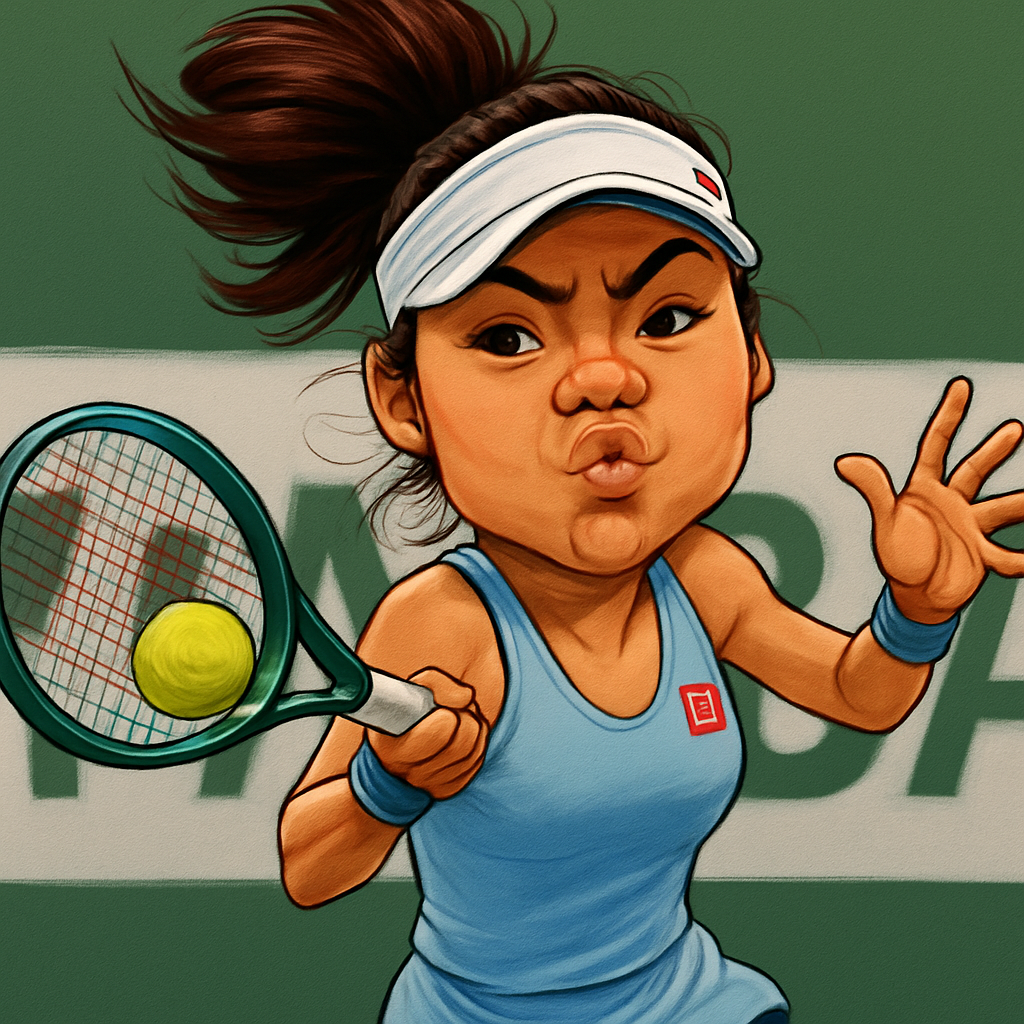
INDIAN WELLS — Emma Raducanu’s promising run at the BNP Paribas Open came to a jarring halt on Monday, as the 2021 US Open champion was soundly defeated 6-3, 6-0 by world No. 2 Aryna Sabalenka in a fourth-round match that laid bare the gulf in power and consistency between the two players. The one-sided nature of the second set, in particular, was a stark reality check for the 21-year-old Brit, who had shown flashes of her brilliant best in the Californian desert.
A Reality Check in the Desert
The match began competitively, with Raducanu holding her own from the baseline and even earning two break points in the opening game. However, once Sabalenka found her thunderous rhythm, the contest quickly slipped away. The Belarusian’s serve, a weapon that has propelled her to two consecutive Australian Open titles, was devastating, and her groundstrokes from both wings pinned Raducanu deep behind the baseline. The second set was a masterclass in aggressive dominance from Sabalenka, leaving Raducanu with few answers and no games on the board.
In her post-match press conference, Raducanu was candid about the experience, stating, "It's difficult to take. I think Aryna played really, really strong today. I think she is the world No. 2 for a reason. She played really good tennis. I think I struggled with my timing a lot today, and I think that comes from not playing as many matches." This admission highlighted the ongoing challenge for Raducanu: rebuilding match toughness and the ability to problem-solve against the tour’s elite after her lengthy absence due to multiple surgeries last year.
The Petchey Puzzle: A Fleeting Partnership
The Indian Wells tournament was notable for Raducanu as it marked a brief, trial reunion with her first-ever professional coach, Mark Petchey. The popular British pundit and former coach, who guided a teenage Raducanu in her initial steps on the WTA Tour, was brought in for a short-term consultancy role. His presence was seen as a stabilizing move, offering familiar tactical guidance and support.
However, when asked about the future of this arrangement ahead of the Miami Open, which begins next week, Raducanu delivered an update that suggests continuity is unlikely in the short term. "I'm not sure. I think it was just for this trip, but we'll see after this week," she said. This ambiguous statement leaves her coaching situation in a familiar state of flux as she heads to the second leg of the "Sunshine Double."
The logistical reality is that Petchey has extensive prior broadcasting commitments for Sky Sports during the Miami Open, making an extended coaching stint improbable. This presents a significant hurdle for Raducanu, who is clearly still in a phase of experimentation and search for a long-term coaching solution. Since her stunning triumph in New York, she has worked with a series of coaches, including:
- Andrew Richardson (during US Open win)
- Torben Beltz
- Dmitry Tursunov
- Sebastian Sachs
- Nick Cavaday (current, part-time)
This revolving door stands in stark contrast to the stability enjoyed by most top players, and the brief Petchey experiment, while positive in sentiment, appears to be another short chapter rather than a permanent fix.
Looking Ahead to Miami and the Clay
Despite the heavy defeat, Raducanu’s Indian Wells campaign had significant positives. She secured three solid wins, including a commanding victory over Dayana Yastremska and a gritty three-setter against Maria Lourdes Carlé. These results will see her protected ranking rise and her actual ranking climb back towards the top 250, a crucial step in her climb back to the sport’s upper echelons.
Her immediate focus now shifts to the Miami Open, where she has been granted a main-draw wildcard. The question of who will be in her coaching box remains open. It is likely she will be supported by her team, which includes physio Will Herbert and agent Chris Helliar, with input from childhood coach Nick Cavaday where possible. The lack of a dedicated, traveling head coach, however, is a subplot that will continue to follow her.
Raducanu also hinted at her schedule beyond the hard courts, revealing an ambitious plan to prepare for the clay-court season. "I'm going to go to the UK after Miami and then I'm going to go to a training block for the clay. I'm really looking forward to it," she said. This dedicated training period will be essential for adapting her game to the slower surface, a challenge she has openly embraced in the past.
The Bigger Picture: Patience Required
For observers and fans, the Sabalenka match served as a necessary reminder of the journey still ahead. Raducanu’s talent and ball-striking ability are undeniable, but competing week-in, week-out with the physical and mental intensity of the world’s best is a process. Her post-surgery return was always going to be measured in months, not tournaments. The key metrics for 2024 remain:
- Staying healthy and building a robust physical base.
- Accumulating matches and ranking points consistently.
- Finding a sustainable coaching structure that fosters development.
The "thrashing" by Sabalenka, while "not easy to take," is a data point in that long-term project. It exposed areas for improvement—handling elite power, maintaining tactical discipline under duress—that can only be addressed through continued exposure at this level.
Conclusion: A Step Forward, Despite the Scoreline
In conclusion, Emma Raducanu leaves Indian Wells with more reasons for optimism than the final scoreline of her last match would suggest. The victories she accrued are tangible proof of progress. The brief collaboration with Mark Petchey provided a nostalgic and likely beneficial boost, even if its future is now in doubt. Her realistic assessment of the Sabalenka defeat shows a maturity in understanding her current place in the tennis hierarchy.
As she moves to Miami and then into a crucial clay-court training block, the search for coaching stability continues to be her most pressing off-court challenge. The WTA Tour waits for no one, and the competition is relentless. Yet, for the first time in over a year, Raducanu is stringing together matches and building momentum on her own terms. The path back to the top is steep, but in the California desert, she at least found her footing once again.