
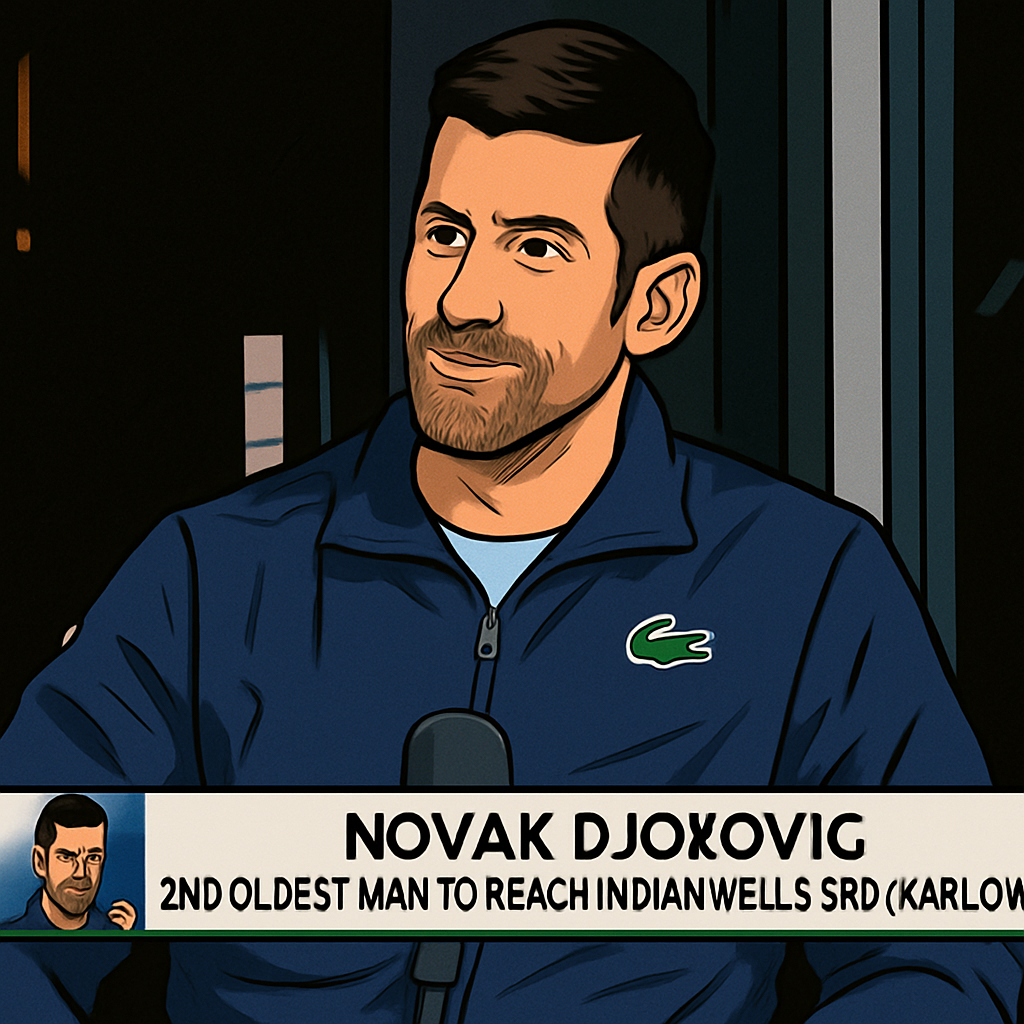
LONDON — In a moment that was equal parts candid, humorous, and pointed, Novak Djokovic demonstrated his acute awareness of the media narrative surrounding him during a post-match interview at the 2024 Wimbledon Championships. After a commanding straight-sets victory over Holger Rune in the fourth round, Djokovic interrupted his on-court chat with BBC presenter Rishi Persad to call out a headline that flashed up on the screen behind them.
The On-Court Moment That Stopped the Interview
The incident occurred as Persad was wrapping up the interview, asking Djokovic about the vocal support from the Centre Court crowd, which had been notably divided between the Serbian legend and his young Danish opponent. As Djokovic began to answer, his eyes flickered to the large video screen, where the BBC’s own graphics team had posted a provocative caption summarizing the match. The headline read: "Novak Djokovic eases into quarter-finals after fans boo him."
Without missing a beat, Djokovic paused his answer, pointed a finger at the screen, and said with a wry smile, "I mean, I’m not sure if that’s what exactly happened… but anyway, I’ve heard that before." The interruption drew laughter and applause from the audience, while Persad, momentarily taken aback, quickly acknowledged the moment with good humor, replying, "Well, we can edit that!"
Context: A Complex Relationship with Crowds
To understand the significance of Djokovic’s interjection, one must consider his long and often complicated relationship with tennis audiences, particularly at Wimbledon. Throughout his career, especially in matches against local favorites or popular underdogs, Djokovic has frequently found himself cast as the narrative’s antagonist. This match against Holger Rune was a prime example, with a significant portion of the crowd passionately cheering for the young challenger, often erupting on Djokovic’s unforced errors.
In his post-match remarks just moments before the headline incident, Djokovic had already addressed the crowd dynamic with a mix of grace and defiance. He stated, "To all the fans that have respect and that stayed here tonight, thank you very much from the bottom of my heart. I appreciate it. And to all those people that have chosen to disrespect the player, in this case me, have a goooood night." His elongated "good night" was delivered with a pointed smile, a classic Djokovic blend of wit and steel.
Why the Headline Struck a Nerve
The specific wording of the BBC headline—"fans boo him"—likely felt reductive to Djokovic. While there were isolated boos, the broader atmosphere was one of fervent support for Rune, not uniform hostility toward the seven-time champion. By calling it out, Djokovic was doing more than just nitpicking semantics; he was pushing back against a persistent media framing that he believes oversimplifies his journey and his connection with fans. Key elements of this framing include:
- The Underdog Narrative: Tennis crowds have a well-documented soft spot for the perceived underdog.
- The "Big Three" Dynamic: For years, Djokovic was the third wheel in the Federer-Nadal rivalry adored by fans.
- A Direct Communication Style: His candidness in press conferences is sometimes misinterpreted as arrogance.
The headline, in Djokovic’s view, fed into an older, one-dimensional narrative that ignores the immense respect he commands and the growing appreciation for his unparalleled longevity and professionalism.
Media Reaction and Public Response
The moment instantly went viral across social media and sports news platforms. Reactions were divided, reflecting the polarizing nature of Djokovic’s public persona. Some praised his quick-wittedness and saw it as a justified correction of biased reporting. Others viewed it as overly sensitive or an unnecessary distraction. Prominent tennis journalist Ben Rothenberg posted on X, "Djokovic remains the most media-literate athlete in tennis. He doesn't just answer questions; he audits the entire narrative apparatus in real-time."
The BBC itself addressed the incident lightly. A spokesperson later noted that the headline was a live, editorial decision meant to capture a talking point of the match, but acknowledged the champion’s right to reply. Persad, in later interviews, laughed it off, saying, "It was a live TV moment, and Novak is sharp as a tack. He sees everything. It made for great television, and he made his point in the most Novak way possible—with a smile that says a thousand words."
A Pattern of Narrative Management
This is not the first time Djokovic has directly engaged with or corrected media narratives. From his early days of challenging questions about his fitness and mental fortitude to more recent instances where he has clarified his views on player rights and tournament conditions, Djokovic has consistently shown a desire to control his own story. He uses his platform not just to win matches, but to shape the conversation around his career and legacy.
This incident at Wimbledon is a microcosm of a larger theme in the latter stages of his career: a player who, having achieved statistical greatness, is now intently focused on the qualitative aspects of his legacy. He is no longer just competing against opponents on the court; he is consciously engaging with the historical narrative being written about him in real-time.
Conclusion: More Than a Quirky Interruption
Novak Djokovic’s decision to interrupt a live BBC interview was far more than a spontaneous, quirky moment. It was a calculated, albeit quick, act of narrative reclamation. In pointing to that screen, he was highlighting the often simplistic gap between complex stadium atmosphere and two-dimensional headlines. He reminded the media and the world that he is an active, discerning consumer of his own coverage, one who will not passively accept portrayals he deems inaccurate.
Ultimately, the episode underscores a fundamental truth about the 24-time Grand Slam champion: his competitiveness burns as fiercely in the arena of public perception as it does on the Wimbledon grass. As he progresses deeper into tournaments and further into the record books, every point, every press conference, and every reaction becomes a part of the legacy he is meticulously crafting. The headline may have read that fans booed him, but with a single pointed finger and a knowing smile, Novak Djokovic ensured the story told was ultimately his own.