
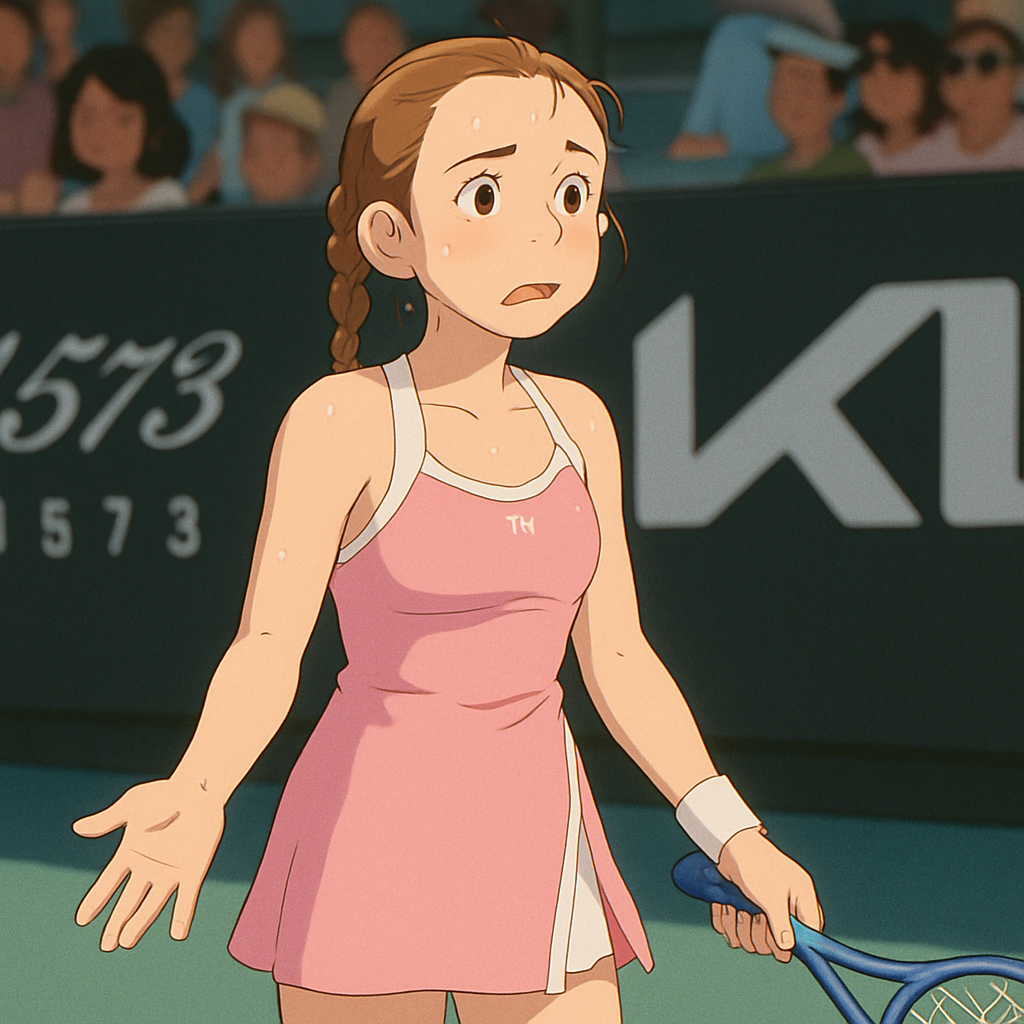
MELBOURNE — The 2024 Australian Open was meant to be a triumphant return for Ukrainian tennis star Marta Kostyuk. Instead, it became a crucible of emotional turmoil, culminating in a first-round exit and a late-night crisis of confidence after her post-match remarks sparked an unexpected and painful backlash.
The 21-year-old, seeded 35th, fell in straight sets, 6-3, 6-2, to Russian qualifier Maria Timofeeva on a scorching Melbourne afternoon. The defeat was disappointing in itself, but the real storm erupted in the press conference room shortly after. Kostyuk, a vocal and principled critic of the war in her homeland, was asked about facing a Russian opponent. Her response, a mix of raw emotion and political conviction, would reverberate far beyond the confines of Rod Laver Arena.
The Speech That Sparked the Firestorm
In her on-court interview and subsequent press conference, Kostyuk was transparent about her feelings. She expressed a deep-seated discomfort and moral conflict in competing against athletes from Russia and Belarus, nations whose military forces continue to wage war on Ukraine. "I have never hit with a Russian or Belarusian player in my life," she stated firmly, outlining her personal boycott of all informal sporting contact.
Her comments, however, took a turn that many interpreted as a critique of her fellow Ukrainian players. When asked about other Ukrainians who have chosen to shake hands or engage more cordially with Russian and Belarusian opponents, Kostyuk said, "I respect everyone's position. Everyone has their own right to do whatever they want. I just feel like this is my mission to talk about it." She added that she wished her peers would be more vocal, a sentiment that was quickly framed as her passing judgment on their choices.
The reaction on social media and within certain segments of the Ukrainian and international tennis community was swift and severe. Critics accused her of:
- Creating division within the Ukrainian tennis contingent during a time of national unity.
- Implying moral superiority over her compatriots who have different coping mechanisms.
- Adding unnecessary psychological pressure on Ukrainian athletes already carrying an immense burden.
The narrative shifted rapidly from one of sympathy for a player struggling with the political dimensions of her sport to one of internal conflict. Headlines focused not on her loss or her anti-war stance, but on the perceived "drama" she had stirred. For Kostyuk, who sees her platform as a vital tool for her country, this twist was devastating.
"I Cried in My Room at 2 a.m.": The Emotional Toll
In the days following the match, the weight of the backlash fully descended upon her. In a heartfelt and revealing post on her Instagram stories, Kostyuk opened up about the profound distress she experienced. "I cried in my room at 2 a.m. because of what I said in the press conference... I never wanted to create this narrative," she wrote.
She clarified her intentions, emphasizing that her words were never meant to condemn other Ukrainians but to explain her own, strict personal code. "My mission is to remind everyone that there is a war going on in my country... I don't force anyone to do anything. I just do what I think is right."
The incident highlighted the impossible tightrope walk Ukrainian athletes are forced to navigate. They are simultaneously:
- Competitors: Focused on the singular goal of winning matches in a brutally competitive global sport.
- Symbols: Viewed as representatives of a nation fighting for its survival, expected to show unwavering strength.
- Individuals: Grappling with unique trauma, fear for family, and personal moral compasses, all while under a global microscope.
Kostyuk’s 2 a.m. tears were the release valve for this immense pressure. They symbolized the clash between her unwavering public stance and a very human need for solidarity and understanding, especially from her own community. The backlash felt like a betrayal, compounding the professional disappointment of the early loss.
A Landscape of Fractured Relations
Kostyuk's experience is not an isolated incident but a symptom of the deeply fractured landscape of tennis since February 2022. The official policy from the WTA, ATP, and ITF allows Russian and Belarusian players to compete as neutrals, without national flags or anthems, provided they do not explicitly endorse the war or their governments.
This has created an arena of constant, low-grade tension. Ukrainian players like Kostyuk, Elina Svitolina, and Dayana Yastremska have adopted a policy of no handshakes with Russian and Belarusian opponents—a silent, powerful protest that is now a familiar sight. Svitolina has been particularly vocal, stating that a handshake would be a photo opportunity she is unwilling to provide.
However, the internal dynamics among Ukrainians are complex. Some players, while sharing the same pain, believe that complete sporting isolation is unsustainable or that quiet resilience is their chosen form of strength. Kostyuk’s call for more vocal unity, though well-intentioned, inadvertently shone a light on these nuanced differences, turning private coping strategies into a public debate.
The Weight of Being a "Mission" Player
For Kostyuk, tennis has become inextricably linked with advocacy. She has donated significant prize money to aid efforts in Ukraine and consistently uses her media appearances to keep the world’s attention on the war. This burden of representation is a heavy one to carry onto the court for every match. "Every match I play, I play for my country," she has said repeatedly.
The Australian Open episode revealed the double-edged sword of this mission. While it gives her strength and purpose, it also makes her vulnerable. When her sporting performance falters, the narrative can quickly shift from athletic result to a questioning of her focus or the weight of her political stance. The backlash to her speech added a new layer: criticism from the very people she feels she is fighting for.
Moving Forward: Resilience Amid the Noise
In the weeks since Melbourne, Kostyuk has shown signs of processing the ordeal. She has continued to compete on the WTA tour, and while she remains steadfast in her principles, her communication has reflected a slightly tempered, more reflective tone. The experience seems to have been a harsh lesson in the complexities of public perception and intra-community dynamics during wartime.
The support from many fans and fellow Ukrainians, who praised her courage and understood her intent, eventually helped counterbalance the initial negativity. Figures like Svitolina have also consistently supported their compatriots' right to express their stance in their own way, advocating for a united front against the common adversary rather than internal division.
The late-night crying episode in Melbourne was a raw, human moment in a saga often discussed in geopolitical or sporting terms. It underscored that for athletes like Marta Kostyuk, the battle is fought on multiple fronts: against the opponent across the net, against the erosion of global attention on the war, and sometimes, against the crushing weight of expectation and misunderstanding. Her tears at 2 a.m. were not a sign of weakness, but a testament to the profound and often lonely cost of carrying a nation's hope and a personal moral code onto the world's sporting stages.