
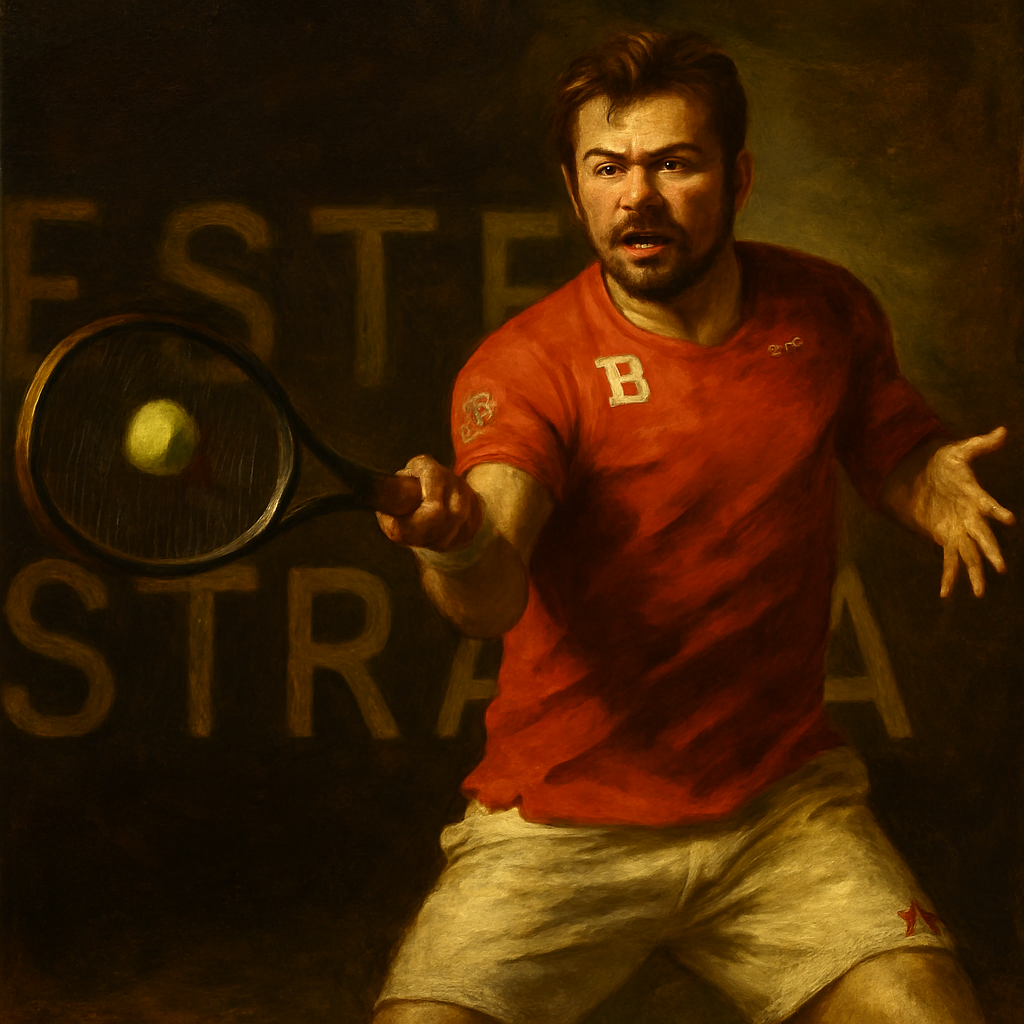
MELBOURNE — The Australian Open is facing mounting criticism over its wildcard allocation process, with the tournament's treatment of former champion Stan Wawrinka becoming a focal point of controversy. As the 2024 season draws to a close, the three-time Grand Slam winner has confirmed his intention to retire, yet finds himself in a precarious position regarding a potential farewell appearance at Melbourne Park.
Wawrinka, the 2014 Australian Open champion and a beloved figure in the sport, has seen his ranking plummet outside the top 300 due to a combination of injuries and age. This places him in a position where he is unlikely to gain direct entry into the main draw for the 2025 tournament, making a discretionary wildcard from Tennis Australia his most plausible route to a final appearance at the event that launched his Major-winning career.
The Swiss star's situation has ignited a fierce debate about how Grand Slam tournaments should honor their legends in the twilight of their careers. Tennis Australia has remained tight-lipped on its wildcard plans, leading to accusations of disrespect and a lack of sentiment from fans and pundits alike. Veteran tennis journalist Mike Dickson articulated the growing sentiment, stating, "To deny a former champion, especially one of Wawrinka's stature and popularity, a final bow would be a cold and commercially shortsighted decision."
The Wildcard Conundrum and Precedent
Australian Open wildcards are a valuable commodity, often used for a mix of strategic purposes: promoting local talent, fostering regional partnerships, and occasionally, honoring legacy. The tournament typically reserves eight wildcards for the men's singles main draw. These are distributed among Australian players, reciprocal agreements with other Grand Slam nations (like France and the United States), and players from the Asia-Pacific region. This leaves little room for discretionary "legacy" awards.
Critics argue that Tennis Australia has set a precedent for honoring greats in the past, making their silence on Wawrinka particularly glaring. In 2022, they granted a wildcard to former world number one and fan favorite Andy Murray, who was also battling back from injury and ranked outside the direct acceptance cutoff. More recently, the 2024 tournament saw a wildcard awarded to French veteran and former top-10 player Richard Gasquet.
"The precedent is clearly there," argues former Australian Davis Cup captain Wally Masur. "When you look at what Murray and Gasquet brought to the tournament—experience, narrative, and crowd-drawing power—Stan checks every single box, and then some. He's a champion of the event. The fans want to see him have a proper farewell. It seems like a straightforward decision."
Wawrinka's Legacy and Current Reality
Stan Wawrinka's career is defined by his explosive power and his trio of Grand Slam titles, each won by defeating the world number one in the final: Rafael Nadal at the 2014 Australian Open, Novak Djokovic at the 2015 French Open, and Djokovic again at the 2016 US Open. His one-handed backhand is considered one of the greatest shots in the modern game. At Melbourne Park, he holds a special place, having broken through for his first Major there, ending a long drought for Swiss men's tennis after Roger Federer.
However, the 39-year-old's recent results paint a challenging picture. A series of foot and knee surgeries have severely limited his mobility and tournament schedule. His 2024 season has been a struggle, with early exits at most events. In a recent press conference, Wawrinka was pragmatic about his future: "I am fighting every day, but the body is not the same. I want to play one more full season, to say goodbye to the tournaments and fans that have given me so much. After that, it will be time."
This declaration has placed added pressure on tournament directors, particularly Craig Tiley of Tennis Australia. The dilemma is multifaceted, involving considerations that extend beyond pure sentiment:
- Sporting Merit vs. Legacy: Does a wildcard go to a rising local player ranked 180th or a former champion ranked 320th?
- Fan Engagement: Wawrinka is a guaranteed crowd-puller, a key factor for ticket sales and broadcast appeal.
- Precedent and Perception: Failing to offer a wildcard could be seen as ungrateful and damage the event's image.
- Reciprocal Agreements: Committed wildcards for French and American players limit flexibility.
The Broader Tour Context
The debate around Wawrinka is part of a larger conversation within tennis about creating a more structured "farewell tour" for its icons, similar to those seen in other sports. The ATP Tour has no official mechanism for this, leaving it to individual tournaments to make ad-hoc decisions. This can lead to inconsistencies and the very kind of public relations dilemma the Australian Open now faces.
Other Slams have navigated this with varying approaches. The US Open famously gave a wildcard to Andy Roddick for his final tournament in 2012. Wimbledon, with its more reserved tradition, has been less inclined to make such gestures, though it maintains a special "Past Champions" entry category that could theoretically be used. The French Tennis Federation (FFT) has a history of supporting its veterans, as seen with Gasquet and earlier, with Jo-Wilfried Tsonga's farewell.
Tennis Australia's decision will be closely watched as a bellwether for how the sport values its aging stars in an increasingly physical and youth-oriented era. Sports marketing expert Dr. Sarah Jones notes, "In an era where narrative and emotional connection drive fan engagement, sidelining a champion's farewell is a missed opportunity of significant proportions."
What Happens Next?
As of now, Tennis Australia has not commented on its wildcard strategy for 2025. The organization typically announces its main draw wildcards in the first two weeks of December. Wawrinka's team has indicated they have not received any communication, positive or negative, from the tournament organizers.
The Swiss could attempt to qualify the hard way, but the grueling best-of-three sets qualifying matches present a substantial physical hurdle. There is also a possibility of a wildcard from the reciprocal agreement with the FFT for the French Open, but Roland Garros is not until May, and the Australian Open represents the symbolic start of his final season.
The court of public opinion has already rendered its verdict. Social media campaigns with hashtags like #WildcardForStan have gained traction, and fellow players have begun to voice their support. The pressure is squarely on Craig Tiley and the Tennis Australia board to balance their developmental goals with an act of respect for a player who has contributed immensely to the history and prestige of their event.
Conclusion: A Test of Tennis's Heart
The standoff over Stan Wawrinka's potential Australian Open wildcard is more than an administrative decision; it is a test of the sport's character. It asks whether tennis, in its relentless pursuit of the next big thing, can pause to properly honor the heroes of its recent past. Wawrinka is not asking for a handout, but for a chance—a single main draw slot in a 128-player field—to say goodbye to the fans who have cheered his thunderous backhand for nearly two decades.
Tennis Australia now holds the power to grant that chance and create a memorable, emotional moment for the 2025 tournament, or to risk appearing calculating and indifferent. As the clock ticks down to December, the silence from Melbourne is growing deafening. The message they send with their decision will resonate far beyond whether one aging champion gets to play one more match.