
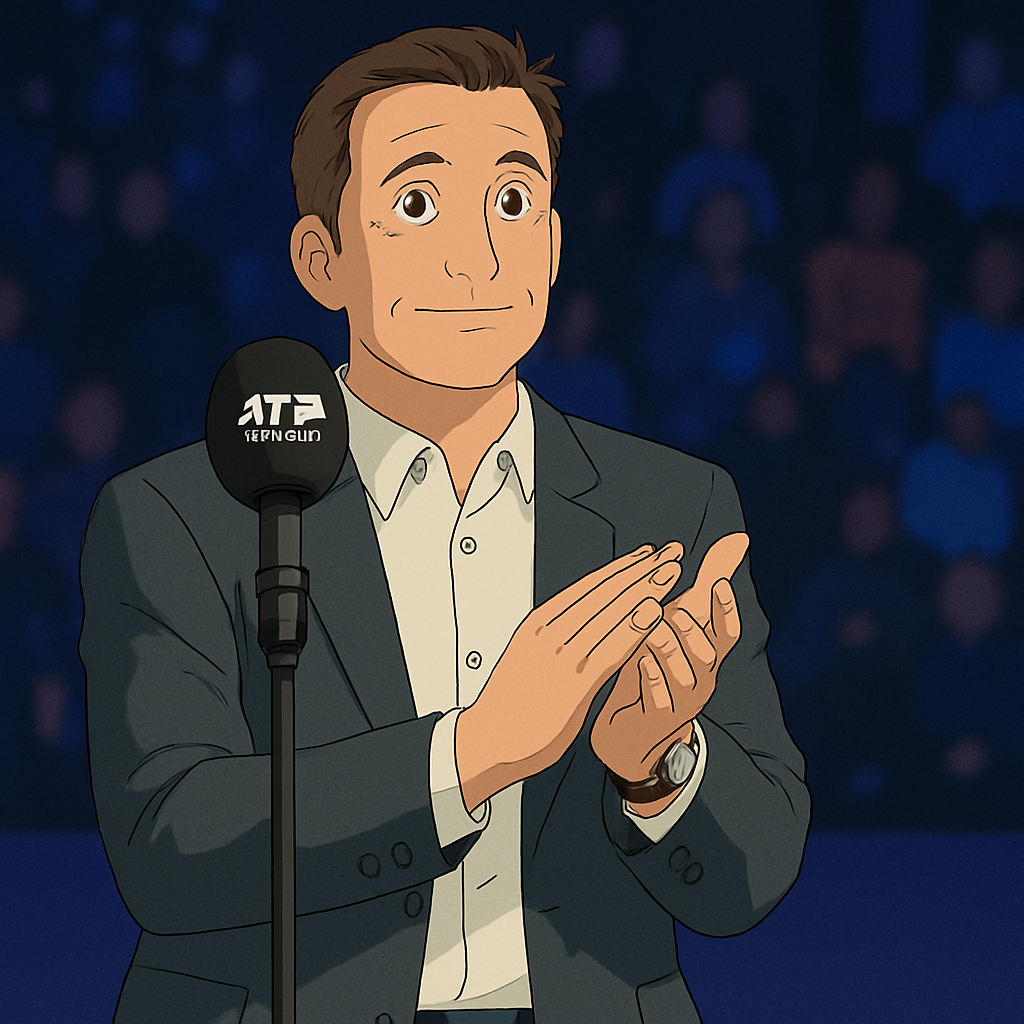
LONDON — ATP Chairman Andrea Gaudenzi has launched a pointed critique at the sport's top stars, suggesting that the allure of lucrative exhibition fees is a primary driver behind player complaints about the demanding official tournament calendar.
The comments, made in an interview with The Times, come as the tennis world grapples with a significant row over the future of the sport, player workloads, and the expansion of key events like the Masters 1000 tournaments, which are set to become 12-day, 96-draw behemoths.
Gaudenzi, a former player himself, did not mince words when addressing the resistance from some of the game's biggest names. "There is a lot of attraction to money, let’s be honest," he stated, directly linking player concerns to financial incentives outside the official tour structure.
The Core of the Conflict: An Expanding Calendar
The central issue revolves around the ATP's strategic plan to grow the sport, a key pillar of which is the expansion of the Masters 1000 events in Madrid, Rome, and Shanghai to two-week formats. This move, designed to increase revenue and fan engagement, has been met with vocal opposition from players like Novak Djokovic and Carlos Alcaraz.
They argue that an already grueling 11-month season is being made worse, increasing the risk of injury and player burnout. The Professional Tennis Players Association (PTPA), co-founded by Djokovic, has been particularly vocal, calling for more player input and expressing concerns that the extended tournaments will squeeze out smaller events and lower-ranked players.
Gaudenzi, however, presented a different perspective, framing the expansion as a necessary evolution. He argued that the changes are not about adding more tournaments to a player's schedule, but about enhancing the biggest ones. "We are not adding more weeks. We are not adding more mandatory events," he clarified.
Gaudenzi's Counter-Argument: The Exhibition Factor
Where the ATP chief's comments took a sharp turn was in his analysis of the motivation behind the player pushback. He suggested that the real conflict isn't about a packed calendar, but about players protecting their ability to participate in highly paid, unofficial exhibition matches.
These exhibitions, often staged in the Middle East and Asia during the short off-season, can offer appearance fees that dwarf the prize money from early-round losses at official tournaments. Gaudenzi implied that this "attraction to money" is a powerful, unspoken force in the debate. "The problem is the off-season, when they can make a lot of money playing exhibitions," he asserted.
This accusation adds a new layer of complexity to the ongoing power struggle between the tour's governance and its star players. It reframes the player-safety argument as, at least partially, a financial negotiation, pitting the long-term, collective business model of the ATP against the short-term, individual earning potential of its biggest attractions.
Player Concerns and the Physical Toll
Despite Gaudenzi's claims, the physical toll of the modern tour is a well-documented concern. The expanded Masters 1000s mean that top players who go deep in these tournaments could face a significantly increased number of best-of-three-set matches during the most intense stretches of the season.
Key player grievances often cited include:
- Increased risk of overuse injuries due to longer periods of peak competition.
- Erosion of the already limited off-season, crucial for physical and mental recovery.
- A potential "rich-get-richer" scenario where top players earn more, while lower-ranked players struggle to break into bigger draws.
Carlos Alcaraz, the young Spanish sensation, has been among the most prominent critics. Following his early exit from the Italian Open, he lamented, "The calendar is too long. We have too many tournaments. We need a longer off-season."
The Business of Tennis vs. The Athletes
Gaudenzi's role is to steward the commercial growth of the ATP Tour, a task that involves negotiating lucrative media rights and sponsorship deals. A more robust and extended "product" in the form of bigger Masters events is central to this strategy. He believes a more unified front, similar to models in the NBA or NFL, is essential for tennis to maximize its global potential.
However, this vision often clashes with the individualistic nature of tennis. Players are independent contractors who manage their own schedules and finances. For them, an exhibition offering seven figures for a single appearance is not just attractive; it can be a life-changing financial decision that is difficult to pass up for the sake of tour unity.
Gaudenzi acknowledged this tension but stood firm on the tour's direction. "Our job is to grow the sport. We have to create the best possible product for the fans and the broadcasters. If we do that, the money will come back to the players."
A Row with No Easy Resolution
The public airing of these grievances by the ATP's own chairman signals a deep and ongoing rift within the sport's governance. By calling out players for being "attracted to money," Gaudenzi has escalated the conflict, moving it beyond a simple debate over scheduling into a more profound disagreement over priorities and loyalty.
The player bodies, particularly the PTPA, are likely to view these comments as dismissive of their legitimate health concerns. The row now appears to be a fundamental clash between two perspectives:
- The Organizational View: Long-term, collective growth requires a strong, unified tour calendar.
- The Player View: Individual welfare and earning freedom must be protected from an increasingly demanding schedule.
As the ATP forges ahead with its plans for 2025 and beyond, finding a compromise that acknowledges both the commercial realities of the sport and the physical limits of its athletes remains the central, and increasingly difficult, challenge. The twist introduced by Gaudenzi's comments ensures that trust, not just the calendar, will be a key item on the negotiation table.