
PARIS — In the high-stakes crucible of a Grand Slam semi-final, every point is a battle, every game a war. But sometimes, the most enduring moment isn't a blistering winner or a saved break point; it's what happens—or doesn't happen—at the net. At the 2023 French Open, Aryna Sabalenka and Elina Svitolina created one of the most talked-about incidents in recent tennis history when Svitolina, adhering to a stance held by many Ukrainian athletes, did not offer a handshake to her Belarusian opponent following their match.
Nearly a year later, the two elite competitors found themselves on another grand stage, this time in the semi-finals of the 2024 Wimbledon Championships. The geopolitical backdrop remained painfully unchanged, but the narrative on court evolved. After a commanding 6-2, 6-4 victory that propelled her into her second Wimbledon final, Sabalenka was asked about the current state of her relationship with Svitolina. Her response was one of maturity, respect, and a clear-eyed focus on the future.
The Shadow of Roland Garros
To understand the significance of the Wimbledon encounter, one must revisit the emotional quarter-final at Roland Garros in 2023. Svitolina, who has been vocal in her support for her war-torn homeland, had consistently maintained she would not shake hands with players from Russia or Belarus, nations involved in the invasion of Ukraine. The WTA had clarified this was a personal decision for Ukrainian players and would not be penalized.
After Sabalenka’s three-set victory in Paris, she waited briefly at the net. Svitolina walked directly to her chair, leading to a chorus of boos from some sections of the crowd who were unaware of the context. Sabalenka later stated she understood the reason, but the moment cast a long shadow. In her post-match press conference, Sabalenka remarked, "I understood her. I mean, I lost my father, so I know how it's not easy to lose someone and how difficult it is."
A Different Atmosphere at Wimbledon
The setting at the All England Club in 2024 was different. The tension, while palpable, was more subdued. Both players delivered a high-quality contest, but Sabalenka’s relentless power and precision proved decisive. At the conclusion, a respectful, if brief, nod was exchanged at the net. The crowd, perhaps better informed, applauded both athletes. The focus shifted squarely back to tennis.
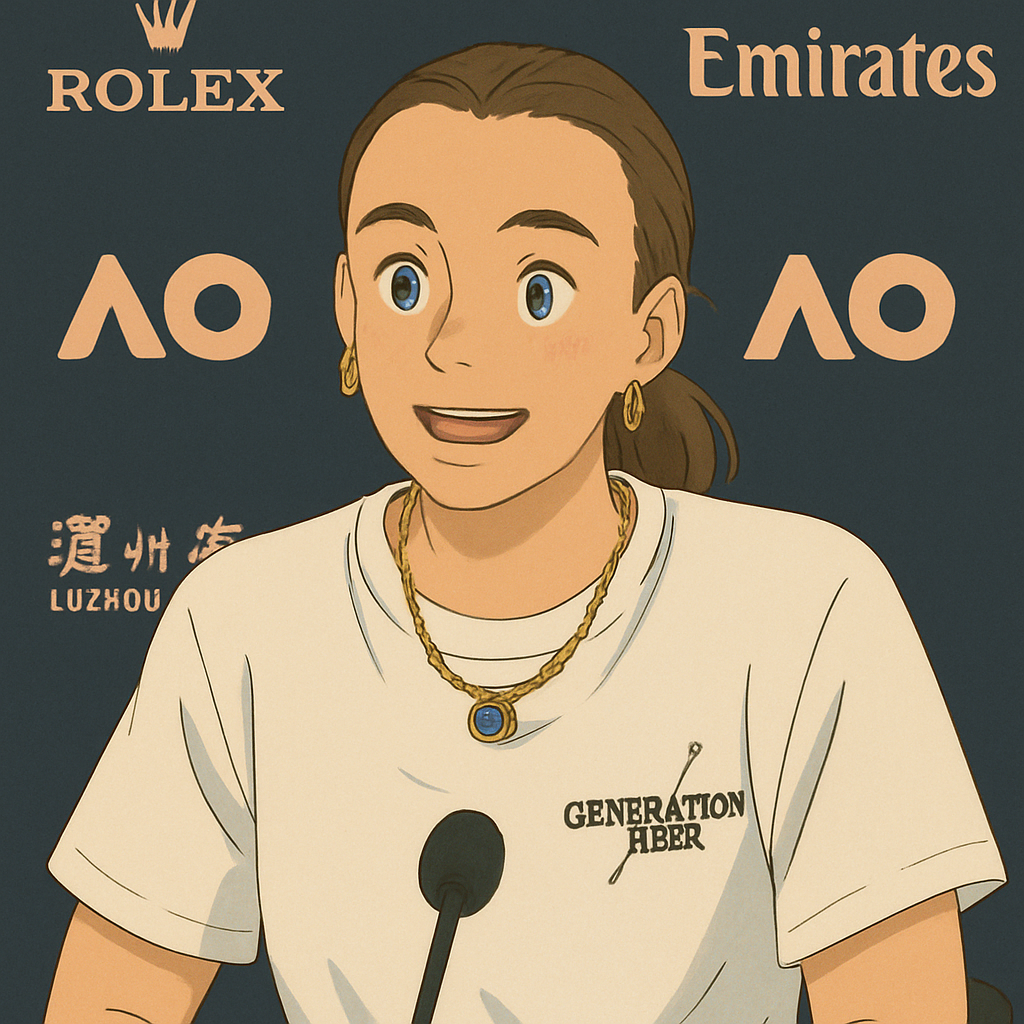
In her post-match press conference, Sabalenka was direct and gracious when addressing the past. She gave full credit to Svitolina’s resilience and performance, both in the match and in her return to the tour after maternity leave. "She's such a tough opponent," Sabalenka said. "It's always a great battle against her. I'm super happy that I was able to win this match."
"We Are Not Friends, But We Respect Each Other"
When pressed on the personal dynamic, Sabalenka offered a perspective that many found refreshingly honest and pragmatic. She explained that while their relationship is not a personal friendship, it is rooted in a professional respect forged through competition and an understanding of incredibly difficult circumstances.
"I think we have, like, respect to each other," she stated. "I think that's it. I think, yeah, we are not friends, but we are, like, respecting each other on the court. And that's it. I think, you know, after the match, I went to the net and I, like, waited for her just to, you know, say 'great match' and, you know, wish her all the best."
This delineation—between personal friendship and professional respect—seemed to be a conscious and healthy boundary for both athletes. Sabalenka acknowledged the complexity of the situation but chose to emphasize the human and athletic elements they share as competitors at the pinnacle of their sport.
The Evolution of a Stance
Observers noted a subtle but significant shift in tone from Sabalenka compared to 2023. The initial confusion and public disappointment following the Paris snub had given way to a more settled acceptance. She has repeatedly condemned the war in Ukraine and expressed sorrow for the suffering of Ukrainian people. Her focus now appears to be on controlling what she can: her performance, her conduct, and her respect for her fellow competitors, regardless of the political chasm between their nations.
This stance is not without its critics from all sides, but it represents the precarious tightrope athletes from Russia and Belarus often walk. Sabalenka’s comments at Wimbledon highlighted a desire to move forward without erasing the past. "What happened, happened," she said, summarizing the 2023 incident. "We cannot change it. I think right now we have, like, a good relationship. We say 'hi' to each other. We are, like, respecting each other."
A Broader Context in Tennis
The Sabalenka-Svitolina dynamic is a microcosm of a wider issue in global tennis. The sport’s governing bodies have allowed Russian and Belarusian players to compete as neutrals, without national flags or anthems, provided they do not express support for the war. This has led to:
- Consistent Non-Handshakes: Ukrainian players like Svitolina, Marta Kostyuk, and Dayana Yastremska have uniformly avoided post-match handshakes with Russian and Belarusian opponents.
- Mixed Crowd Reactions: Some audiences have booed Ukrainian players, misinterpreting the snub as poor sportsmanship, while others have offered supportive standing ovations.
- An Unprecedented Atmosphere: It has created a unique and often tense environment at tournaments, where the political is inextricably woven into the personal and athletic.
Within this fraught landscape, the simple act of a nod or a spoken "good match" at the net has become a new form of sportsmanlike acknowledgment. It is a compromise that allows the athletes to compete, uphold their principles, and show a baseline of respect for the effort expended on the other side of the net.
Looking Forward with Clarity
For Sabalenka, the victory at Wimbledon and her comments afterward signaled a chapter closing. She did not win the title, falling in a thrilling three-set final to Jasmine Paolini, but her semi-final performance and her handling of the post-match discourse were marks of significant growth. She has defined the relationship with Svitolina on clear, if limited, terms: one of mutual professional respect between two warriors of the court.
This clarity may be the most sustainable path forward for all players caught in this situation. As the war continues with no end in sight, tennis must find a way to host these competitions. The solution, as demonstrated on Centre Court, may not be in forced camaraderie or ignored history, but in a shared, unspoken agreement to honor the game, the struggle, and the humanity of the opponent, even when hands cannot be shaken.
Sabalenka’s final words on the matter were perhaps the most telling. They pointed not to a resolved friendship, but to a hardened, realistic peace. "I think everything is clear between us," she concluded. In the complex world they inhabit, that clarity—earned through fire on the clay of Paris and the grass of London—might be the most valuable outcome of all.