
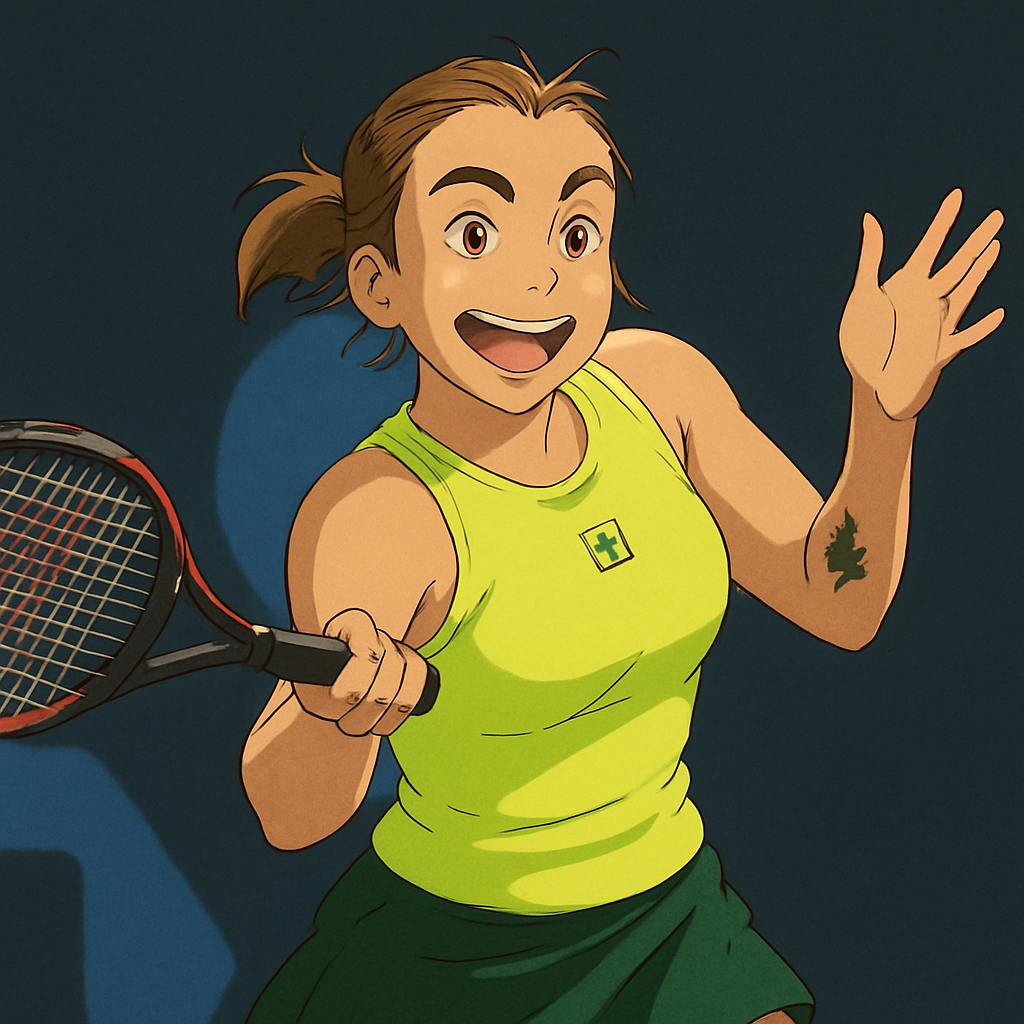
BRISBANE — The scoreline was as emphatic as they come: 6-0, 6-1. The duration was a brisk 47 minutes. For Aryna Sabalenka, the world No. 2, her opening match of the 2024 season at the Brisbane International was a statement of intent, a ruthless demolition of Italian qualifier Lucia Bronzetti. Yet, in the aftermath of this near-perfect performance, the reigning Australian Open champion’s prevailing emotion was not triumph, but a palpable and unexpected melancholy.
A Dominant Display, A Complex Victory
Sabalenka’s power game was in full, devastating flow from the first point. She struck 14 winners to Bronzetti’s one, won 86% of points on her formidable first serve, and broke the Italian’s serve five times. Bronzetti, ranked 65th in the world, was simply overwhelmed, unable to find any rhythm or answer to the Belarusian’s relentless aggression from the baseline. It was the kind of performance that sends a chilling message to the rest of the tour ahead of the Australian Open. However, when Sabalenka sat down for her post-match press conference, the narrative swiftly shifted from her tennis to her feelings.
“I feel a little bit sad,” Sabalenka admitted, her words hanging in the air with a poignant weight. “I know how it feels to lose like that. I know that feeling. I really feel for her.” This display of empathy, rare in the cutthroat world of elite sport, revealed a champion who, while fiercely competitive, has not lost touch with the human dimension of the game. She continued, “I was just, like, trying to finish the match as soon as possible without playing any extra points, you know, trying to get it done.”
The Empathy of a Champion
Sabalenka’s sentiment is rooted in her own experiences. While she is now a dominant force, her career has not been without its struggles and heavy defeats. She has spoken openly about the mental challenges she faced earlier in her career, including a well-documented battle with the “demons” of her serve that led to a staggering number of double faults. To have walked through that fire and emerged as a two-time Grand Slam champion gives her a unique perspective on the psychological toll of a one-sided loss.
“I’ve been in this situation before,” she explained. “When you’re on the court and nothing is working, and you feel like you have no control, it’s one of the worst feelings as a tennis player.” This acknowledgment transforms her victory from a simple statistical dominance into a moment of shared understanding. It underscores a maturity that extends beyond her powerful groundstrokes—a champion’s mindset that balances the hunger to win with respect for the opponent’s struggle.
The reaction from the tennis community was one of admiration for Sabalenka’s grace. Fans and commentators noted that such empathy, especially after such a commanding win, is a hallmark of true sportsmanship. It also highlighted the stark contrast between the external perception of a “perfect” match and the internal, more nuanced reality experienced by the players themselves.
The Mental Game: Beyond the Scoreboard
Sabalenka’s comments in Brisbane offer a fascinating window into the psychological complexities at the highest level of tennis. Winning easily is often seen as the ideal scenario, but it presents its own unique mental challenges:
- Maintaining Focus: It can be surprisingly difficult to sustain intensity when the match is not competitive.
- Managing Empathy: As Sabalenka displayed, feeling for an opponent can be a distraction if not properly channeled.
- Preparing for Tougher Tests: A blowout win provides little information on how to handle pressure in later rounds.
For Sabalenka, this mental fortitude has been a key pillar of her recent success. After her breakthrough Australian Open title in 2023, she reached the final at the US Open and the semi-finals at both Roland Garros and Wimbledon, demonstrating remarkable consistency at the majors. Her ability to compartmentalize emotion—to feel for Bronzetti but still execute her game plan mercilessly—is a testament to the work she has done with her sports psychologist.
A Statement Start to 2024
Despite the bittersweet feelings, the match served its primary purpose flawlessly. After an off-season of training, Sabalenka needed match rhythm and a confidence-boosting start. She achieved both without expending significant physical energy. “I’m super happy with the level I played,” she clarified, ensuring her sadness was not mistaken for dissatisfaction. “It’s always tough to start the season after a pre-season, you never know what to expect from yourself.”
The victory in Brisbane was a clear declaration that she has carried her formidable 2023 form into the new year. With the Australian Open—a tournament where she is undefeated in 2023 and now the defending champion—just weeks away, establishing this kind of momentum is crucial. Her main rivals, including Iga Świątek and Elena Rybakina, will have taken note not just of the scoreline, but of the composed and complete nature of her performance.
Sabalenka’s path in Brisbane continued beyond Bronzetti, but the conversation sparked by her opening match lingered. It raised questions about the emotional landscape of professional athletes, often hidden behind statistics and results. In a sport where players are frequently portrayed as warriors locked in solitary combat, Sabalenka’s vulnerability was a powerful reminder of their shared humanity.
Conclusion: Power Tempered with Perspective
Aryna Sabalenka’s 47-minute masterclass in Brisbane will be logged in the record books as a straightforward, dominant win. Yet, the true story of the match was told in the press room afterwards. In admitting her sadness, Sabalenka displayed a depth of character that resonates far beyond the confines of a tennis court. She proved that it is possible to be both an apex predator in competition and a compassionate person who remembers the sting of defeat. This blend of relentless power and genuine empathy may well be the defining quality that sustains her at the pinnacle of the game. As she heads to Melbourne to defend her crown, she does so not just as a fearsome ball-striker, but as a champion with a profound understanding of the sport’s emotional weight—a combination that makes her an even more formidable and respected opponent.