
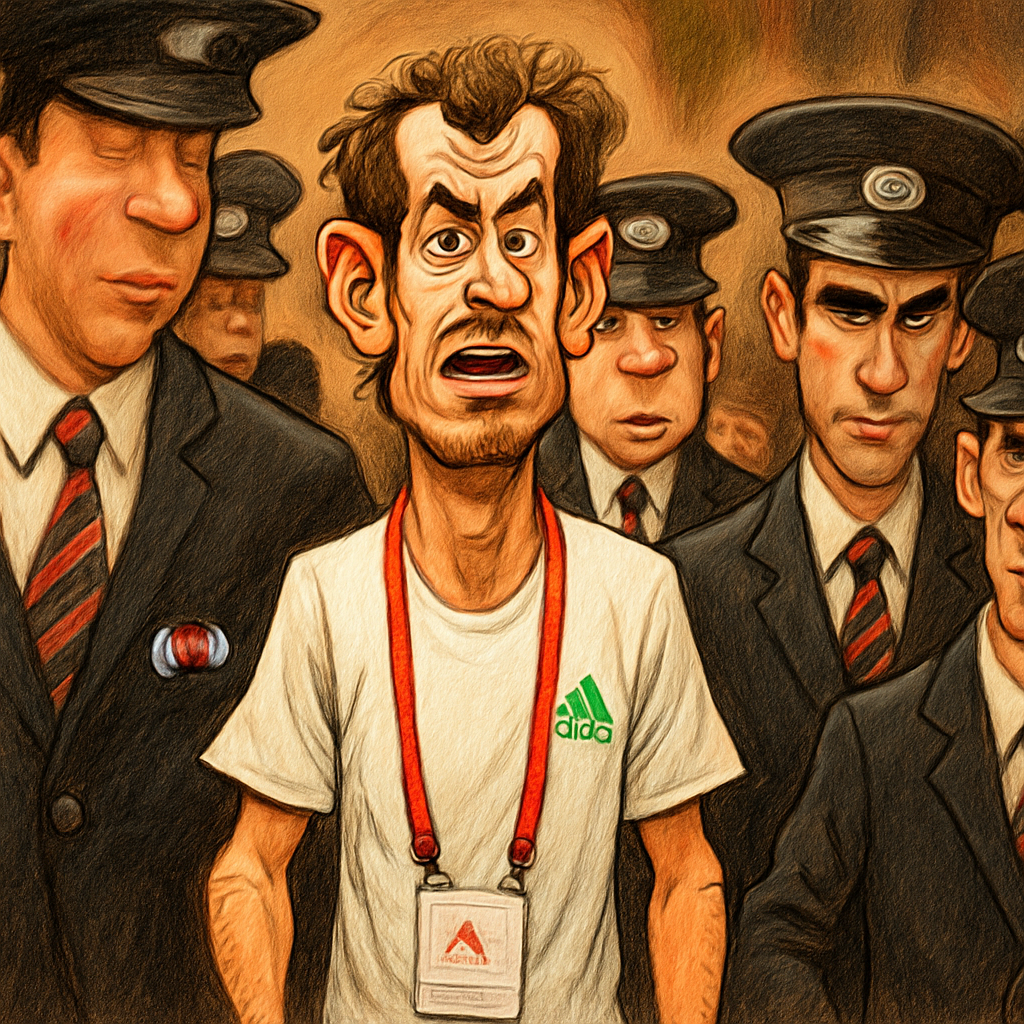
LONDON — In a candid and surprising revelation, tennis legend Andy Murray has shared a story from his youth that involved being pulled over by police—only to be given what amounted to a free pass to break the law. The three-time Grand Slam champion recounted the bizarre incident during a recent interview, offering a glimpse into the unique pressures and surreal moments that can accompany life in the sporting spotlight.
The story dates back to the mid-2000s, shortly after Murray, then a rising star, had secured his first major sponsorship deal with a prominent watch brand. The young Scot was driving his new, high-performance car—a symbol of his burgeoning success—when he was flagged down by police officers. What followed was a surreal interaction that highlights the strange intersection of celebrity, youth, and authority.
A Routine Stop Takes an Unexpected Turn
Murray explained that he was initially nervous when he saw the police car's lights in his rearview mirror. As any young driver would be, he was running through a mental checklist, wondering if he had been speeding or committed some other minor traffic violation. He pulled over, expecting a standard procedure of license and registration checks, potentially followed by a ticket.
However, the encounter quickly deviated from the script. The officers recognized the young tennis prodigy immediately. After the initial formalities, the conversation shifted from traffic infractions to tennis, with the officers asking about his recent matches and his potential on the court. Murray, relieved but puzzled, answered their questions politely. Then came the unexpected twist.
As the conversation wound down, one of the officers leaned in and said, "Look, we're not going to do you for anything this time. But just take it easy, alright?" The implication was clear: they had stopped him for a reason—likely speeding—but were choosing to let him off with a verbal warning, fueled by their recognition of his celebrity status.
The "Pass" and Its Lasting Impression
The most striking part of the story, which Murray reflected on with a mix of amusement and unease, was the officer's parting comment. He recalls them saying something to the effect of, "Consider this a pass." This wasn't just a simple warning; it was framed as a one-time exemption, a hall pass granted due to his fame.
Murray admitted that at the time, as a teenager flush with early success and the invincibility that often accompanies it, he might have brushed off the incident. But looking back, the experience left a more complex impression. He understood it was a gesture of support from local officers who were perhaps proud to see a British athlete doing well, yet he also recognized the inherent double standard it represented.
"It was a very strange feeling," Murray recounted. "On one hand, you're relieved you're not getting a fine or points on your license. On the other, you're acutely aware that this isn't normal, that it's happening because of who you are, not because you didn't do anything wrong. It sits with you."
Reflections on Fame and Responsibility
Now a father and an elder statesman of the sport, Murray views the incident through a more mature lens. He sees it as a minor but telling example of the ways in which fame can distort reality and create a bubble around young athletes. The "pass" was a small token, but it symbolized a larger potential for celebrities to become detached from everyday rules and consequences.
He expressed gratitude that he had a strong family unit and team around him to provide grounding during his rapid ascent. "When you're young and things start happening quickly, you need people to keep you level-headed," he said. "Those small moments, like being let off by the police, could easily make you think you're above things if you're not careful. I was lucky to have people who wouldn't let that happen."
The story also prompted Murray to consider the broader responsibility that comes with a public platform. He has since become known for his thoughtful, principled stands on issues like gender equality in sports, often using his voice to advocate for what he believes is right, regardless of whether it's popular.
A Lesson in Groundedness
This early brush with preferential treatment seems to have reinforced in Murray the importance of staying grounded. He has often been described as one of the most "normal" or down-to-earth top athletes, an attribute fans and peers alike admire. This anecdote suggests that part of that normalcy comes from a conscious recognition of the abnormal privileges fame can bring, and a decision not to let them define him.
The key takeaways from Murray's unusual experience, as he now sees them, include:
- The Surreal Nature of Celebrity: Everyday interactions can become skewed, requiring a strong internal compass.
- The Importance of a Grounding Team: Having people who treat you normally is invaluable.
- Personal Accountability: Ultimately, fame does not absolve one from personal responsibility.
Conclusion: More Than Just a Story
Andy Murray's tale of being pulled over is more than just an amusing celebrity anecdote. It serves as a microcosm of the challenges young stars face in navigating a world that often treats them by a different set of rules. His willingness to share the story, and his reflective analysis of it, underscores the maturity and self-awareness that have become hallmarks of his character.
"I don't tell that story as a brag, definitely not," Murray clarified. "If anything, it's a reminder of how odd things can get. You have to be able to laugh at it, but also learn from it. The law is the law, and a 'pass' isn't something anyone should expect or feel entitled to, no matter what they do for a living."
In the end, the incident is a footnote in the career of a champion defined by grit and resilience, not privilege. But it offers a fascinating insight into the man behind the racquet—a global superstar who remains, at his core, deeply aware of the real world and his place in it.