
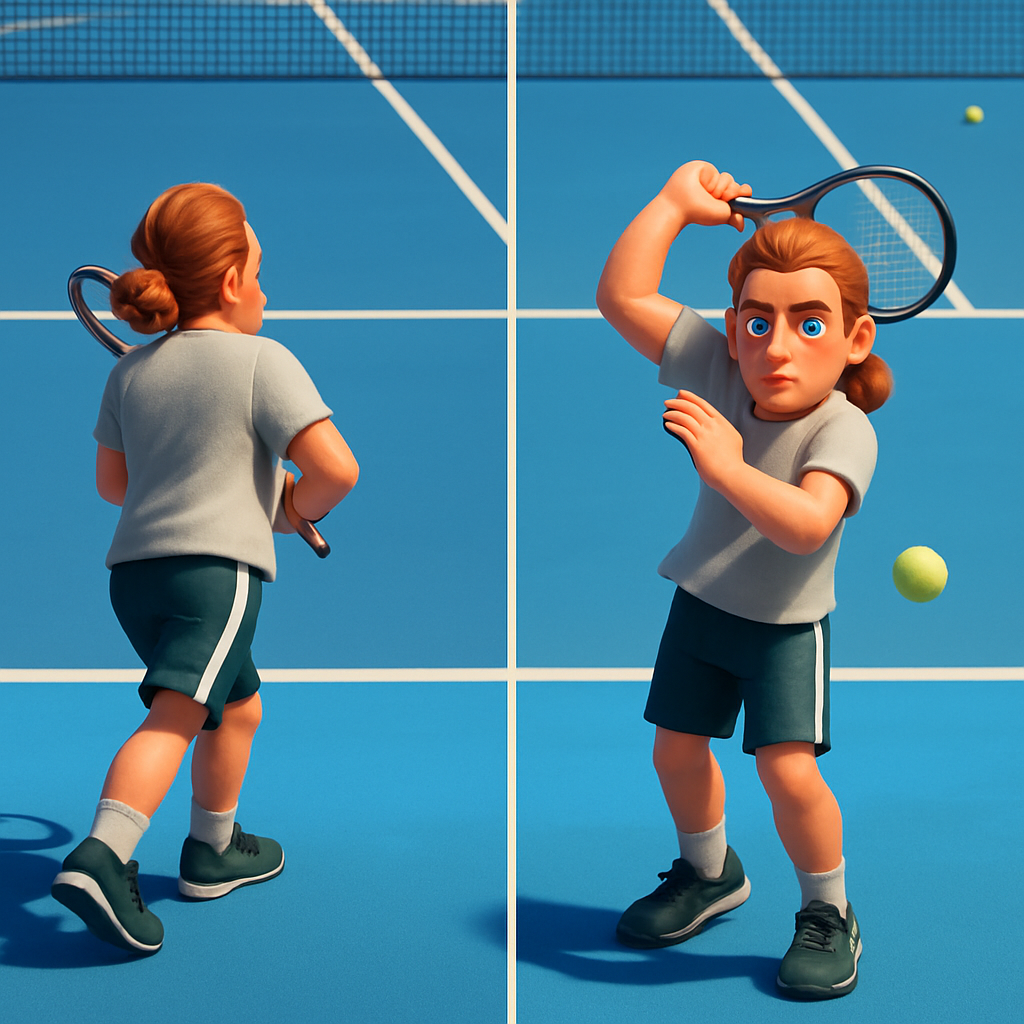
MELBOURNE — The Australian Open is renowned for its scorching heat and high-stakes drama, but this year, a fiery incident during a practice session has captured headlines before the main draw even began. World No. 6 Alexander Zverev found himself at the center of controversy after a moment of intense frustration saw him hurl his racket towards the stands, narrowly missing spectators, in a shocking breach of on-court decorum.
The incident occurred on the practice courts at Melbourne Park, where Zverev was engaged in a pre-tournament hitting session. According to multiple eyewitness reports and video footage that quickly circulated on social media, the German star became increasingly agitated during a rally. After missing a shot, he unleashed his anger, violently slamming his racket onto the court surface before picking it up and flinging it in the direction of the crowd that had gathered to watch.
The racket sailed over the net and skidded perilously close to the feet of fans seated courtside. While no one was injured, the act was met with immediate gasps and disapproval from onlookers. One fan captured the moment on video, stating, "It was terrifying. It came out of nowhere and just flew right at us. He wasn't aiming at anyone specifically, but the lack of control was shocking."
A Pattern of On-Court Outbursts
This is not the first time Zverev's temper has flared in a public setting. The 2020 US Open finalist has a history of racket abuse and verbal outbursts, which has previously resulted in fines and warnings from tennis governing bodies. However, directing equipment towards spectators represents a significant escalation. The ATP's rulebook is clear on player conduct, particularly regarding actions that endanger others. A Grand Slam tournament, operating under the ITF Grand Slam rulebook, has even greater latitude to impose sanctions.
Tennis Australia, the organizer of the Australian Open, was swift to respond. Tournament director Craig Tiley confirmed that the matter was under immediate review. In a statement, Tennis Australia emphasized, "The safety and enjoyment of our fans is our absolute priority. We are aware of the incident and are investigating it thoroughly." The incident puts pressure on officials to take a firm stance, balancing the enforcement of rules with the management of a top player's participation in the year's first major.
Zverev's Response and Fan Backlash
Initially, Zverev did not address the incident publicly. He proceeded with his scheduled media day, fielding questions primarily about his form and prospects in the tournament. However, as the video gained traction and criticism mounted, he was compelled to comment. In a brief statement to reporters, Zverev offered a terse apology, saying, "It was unacceptable behavior on my part. I let my frustration get the better of me in a moment, and I apologize to the fans who were there."
The apology did little to quell the backlash from many within the tennis community. Fans and pundits alike took to social media and commentary platforms to express their dismay. The core criticism centered on the profound lack of regard for spectator safety. Former player and now analyst Pam Shriver commented on broadcast, "Throwing a racket is one thing. Throwing it towards people who have paid to be there is on another level entirely. There must be consequences."
The potential consequences for Zverev could be severe, ranging from a substantial fine to a possible suspension. Key factors officials will consider include:
- The clear danger posed to spectators, regardless of intent.
- His previous record of on-court conduct violations.
- The global visibility of the incident.
The Broader Context: Pressure and Professionalism
The incident raises perennial questions about pressure in professional sports and the standards expected of elite athletes. While the intensity of competition is understood, the line between passionate frustration and dangerous conduct is non-negotiable. Players have a responsibility to manage their emotions in a way that does not compromise the safety of ball kids, officials, or fans. The practice court, though less formal, is still a professional workspace with public access.
This episode also casts a shadow over what has been a period of professional resurgence for Zverev. After a devastating ankle injury at the 2022 French Open, he has worked diligently to return to the top of the game, winning two titles in 2023 and leading Germany to the United Cup victory just weeks before the Australian Open. This behavioral lapse threatens to undermine that narrative of resilience and refocus the conversation on his volatility.
A History of Scrutiny Off the Court
Complicating the public perception of this incident is Zverev's ongoing off-court legal situation. He is scheduled to face a public trial in Berlin in May 2024 over allegations of assault made by a former girlfriend, which he has consistently and vehemently denied. While that case is entirely separate, it contributes to a fraught public image. The racket-throwing incident, for many observers, becomes another data point in a pattern of concerning behavior, rightly or wrongly linking the personal and professional spheres.
Conclusion: A Moment of Reckoning
As the Australian Open main draw commences, Alexander Zverev will undoubtedly try to channel his focus onto his tennis. However, the specter of his actions on the practice court will linger. The tournament officials now face a critical test of their disciplinary protocols. A slap on the wrist would be seen as preferential treatment for a star player; a harsher penalty would send a clear message about the inviolability of fan safety.
Ultimately, the incident serves as a stark reminder of the fine line athletes walk. The fire that fuels competitive greatness can, in an unguarded moment, boil over into something destructive. For Zverev, the path forward requires not just powerful groundstrokes and tactical acumen, but a demonstrable commitment to controlling the temper that, in a split second, sent a racket flying towards the very people who support the sport. The true test will be whether this moment becomes a regrettable footnote or a catalyst for genuine change in his professional conduct.