
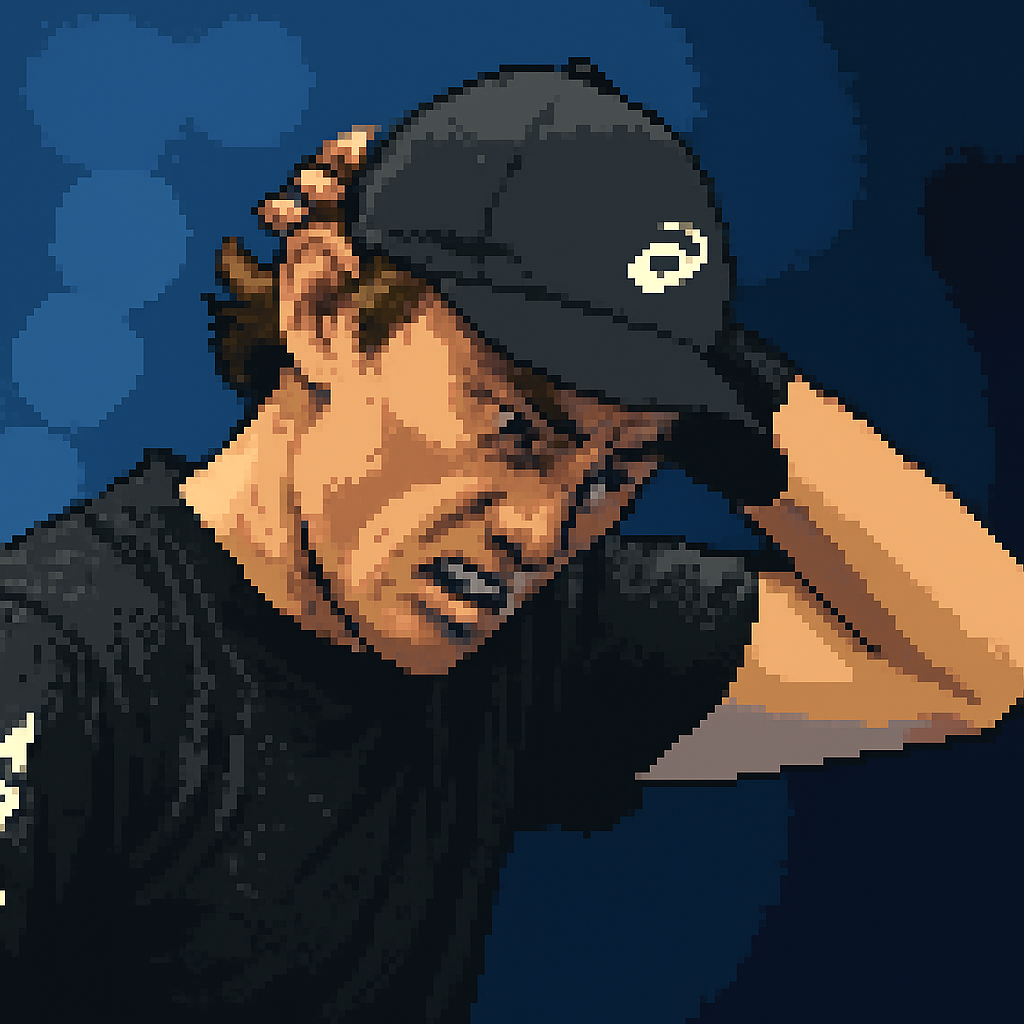
TURIN — The vibrant, high-energy atmosphere of the Pala Alpitour in Turin felt like a cruel contrast to the emotional state of Alex de Minaur. Just minutes after a gut-wrenching defeat to Taylor Fritz, the Australian star sat in his press conference, his usual fiery demeanor replaced by a hollowed-out exhaustion. He had left everything on the court, but it wasn't enough, and the aftermath was a descent into what he could only describe as a place of "dark thoughts."
The 6-4, 6-3 loss to the American in his final Green Group match at the 2023 ATP Finals was more than just a season-ending defeat; it was a brutal conclusion to a dream. De Minaur, the first Australian to qualify for the year-end championships since Lleyton Hewitt in 2005, had fought valiantly in a three-set thriller against Jannik Sinner and pushed Novak Djokovic to the limit. He needed a win against Fritz to keep his semi-final hopes alive.
For a set and a half, he was in the fight, but a crucial missed opportunity in the second set proved to be the psychological breaking point. The usually indefatigable competitor was suddenly vulnerable, and the weight of the moment came crashing down. "It's a tough one to swallow," de Minaur confessed, his voice low and heavy with disappointment.
The Turning Point and the Descent
The match's pivotal moment arrived with Fritz serving at 3-4, 0-40 in the second set. De Minaur had three golden opportunities to break back and level the match, a scenario that would have completely shifted the momentum. He created the openings with his characteristic grit and defensive prowess, but on each break point, Fritz found a way to respond, ultimately holding serve in a devastating five-deuce game that lasted over 13 minutes.
The emotional toll was immediately visible. The spring in de Minaur's step vanished. His trademark fist-pumps and cries of "Come on!" were replaced by slumped shoulders and a distant stare. Fritz, sensing the shift, pounced, breaking de Minaur's serve in the very next game to seal the match. The Australian's heroic campaign in Turin was over.
In his post-match press conference, de Minaur was startlingly candid about his mental state. "It's a dark place to be after a match like this," he revealed. "You question yourself. You have all these dark thoughts. You feel like you're alone, you feel like all the hard work you've put in is for nothing. It's not a fun place to be."
The Psychological Battle of Elite Sport
De Minaur's raw honesty provided a rare, unfiltered look into the psychological warfare that elite athletes, particularly in individual sports like tennis, wage against themselves. The "Demon" persona he cultivates on court—the relentless, fiery competitor—masks the same vulnerabilities that plague anyone facing monumental pressure and public failure. His admission highlighted a critical, often overlooked aspect of professional sport:
- The immense pressure of representing a proud tennis nation.
- The loneliness of defeat, where a player bears the full weight of the result.
- The mental toll of a long, grueling season culminating in a high-stakes event.
- The fragility of confidence at the highest level.
This was not the first time de Minaur had spoken about the mental challenges of the tour, but it was by far his most poignant description. He articulated the feeling of a dream slipping away, not through a lack of effort, but through the finest of margins that separate victory from defeat at the ATP Finals, an event featuring only the world's best eight players.
A Season of Highs Ending in a Painful Low
The context of the loss made it all the more heartbreaking. The 2023 season had been a career-best for de Minaur. He had captured two ATP titles (Acapulco and Atlanta), reached a career-high ranking of World No. 11, and scored monumental wins over top-tier opponents, including a stunning victory over Novak Djokovic at the United Cup. His qualification for Turin was the just reward for a year of consistent, high-level performance.
His performances in the group stage, even in defeat, had earned him widespread respect. He pushed the eventual champion, Novak Djokovic, in a high-quality three-set battle and electrified the Italian crowd in his match against local hero Jannik Sinner. He had proven he belonged among the elite. Yet, in the immediate aftermath of the Fritz match, none of those achievements provided any solace.
"Right now, it feels like the world is ending," de Minaur said, capturing the all-consuming nature of the moment. "It's tough to see any positives. You feel like you've let yourself down, you've let your team down, you've let your country down. It's a tough pill to swallow."
The Road to Recovery and Future Resolve
Athletes of de Minaur's caliber are defined not by their setbacks, but by their response. While he was immersed in the immediate pain, he also displayed the self-awareness that suggests a strong capacity for resilience. He acknowledged that these dark periods, while intense, are temporary. The support system of his team, his family, and his girlfriend, British No. 1 Katie Boulter, would be crucial in the days that followed.
The experience in Turin, as painful as it was, also serves as a vital reference point. It was his first taste of the ATP Finals, an environment with a unique pressure cooker atmosphere. The loss to Fritz, and the psychological battle that ensued, provides a clear area for growth. Learning to manage those pivotal moments and the subsequent emotional spiral will be a key focus for the off-season.
As the dust settles, the perspective will inevitably shift. The "dark thoughts" will recede, replaced by the clarity that comes from distance. The 2023 season will be viewed not for its painful ending in Turin, but for its monumental successes. De Minaur solidified his status as a top-tier player and a leader of the next generation. His fighting spirit and raw honesty have only deepened the connection with his fans.
The heartbreaking defeat at the ATP Finals is not an end point for Alex de Minaur; it is a brutally difficult lesson on the path to greater achievements. The "dark place" he described is a testament to how much he cares, and that burning desire to compete and win is the very fuel that will propel him back onto the court, stronger and more determined than ever in 2024.