
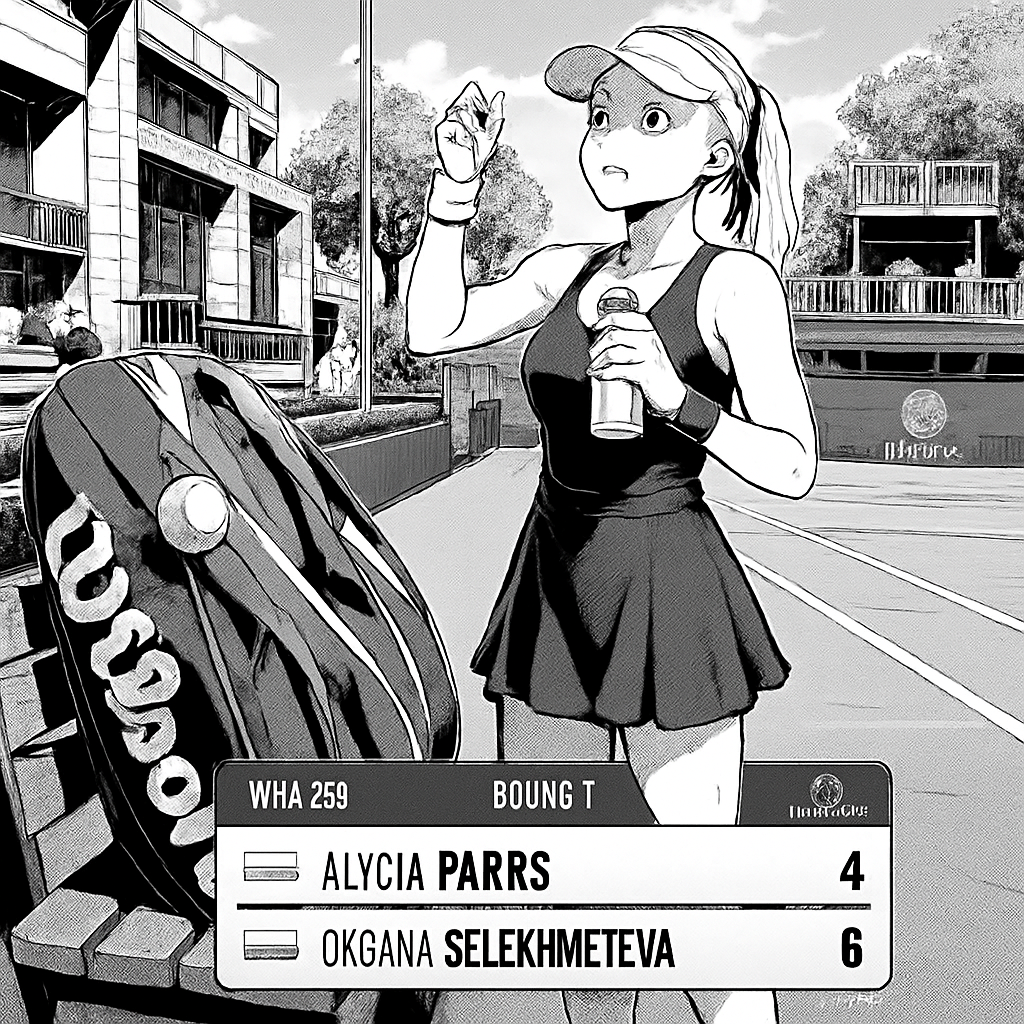
AUSTIN, Texas — The Women's Tennis Association (WTA) has been forced to issue a public response after the Russian flag was displayed next to a player's name during a live broadcast of the ATX Open, a WTA 250 event in Austin, Texas. The incident, which occurred during coverage of the tournament's early rounds, directly contravenes the sport's long-standing policy banning Russian and Belarusian national symbols in the wake of the war in Ukraine.
The graphic, shown on the Tennis Channel broadcast, appeared alongside the name of Russian player Kamilla Rakhimova during her first-round match. The WTA, along with the Association of Tennis Professionals (ATP) and the International Tennis Federation (ITF), instituted a ban on Russian and Belarusian flags and anthems in March 2022, requiring athletes from those nations to compete as neutral individuals without national identification.
In a statement provided to various media outlets, the WTA attributed the broadcast error to a third-party data provider, clarifying that the violation was not the fault of the tournament organizers or the WTA itself. The statement read, "This was a broadcast error caused by a third-party data provider and not the fault of the tournament or the WTA."
A Technical Glitch with Political Repercussions
The incident, while described as a technical error, underscores the heightened sensitivity and logistical complexity surrounding the participation of Russian and Belarusian athletes in international sport. Since the invasion of Ukraine, tennis has walked a tightrope, attempting to balance a principled stance against the war with a commitment to individual athlete participation based on merit.
The neutral athlete policy mandates that players from Russia and Belarus cannot be represented by their national flags or anthems at any official tournament ceremonies, draws, or broadcast graphics. They are also prohibited from expressing support for the war or the regimes of their home countries. The Austin broadcast failure represented a visible breach of this carefully managed protocol.
Reaction was swift on social media, with many viewers, particularly from Ukraine and its supporter nations, expressing outrage and perceiving the error as a normalization of Russian presence in sport. The incident also drew immediate criticism from Ukrainian players and officials, who have consistently voiced their distress at competing against opponents from the aggressor nations.
The Broader Context of Neutrality in Tennis
The WTA's policy mirrors that of most global sports federations, which have chosen athlete neutrality over outright bans. This approach has been a source of significant tension within the tennis community. Ukrainian players, including former top-25 competitor Lesia Tsurenko, have spoken openly about the psychological toll of competing on a tour that includes Russian and Belarusian athletes.
Tsurenko recently filed an amended lawsuit against the WTA and its chairman, Steve Simon, alleging emotional distress and a breach of promised consequences for players supporting the war. In this context, the broadcast error in Austin is not seen as an isolated mistake but as a symptom of a deeper conflict within the sport's governance.
The key elements of the current neutrality policy for Russian and Belarusian tennis players include:
- Competing under a neutral white flag or no flag at all.
- Being listed in official draws without national designation.
- Prohibition on any symbols or clothing representing their nations.
- A strict ban on verbal or written support for the invasion of Ukraine.
Previous Incidents and Enforcement Challenges
This is not the first time the flag ban has been challenged. Similar incidents have occurred at other tournaments, often stemming from broadcast or graphics errors. Furthermore, policing player expression has proven difficult. While no top player has openly endorsed the war, some, like Russia's Daniil Medvedev, have made vague calls for "peace" without condemning the invasion, a stance that frustrates Ukrainian athletes.
The enforcement burden largely falls on tournament organizers and broadcast partners, who must vet graphics packages and ensure compliance. The WTA's statement pinning the Austin error on a "third-party data provider" highlights the decentralized nature of modern sports production, where multiple vendors feed information into the global broadcast feed, creating potential points of failure.
Official Responses and Moving Forward
Following the incident, the Tennis Channel, which produced the broadcast, also issued an apology. A spokesperson stated, "We sincerely apologize for the error. It was unintentional and we have taken steps to ensure it does not happen again."
For the WTA, the immediate task is damage control. The organization reiterated its official position on the war, stating, "The WTA has consistently condemned Russia's invasion of Ukraine and continues to follow the policies set forth by the broader tennis industry." However, for critics, the repeated "technical errors" undermine the credibility of the policy and are seen as a form of silent erosion.
The incident arrives at a precarious time for tennis diplomacy. With the 2024 Paris Olympics approaching, where Russian and Belarusian athletes will again be allowed to compete as Individual Neutral Athletes (AINs) under strict conditions, the pressure on sports bodies to perfectly execute these neutrality rules is immense. Every misplaced flag fuels the argument that neutrality is a slippery slope toward normalization.
In conclusion, the appearance of the Russian flag in Austin, though reportedly a technical glitch, serves as a potent reminder of the unresolved tensions within tennis. It highlights the practical challenges of enforcing geopolitical sanctions in a global sport and the profound emotional impact such symbols carry. While the WTA and its partners have moved to correct the error, the episode reinforces the perception among Ukrainian players and their supporters that the tour's commitment to a truly neutral environment is fragile, and that the psychological battlefield extends far beyond the court's baselines.