
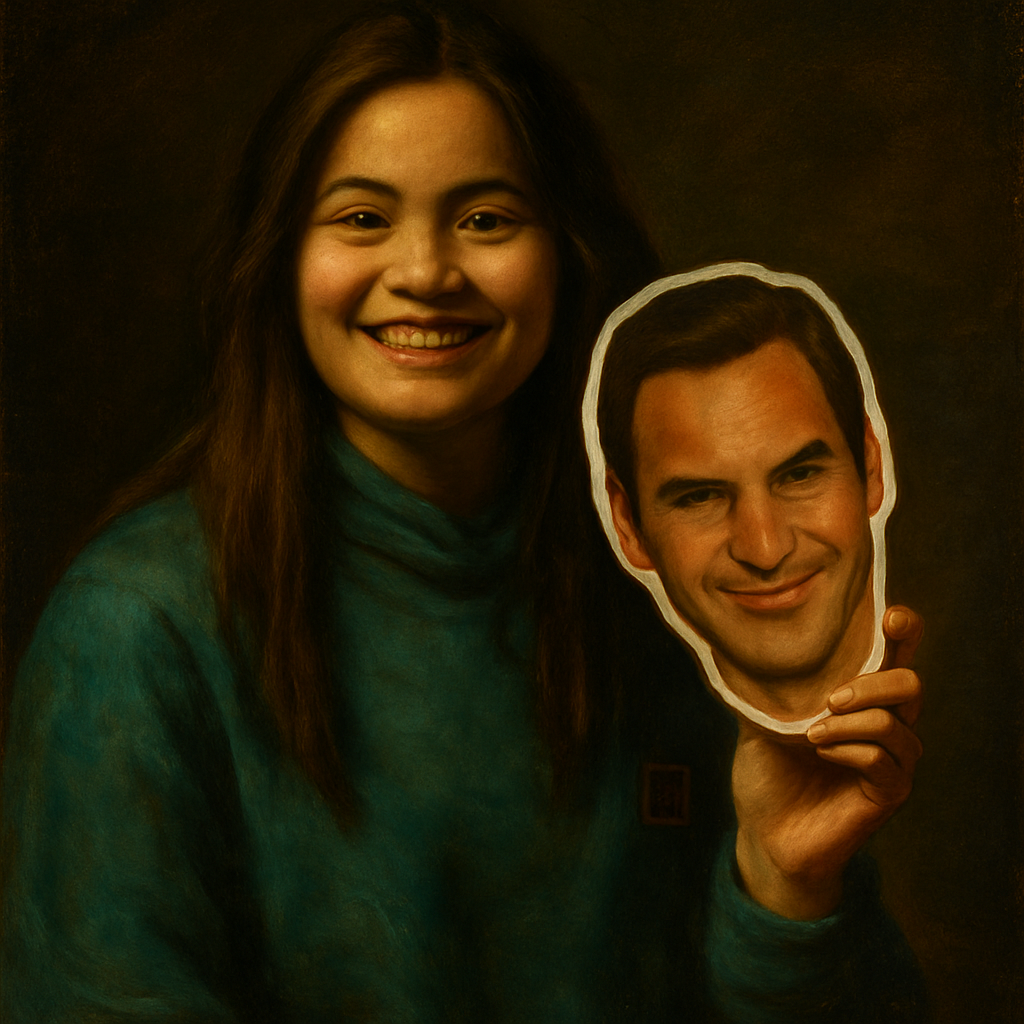
In the high-stakes world of sports marketing, a sponsorship deal with a global apparel giant is more than just a paycheck; it's a statement of brand alignment, marketability, and legacy. When that brand is Nike, the stakes are even higher. Two recent signings have captured the tennis world's attention for their contrasting narratives: the legendary Roger Federer and the meteoric Emma Raducanu. While both are now ambassadors for the iconic Swoosh, the nature of their deals—and what they signify—could not be more different, highlighting a fascinating evolution in how brands value athletes.
The GOAT's Grand Finale: A Lifetime Partnership
Following his retirement in 2022, Roger Federer didn't simply fade from the commercial landscape. In a move that stunned the industry, Nike and Federer announced the termination of their 24-year partnership, a relationship that had defined tennis style for a generation. However, this was not an ending, but a strategic pivot. Federer swiftly entered into a landmark, long-term deal with Japanese apparel brand Uniqlo, reportedly worth $300 million over 10 years. Yet, in a twist that speaks to his unparalleled status, Nike has now welcomed Federer back into the fold with a unique, non-apparel partnership. This new role focuses on collaborative product design, brand storytelling, and leveraging Federer's global influence to inspire the next generation of athletes. As one insider noted, "Roger transcends sport. His value to a brand like Nike is now in his creative vision and his legacy, not just his on-court performance."
The British Phenom: A Bet on Explosive Potential
Emma Raducanu's journey to a Nike deal is a tale of instant, stratospheric success. After her historic 2021 US Open victory as a qualifier, she became one of the most sought-after properties in sports. After initial partnerships with Nike and later, a high-profile switch to New Balance, Raducanu has now returned to the Swoosh with a major, multi-year agreement. Reports suggest the deal is worth millions annually, a testament to Nike's belief in her long-term marketability despite subsequent injury struggles. The deal is a classic investment in youth and potential, targeting a new, global, and digitally-native fanbase. Raducanu herself expressed her excitement, stating, "It's a dream to be back with Nike. Their commitment to innovation and supporting athletes resonates deeply with me as I build this next chapter of my career."
A Side-by-Side Comparison of Two Eras
Placing these two deals side-by-side reveals the shifting sands of sports endorsement. Federer's arrangement is legacy-based, creative, and arguably "post-career." Raducanu's is potential-based, performance-oriented (with expectations of a return to top form), and squarely focused on the future. The key differences can be summarized as follows:
- Career Stage: Federer is a retired legend building a post-playing empire. Raducanu is a young star navigating the early, turbulent years of a promising career.
- Deal Focus: Federer's is on collaboration, design, and brand ambassadorship. Raducanu's is on wearing the kit, performing on court, and fronting campaigns.
- Market Appeal: Federer offers global, cross-generational appeal and timeless class. Raducanu offers explosive growth potential in key markets like the UK and Asia, and a connection with Gen Z.
- Risk Profile: Federer is a virtually zero-risk, stable asset. Raducanu represents a higher-risk, higher-reward bet on future Grand Slam success and consistent ranking.
The Financial Architecture: Guarantees vs. Incentives
While exact figures are closely guarded, industry experts suggest the financial structures of these deals are fundamentally different. Federer's new Nike partnership, much like his Uniqlo deal, is likely heavily guaranteed, reflecting his established value. Raducanu's contract, while lucrative, almost certainly contains significant performance-related bonuses tied to rankings, tournament wins, and Grand Slam performances. This is standard for rising stars and protects the brand while incentivizing the athlete. As a sports marketing analyst explained, "Federer is being paid for who he is and what he's done. Raducanu is being paid for who she is, but with a strong eye on what she is expected to do."
What This Signals for the Future of Tennis Sponsorship
The concurrent signing of Federer and Raducanu by Nike is a masterclass in portfolio management. It shows a brand covering all its bases:
1. Honoring Legacy: By bringing Federer back, Nike acknowledges and monetizes the enduring power of a true great, ensuring his aesthetic and ethos remain partly within the Nike universe.
2. Betting on the "Next Big Thing": The Raducanu signing is a bold statement of faith in a player whose commercial appeal already outpaces her current WTA ranking, hoping to ride her wave back to the top.
3. Diversifying Appeal: Together, they allow Nike to dominate conversations across demographics—from fans who grew up with Federer to a new wave of supporters drawn to Raducanu's story.
This dual strategy reflects a broader trend where brands seek both the stability of established icons and the viral potential of breakthrough stars. In an era where an athlete's social media footprint and personal narrative are as scrutinized as their backhand, Raducanu's deal is a testament to the power of a compelling story. Federer's, meanwhile, is a lesson in how a career's worth of excellence can be parlayed into a second act of immense influence.
Conclusion: Two Paths, One Swoosh
Roger Federer and Emma Raducanu now share a sponsor, but they represent two distinct chapters in the playbook of athletic endorsement. Federer's deal is the crowning of a king emeritus, a lifetime achievement award that transitions into a creative partnership. Raducanu's is the anointing of a potential queen, a massive investment in a future that the brand hopes to help shape. One is a celebration of a completed masterpiece; the other is a bold stroke on a largely blank canvas. Nike, in securing both, demonstrates a sophisticated understanding that in today's market, value is not a monolith. It exists in the polished legacy of the past and the thrilling, uncertain promise of the future. For fans and marketers alike, watching how these two parallel journeys unfold under the same banner will be one of the most intriguing narratives in sports business.