
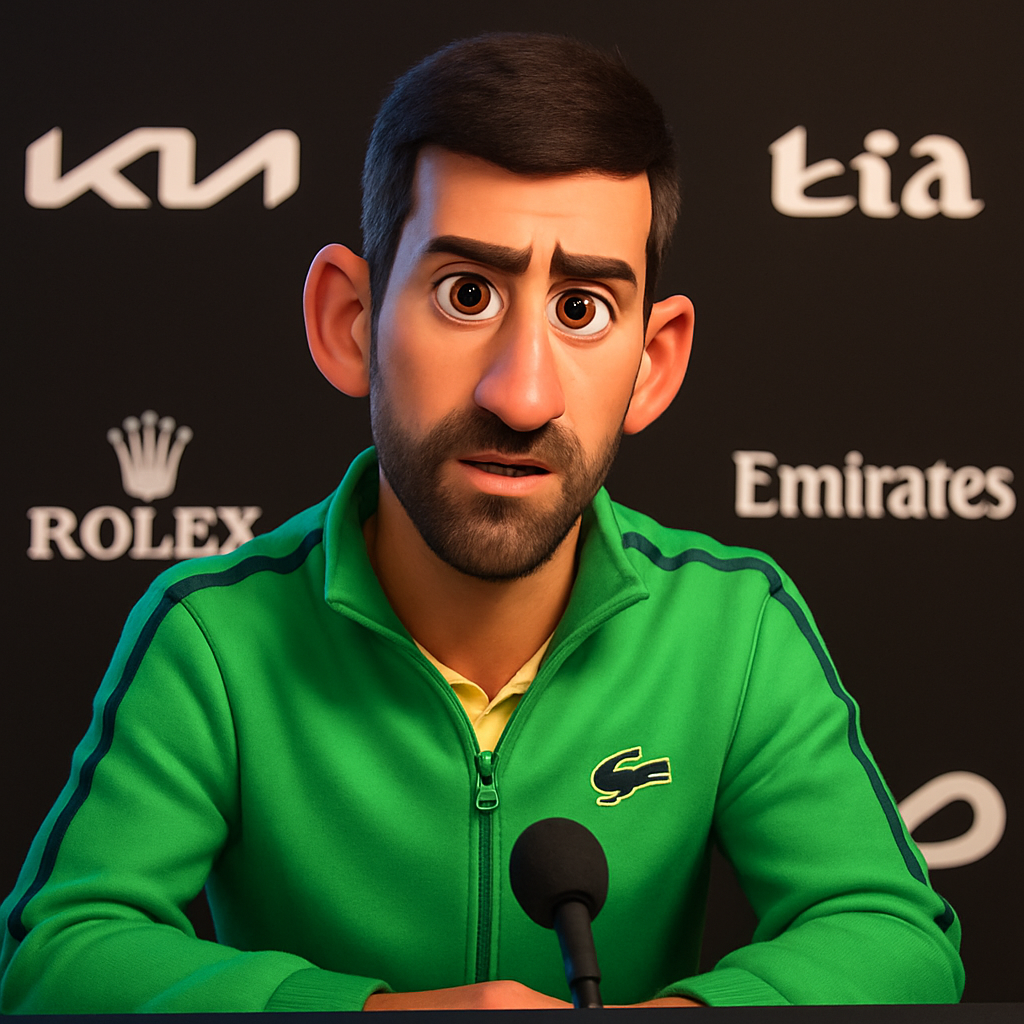
LONDON — In the pantheon of tennis, Novak Djokovic’s statistical claim to the title of Greatest of All Time (GOAT) appears unassailable. With a record 24 Grand Slam singles titles, more weeks at world No. 1 than any player in history, and a unique double Career Grand Slam, the Serbian’s resume is the envy of the sport. Yet, according to a voice intimately connected to his greatest rival, the numbers don't tell the full story. Rafael Nadal’s uncle and former coach, Toni Nadal, has delivered a stunning assessment, suggesting Djokovic is "clearly worse" than a rival who has never won a major.
The Provocative Claim from the Nadal Camp
In a recent column for Spanish newspaper El País, Toni Nadal, the architect of his nephew’s legendary career, ventured beyond the usual Djokovic-Nadal-Federer debate to make a more controversial comparison. He posited that Djokovic’s game, for all its perfection, is inferior to that of the mercurial Frenchman Gaël Monfils. "If we talk about pure tennis, Monfils is clearly better than Djokovic," Toni wrote. He elaborated that while Djokovic’s mental fortitude and competitive consistency are peerless, "in terms of quality of shots, I have no doubt: Monfils is superior." This assertion immediately sent shockwaves through the tennis community, juxtaposing the sport’s most decorated champion with a player known for spectacular athleticism and shot-making but whose sole major final appearance came 15 years ago.
Toni Nadal’s argument hinges on a distinction between "pure tennis" and "competitive tennis." He credits Djokovic as the ultimate competitor, a master of pressure, tactics, and error reduction. However, he suggests that if you isolate raw technical ability—the power of serve, the explosiveness of movement, the variety of strokes—Monfils possesses a higher ceiling. "Novak is the best competitor I have ever seen," Nadal conceded. "But Gaël, if we are talking about talent and the ability to hit any shot, is extraordinary. He has everything, but he has not been able to apply it with the necessary continuity."
Deconstructing the "Pure Tennis" Argument
To understand this hot take, one must examine the components of "pure tennis" as likely defined by a purist coach like Toni Nadal. It encompasses the innate, physical gifts and technical prowess a player brings to the court, separate from mental strength or match management. By this metric, Monfils is a compelling case study. His career highlights include:
- Shot-making Genius: A capacity for jaw-dropping winners from impossible positions, including legendary leaping backhands and flicked passing shots.
- Elite Athleticism: Arguably the fastest and most explosive mover the sport has ever seen.
- Versatility: A complete arsenal of spins, paces, and angles, capable of serve-and-volleying or engaging in baseline wars.
- Power: A devastating first serve and crushing forehand when fully unleashed.
In contrast, Djokovic’s genius is often described as efficient, robotic, and relentless. His technique is flawless but rarely described as "flashy." His strengths—his elastic flexibility, his impenetrable two-handed backhand, his peerless return of serve, and his inhuman ability to absorb and redirect pace—are weapons of supreme functionality rather than overt spectacle. Toni Nadal’s point is that Monfils’s raw toolkit is more aesthetically and physically gifted, even if Djokovic’s application of his own, differently optimized toolkit is historically superior.
The Unquantifiable "X-Factor"
This debate touches on a perennial sports argument: the separation of talent from achievement. Monfils, now 37 and a beloved veteran, embodies unfulfilled potential. He has won 12 ATP titles, reached two major semifinals, and spent years in the top 10, a commendable career by any standard except that of the "Big Three." His inconsistency, occasional lapses in concentration, and a playing style that sometimes prioritizes entertainment over efficiency have prevented him from converting his "pure tennis" into a major championship. Djokovic, conversely, is the ultimate converter. His mental resilience, tactical intelligence, and clutch performance under pressure represent a different, arguably rarer form of talent—one that Toni Nadal explicitly acknowledges but deliberately separates in his analysis.
Reactions and the Underlying Rivalry Context
The tennis world has met Toni’s comments with a mixture of bewilderment and thoughtful analysis. Many pundits and fans have dismissed it as a provocative, perhaps even disrespectful, hot take designed to diminish Djokovic’s legacy. Others see it as a valid, if narrowly focused, appreciation of athletic artistry. Notably, this is not the first time Toni Nadal has offered a pointed perspective on Djokovic. His loyalties to his nephew, who shares one of sport’s most intense rivalries with the Serbian, inevitably color his commentary. Throughout the Nadal-Djokovic saga, which stands at 30-29 in Novak’s favor, Toni has frequently emphasized the importance of mentality and values, often implying Rafael’s superiority in those intangible domains.
In that light, this Monfils comparison can be interpreted as another layer of this narrative: an attempt to compartmentalize Djokovic’s success into "competitiveness" while attributing the essence of the sport—the "pure tennis"—to others. It subtly reinforces a long-standing, if debated, perception that while Djokovic may be the most effective, he is not necessarily the most naturally gifted of his generation. Djokovic himself has rarely engaged in such debates, focusing instead on his records and his own continuous evolution. When asked about the GOAT debate in the past, he has stated his achievements speak for themselves, while expressing immense respect for his rivals' defining qualities.
Conclusion: A Debate of Definitions, Not Just Trophies
Toni Nadal’s assertion that Gaël Monfils is a purer tennis talent than Novak Djokovic is ultimately a philosophical provocation. It challenges fans and analysts to define what they value most in the sport. Is greatness measured solely by silverware and statistics, or is there room to celebrate the sublime, if inconsistent, expression of athletic artistry? By separating "pure tennis" from "competitive tennis," Toni creates a framework where both players can "win" their respective categories. Djokovic’s legacy as the most accomplished champion in the history of the sport remains untouched by any opinion. Yet, the comment serves as a poignant reminder of the breathtaking, untamed potential Monfils has showcased for nearly two decades—a potential that, in fleeting moments, can make even the game’s most efficient emperor look merely human. In the end, the beauty of tennis lies in its capacity to harbor both definitions of greatness simultaneously, even when they reside in figures as disparate as the record-collecting king and the crownless prince of spectacle.