
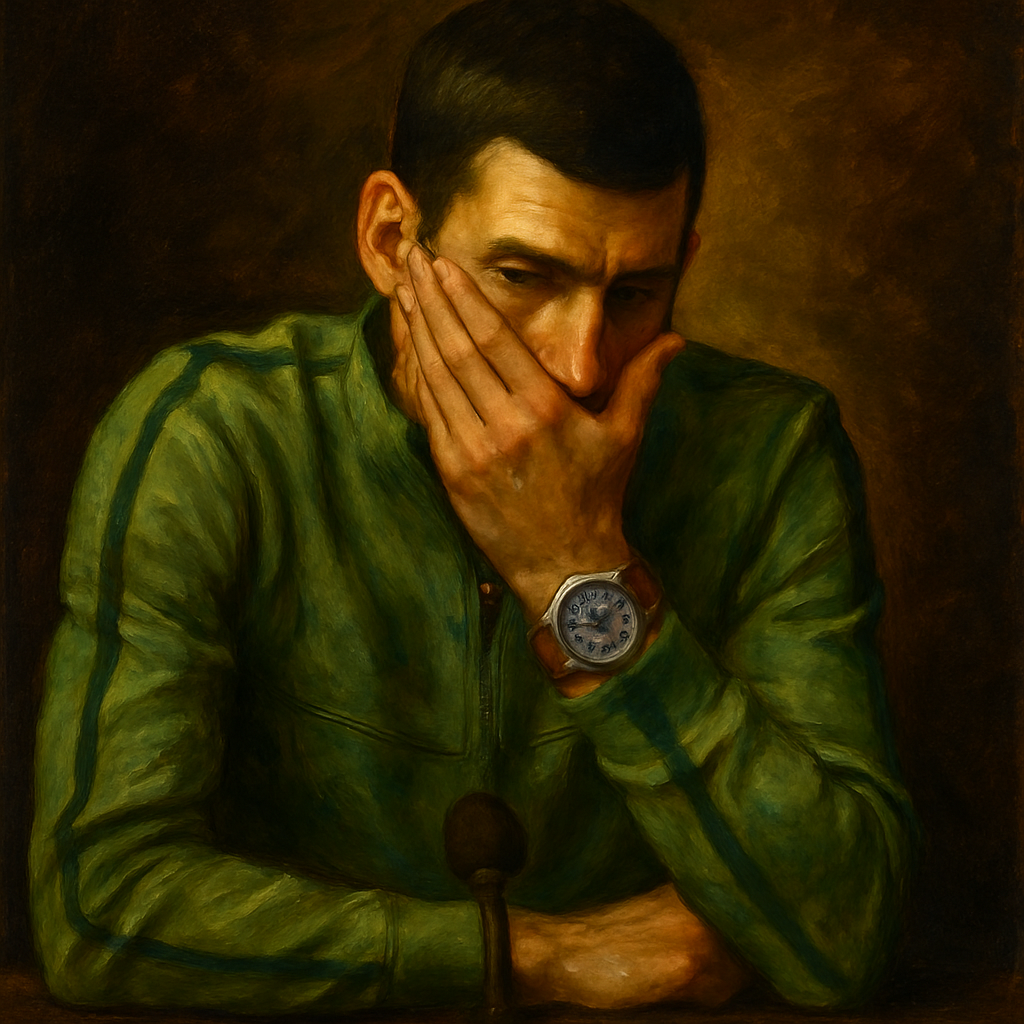
BELGRADE — Novak Djokovic, the most decorated men's tennis player in history and a national icon in Serbia, has found himself in the crosshairs of domestic political criticism. In a stunning public rebuke, a prominent Serbian politician has launched a scathing attack on the 24-time Grand Slam champion, questioning his education and intellectual capacity in comments that have ignited a firestorm of controversy across the Balkan nation and the sporting world.
The criticism came from Serbian MP and former Minister of Education, Žarko Obradović, a member of the Socialist Party of Serbia (SPS). During a parliamentary debate focused on the country's education system, Obradović veered off-topic to single out Djokovic, using the athlete as an example in a broader critique of societal values. His remarks, captured on official video, have been widely interpreted as a deliberate attempt to diminish the legacy of Serbia's greatest sporting export.
The Politician's Scathing Remarks
Obradović’s comments were direct and personal. He stated, "We have a tennis player who barely finished school, and he is now giving lectures to everyone about everything, from what to eat to how to behave. We have made a deity out of him, and he believes he is the smartest." The reference to "barely finished school" is a pointed dig at Djokovic's educational background. Djokovic completed his secondary education at the prestigious "Pilot School" in Belgrade, a specialized school known for its rigorous curriculum, but famously left his university studies to pursue tennis professionally.
The politician's attack did not stop at Djokovic's schooling. Obradović continued his broadside by criticizing the societal adulation of the athlete, suggesting it has created an inflated sense of expertise. "He talks about medicine, about spirituality, about everything. And we listen to him as if he were a prophet," Obradović said, alluding to Djokovic's well-documented interests in holistic health, meditation, and mindfulness, which he often credits for his mental fortitude on court.
Context and Political Motivations
Analysts suggest Obradović's outburst is not an isolated incident but reflects deeper political undercurrents in Serbia. Djokovic, while fiercely patriotic and a unifying figure for many Serbs, has maintained a careful distance from direct party politics. He has, however, been openly supportive of certain national causes and is known to have a respectful relationship with the Serbian Orthodox Church. His global platform and independent stature make him a unique influence, one that some political factions may view as outside their control.
Key points of context for the attack include:
- Timing: The comments came during a debate on education, a sector facing numerous challenges in Serbia, potentially as a diversionary tactic.
- Source: Obradović is a veteran politician from the SPS, a party that was part of the ruling coalition for years but is now in opposition, which may signal a shift in how certain elites view national icons.
- Target: Attacking a beloved figure like Djokovic is a high-risk strategy, guaranteed to generate headlines and public backlash, suggesting an intent to provoke or rally a specific base.
Public and Celebrity Backlash
The reaction from the Serbian public and fellow celebrities was swift and overwhelmingly in defense of Djokovic. On social media, the hashtag #WeAreWithNovak trended, with thousands of fans condemning Obradović's comments as "shameful," "jealous," and "beneath contempt." Many pointed to Djokovic's philanthropic work through his foundation, his role in building tennis infrastructure in Serbia, and his unparalleled success as a testament to his intelligence and dedication far beyond formal schooling.
Prominent Serbian actor and director Nikola Đuričko delivered a fiery rebuttal on a national talk show, stating, "What Žarko Obradović said is the epitome of malice. Novak Djokovic is a genius in his field, a man who has raised the name of Serbia across the globe. To reduce his worth to a school diploma is not only ignorant but an insult to every hard-working, self-made individual in this country." Other public figures, including athletes and journalists, echoed this sentiment, framing Djokovic as a model of discipline and global excellence.
The "Education vs. Wisdom" Debate
Obradović's comments have inadvertently sparked a national conversation about the nature of intelligence, success, and education. Djokovic's journey is seen by many as a classic example of specialized, world-class expertise developed through relentless focus—a path that often exists parallel to, rather than through, traditional academic routes. His mastery of languages, business acumen in building his brand, and deep understanding of sports science and physiology are frequently cited as evidence of a formidable and applied intellect.
Furthermore, Djokovic's public persona extends beyond tennis. He is a bestselling author, having penned a memoir and a book on nutrition and wellness titled *Serve to Win*. His annual "Novak Tennis Center" charity tournament raises substantial funds for children's education and healthcare. This broader impact led one sports columnist to write, "Obradović measures education by certificates on a wall. Djokovic's education is measured in Grand Slam trophies, millions inspired, and a legacy that will outlive any political term."
Djokovic's Silence and Future Impact
As of this writing, Novak Djokovic has not publicly responded to the politician's comments. This silence is characteristic; he has historically avoided engaging in political spats, preferring to let his achievements and actions speak for themselves. He is currently recovering from knee surgery and focusing on his rehabilitation, with aims to return for the upcoming Olympic Games in Paris. The incident, however, raises questions about the pressures faced by athletes who become national symbols and the potential for their image to be weaponized in political arenas.
The attack underscores a tension that exists in many societies between established institutional pathways to respect and the disruptive, meritocratic fame of global sports stars. For now, the consensus in Serbia and among tennis fans worldwide is that Obradović's comments have backfired, serving only to reinforce the immense respect and affection held for a player whose "education" on the courts of Wimbledon, Roland Garros, and Arthur Ashe has produced one of the greatest sporting minds of all time. The final word, as so often in Djokovic's career, will likely be written not in parliamentary transcripts, but in the record books he continues to redefine.