
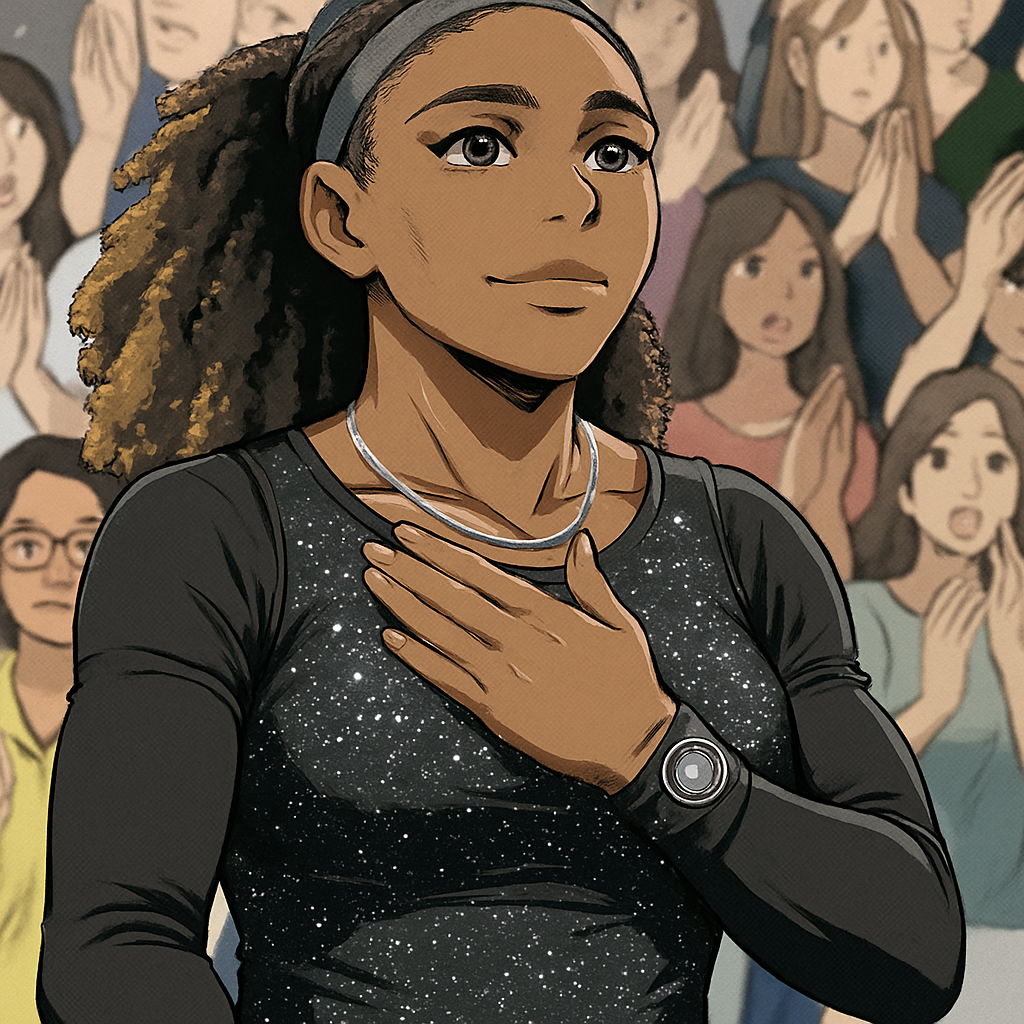
NEW YORK — The air on Court 17 at the U.S. Open was thick with history and humidity, but the silence that fell after the final point was one of profound transition. Serena Williams, draped in the crystals of a career-defining outfit, had just been defeated by Ajla Tomljanović in what was widely believed to be her final professional match. The year was 2022, and the sporting world prepared to say goodbye to a legend who had spent nearly three decades redefining greatness.
Yet, in the months and years that followed that emotional farewell, a whisper grew into a persistent rumor, fueled by cryptic social media posts, intense training videos, and the athlete's own unwavering competitive fire. The question on every tennis fan's mind shifted from "How will we remember her?" to "Is she coming back?" Last week, I had the extraordinary, pinch-me opportunity to be a practice partner for Serena at a private court in Florida. While I cannot divulge specifics of location or schedule, I can share what I witnessed—and what the world should expect if the greatest of all time makes her return to the tour.
The Mindset: Unfinished Business
Walking onto the court, I expected to meet a content icon enjoying a post-retirement hit. I was immediately disabused of that notion. The Serena who greeted me was the Serena of old: focused, intense, and present. The casual banter was minimal; the business was maximum. There was a palpable sense of purpose that transcended a mere workout. As we began to rally, a comment she made to me during a water break encapsulated it all: "I don't do anything just to do it. I'm here to see what's still there."
This isn't about a nostalgia tour or exhibition matches. The aura she projected was one of testing limits. Her 2022 "evolution away from tennis" was framed as a choice, not a forced retirement due to a body that had given out. The time away, it seems, has allowed physical healing and stoked a mental hunger. The fire to compete at the absolute highest level, the very fire that Tomljanović noted was still "blazing" in their third-round match, is not only present but being meticulously stoked.
The Physical Reality: Power, Precision, and Patience
Let's address the most common question first: the power. It is very much intact. The sound of the ball coming off her strings remains distinct—a concussive *thump* that feels different from anyone else on the WTA tour. The serve, her most legendary weapon, is a work in progress but flashes of its former dominance are undeniable. The motion is fluid, and when it clicks, the ball is simply unreturnable, kicking up chalk on the line.
However, the session revealed a nuanced evolution. She is not trying to simply blast opponents off the court in 45 minutes anymore. There is a strategic depth being layered onto the power. We engaged in extended cross-court rallies where she focused on:
- Extreme corner precision: Painting lines to move an opponent laterally before unleashing the winner.
- Slice and defensive retrieval: Acknowledging the need for a Plan B when pressed.
- Net-rushing tactics: Following heavy, deep approach shots to finish points volleying.
The most telling drill was a "first five shots" exercise, emphasizing constructing the point from the return onward. This is the work of someone preparing for the grueling, physical battles against today's top baseliners like Iga Świątek and Aryna Sabalenka, who can match power but perhaps not yet her point-construction IQ.
The Modern Game: Adapting to a New Landscape
The women's game has evolved in her absence. The field is deeper, and the physicality demanded is greater than ever. A comeback would not be a victory lap; it would be one of the most audacious challenges in sports history. From our practice, it's clear she is studying this new landscape. We simulated points against a "big-hitting baseliner" (my role, albeit at a vastly inferior level), where she worked on absorbing pace and redirecting it with interest.
Her coaching team, including Eric Hechtman, focused heavily on movement and recovery. Footwork drills were exhaustive. The knee, which has been surgically repaired, was heavily taped, and sessions were carefully monitored. Recovery between intense points was a key part of the regimen. She knows she cannot rely on sheer intimidation; she must be prepared for three-set wars. "The girls hit hard now," she noted matter-of-factly. "You have to be ready for the ball to come back faster, every single time."
The Biggest Hurdle: Match Toughness
The single largest unknown is match play. Practice, no matter how intense, cannot replicate the pressure of break point down at 4-5 in the third set of a Grand Slam. The neural pathways for handling that specific stress need reactivation. We did play several practice sets, and the champion's clutch gene was visible—she raised her level on key points instinctively. But sustaining that over seven best-of-three-set matches to win a major is a monumental ask. This is the canyon between being "practice ready" and "tournament ready."
What a Comeback Would Look Like
Based on this glimpse, a Serena Williams comeback would likely be highly targeted and strategic. Expect a limited schedule, perhaps starting on the faster hard courts that suit her game, aiming for peak performance at the US Open or Australian Open. It would not be a full-season grind. The goals would be clear: to add to her 23 Grand Slam singles titles and, in her mind, finish the story on her own terms.
The impact would be seismic. Ticket demand would shatter records. Every tournament she entered would become the main event. For her opponents, it would be the ultimate test—facing a living legend with nothing to lose and a point to prove. For the sport, it would be a tidal wave of attention, inspiring a new generation while forcing the current one to stare down the greatest competitor they will ever see.
Conclusion: The Will Remains
My takeaway from that surreal practice session is not a guarantee of a comeback, but a definitive statement of capability. Serena Williams is training with the intent of a contender. The body, while requiring careful management, can still produce tennis that is devastating. The mind is sharp, tactical, and ferociously competitive. The will—the most important ingredient—is undiminished.
As we finished, she looked at the basket of balls, then at the net, with an expression I can only describe as calculative. The 2022 exit was an ending filled with grace and gratitude. A 2024 or 2025 return would be about something else entirely: pure, unadulterated competition. The world thought it saw the final chapter of Serena Williams' story in the New York twilight two years ago. After last week, I am convinced she is meticulously drafting a stunning, unprecedented epilogue.