
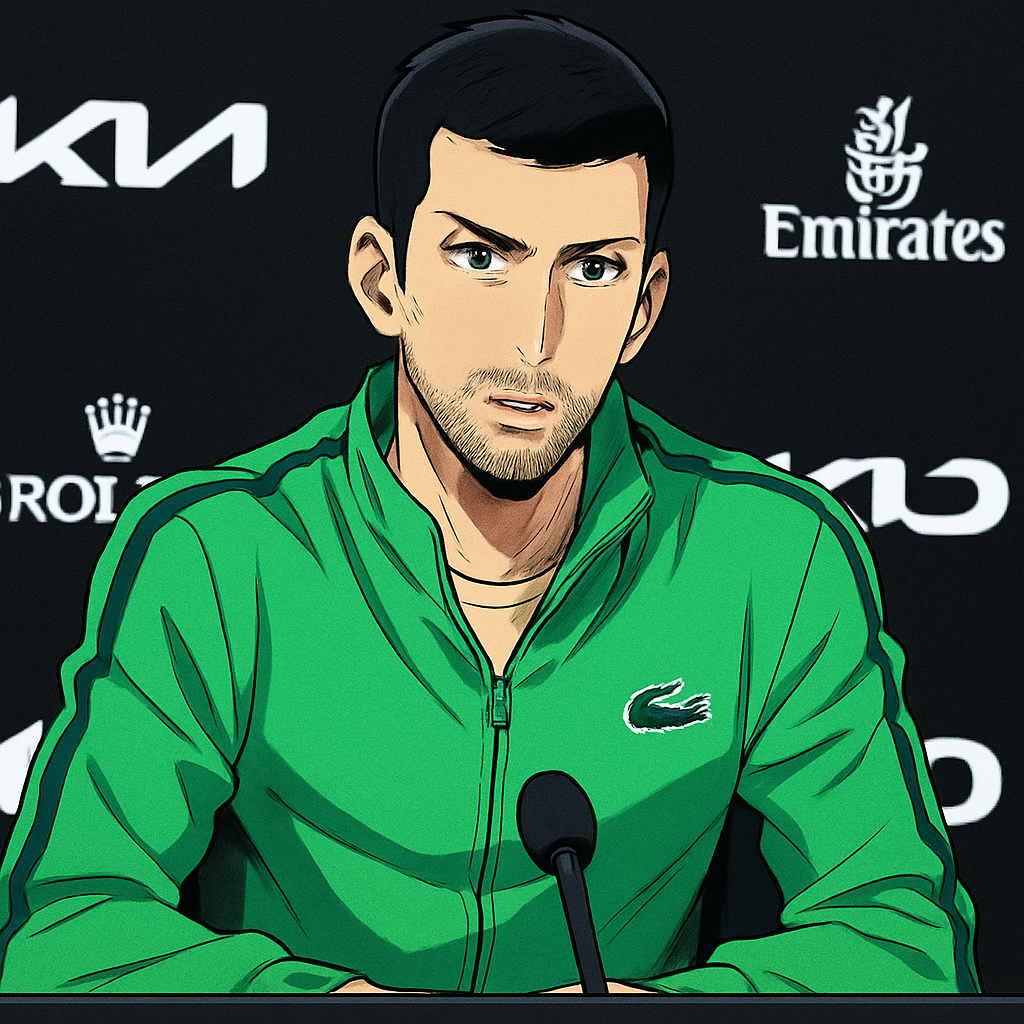
MELBOURNE — In the hushed, cavernous silence of Rod Laver Arena, Novak Djokovic stood motionless, his gaze fixed on the ground as the thunderous applause for the new champion, Carlos Alcaraz, washed over him. The 2024 Australian Open final had just concluded not with the coronation of a record-extending 11th title, but with a devastating 6-1, 6-7(4), 1-6, 6-3, 4-6 loss. Days later, the 24-time Grand Slam champion has broken his silence, admitting to a profound sense of bitterness and revealing his meticulous plan to recover from what he calls one of the most painful defeats of his storied career.
The defeat shattered multiple narratives. It ended Djokovic's astonishing 33-match winning streak at Melbourne Park, a run dating back to 2019. It denied him the chance to stand alone with 25 major titles. Perhaps most jarringly, it confirmed the arrival of a true, generational rival on the sport's biggest stages. "I left Australia with a very bitter taste in my mouth," Djokovic confessed in a recent interview with Serbian outlet Sportal. "I had never lost in the semi-finals or finals of the Australian Open before. This was a new experience for me."
The Anatomy of a Devastating Loss
For two sets, the match followed a familiar script. Djokovic, the undisputed king of Melbourne, was imperious, dismantling the young Spaniard's game with relentless depth and precision to take a commanding lead. Yet, a pivotal moment in the second-set tiebreak, where Alcaraz saved a set point with a breathtaking forehand winner, became the fulcrum of the match. From there, the momentum shifted seismically. Alcaraz's explosive power, fearless net play, and seemingly inexhaustible energy began to overwhelm the defending champion.
Djokovic was uncharacteristically error-prone, particularly off his usually lethal forehand wing. His movement, while still elite, seemed a half-step slower as the match stretched into a fourth hour. "Carlos was simply the better player in the crucial moments," Djokovic admitted. "He played with a courage and clarity that, on the day, I could not match. He deserved the victory." The statistical breakdown painted a stark picture of Alcaraz's dominance in the latter stages:
- Winners: Alcaraz struck 55 clean winners to Djokovic's 28.
- Net Points: The Spaniard won 34 of 45 net approaches.
- Break Points Saved: Alcaraz saved 8 of the 9 break points he faced.
- Physical Edge: Djokovic's unforced error count ballooned to 54.
Confronting the "Bitter" Aftermath
For a competitor whose identity is so deeply intertwined with winning, especially at the majors he has dominated, the psychological toll has been significant. Djokovic did not shy away from describing the emotional hangover. "The feeling is bitter, there's no other word for it," he stated. "When you are so close to a historic achievement and you feel you had the match in your grasp, it stays with you." He revealed that the days following the final were spent in quiet reflection, analyzing not just the tactical missteps but the mental lapses that allowed Alcaraz back into the contest.
This introspection, however, is not born of despair but of a relentless drive to improve. "The bitterness is a fuel," he explained. "It burns now, but it will fire me up for what comes next. I have been here before. I know this feeling." He drew parallels to other painful losses in his career, such as the 2013 Wimbledon final or the 2021 US Open final, which were followed by periods of immense success.
The Djokovic Recovery Blueprint
True to his reputation as the most meticulous preparer in tennis, Djokovic has already mapped out a detailed recovery plan, both physical and psychological. The immediate focus is on rest and recalibration. "The body needs time to heal after a deep Grand Slam run," he said, noting the minor wrist and hamstring niggles he managed throughout the tournament.
Physical and Technical Adjustments
His team, led by coach Goran Ivanišević and fitness coach Marco Panichi, is designing a modified training block before the upcoming "Sunshine Double" in Indian Wells and Miami. The key areas of focus include:
- Endurance Optimization: Enhancing his stamina for potential five-set battles against powerful, younger opponents.
- Forehand Stability: Drilling to regain the ruthless consistency that deserted him in the final.
- Serve +1 Aggression: Working to be more offensive immediately after his serve to shorten points.
The Mental Rebuild
Perhaps the most critical component is the mental reset. Djokovic emphasized the importance of perspective. "I am 36 years old, competing at the highest level, and I was in another Grand Slam final," he reflected. "This is not a decline. This is a challenge. And challenges are what I play for." He plans to spend more time with his family, engage in meditation, and use the loss as a catalyst to reignite his competitive hunger.
The Alcaraz Rivalry: A New Chapter
Beyond personal recovery, Djokovic acknowledged the broader significance of the result. The torch is not yet passed, but the flame is being shared. His rivalry with Alcaraz, now tied at 2-2 in Grand Slam meetings, has instantly become the most compelling narrative in men's tennis. "He brings a different energy, a different game," Djokovic said of the 20-year-old. "It's great for our sport. It pushes me to find new levels, and I believe it will push him, too."
This dynamic sets the stage for an epic season. With Alcaraz proving he can dethrone the king on hard courts to add to his Wimbledon and US Open titles, every major in 2024 becomes a potential showdown. The French Open, where Djokovic is defending champion and Alcaraz is a clay-court phenom, looms particularly large.
Looking Ahead: The Road to Paris
Djokovic's immediate schedule is uncertain, with potential appearances in Dubai or a direct lead-up to Roland-Garros via the clay-court season. His goal is clear: channel the bitterness of Melbourne into the red dirt of Paris. "This loss hurts, but it is not the end," he declared. "My goals for the year remain unchanged. I am here to win the biggest tournaments."
The tennis world is left with a poignant image: the greatest hard-court player in history, humbled on his favorite stage, yet unbowed. Novak Djokovic's bitterness is not a sign of surrender, but the first step in a calculated, champion's response. As he himself put it, "The story is not over." The defeat to Carlos Alcaraz may have closed a chapter of Australian Open invincibility, but it has opened a thrilling new volume in the relentless pursuit of greatness that defines Novak Djokovic.