
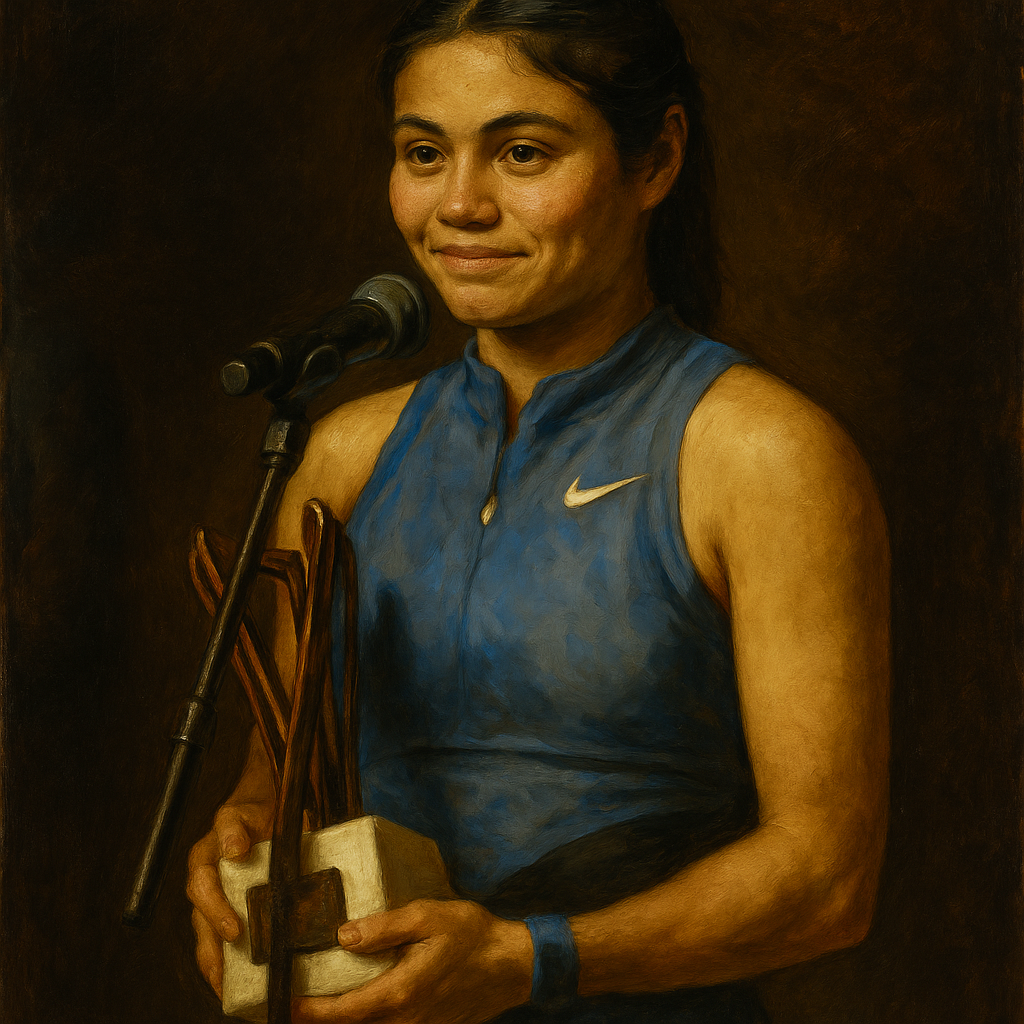
CLUJ-NAPOCA — In the immediate aftermath of a crushing 6-2, 6-3 defeat to world No. 1 Iga Świątek in the Transylvania Open final, the narrative seemed straightforward. Emma Raducanu, the 2021 US Open champion, had been thoroughly outclassed, winning just five games in a match that underscored the gulf between a generational talent and a player still finding her way back. Yet, within hours, a more compelling and paradoxical story emerged: despite the humbling loss, Raducanu’s journey in Romania propelled her soaring up the WTA rankings, a testament to a quietly successful comeback week.
The 6-2, 6-3 scoreline in Świątek’s favor tells a tale of dominance. The Polish star, playing her first tournament since reclaiming the No. 1 spot, was in merciless form, exploiting Raducanu’s second serve and dictating rallies with her heavy topspin. For Raducanu, moments of brilliant counter-punching were too often followed by unforced errors, a pattern symptomatic of a player lacking consistent match rhythm against the very best. In her post-match press conference, Raducanu was candid, stating, "I think I can take away that I played a world No. 1 for the first time and I think I can see what level I need to be at if I want to be like her."
The Silver Lining in the Rankings Rise
While the final was one-sided, the week in Cluj-Napoca was anything but a failure for the British star. Her surge in the rankings is the quantifiable proof. Entering the tournament ranked No. 303 and requiring a wildcard, Raducanu’s run to the final is projected to catapult her approximately 150 places, back inside the world’s top 160. This dramatic leap is the most significant of her young career since winning the US Open, and it was built on a foundation of grit and tactical maturity that had been questioned during her prolonged absence from the sport.
Her path to the final was a masterclass in navigating pressure and overcoming varied challenges. She strung together four consecutive WTA Tour-level match wins for the first time since her Flushing Meadows triumph, demonstrating a resilience that has been her focus during an eight-month hiatus for triple wrist and ankle surgeries. Key victories included:
- A commanding first-round win over Romanian hope Elena-Gabriela Ruse.
- A gritty, three-set comeback against world No. 67 Ana Bogdan in front of a fervent home crowd.
Each win represented a milestone, rebuilding the match toughness essential for a player whose career has been a rollercoaster of spectacular highs and injury-induced lows. Her coach, Nick Cavaday, emphasized the progress, noting, "The objective was always the process, building back. The ranking is a byproduct of doing the right things daily."
Re-building the Raducanu Foundation
The Transylvania Open was never about winning a title for Raducanu; it was about laying bricks. After a 2023 season decimated by surgery and rehabilitation, her goals for 2024 are fundamentally different. The focus is on consistency, physical durability, and accumulating matches without pain. In this context, playing five matches in a week—including a final against the world’s best player—is an unqualified success. She proved to herself, and to critics, that her body could withstand the rigors of a full tournament.
Furthermore, her game showed promising evolution. While her powerful flat groundstrokes were on display, there were glimpses of added variety—more use of slice, improved net approaches, and a strategic willingness to construct points rather than simply overpower opponents. This development is crucial for her long-term prospects, as noted by analysts who saw a more complete, patient player emerging in Cluj-Napoca, even in defeat.
The Świątek Barometer
Facing Iga Świątek is a unique challenge in women’s tennis, a brutal examination of every facet of an opponent’s game. For Raducanu, the final served as the ultimate diagnostic tool. The areas needing sharpest improvement were laid bare: the vulnerability of her second serve under relentless pressure, and the difficulty of sustaining aggression against Świątek’s relentless depth and weight of shot. Yet, there were also positives. She broke Świątek’s serve twice, a feat in itself, and for patches, she matched the Pole’s intensity from the baseline.
Raducanu’s perspective post-match was notably analytical and forward-looking, devoid of the devastation one might expect. "I’m very positive, very happy with how the week went," she said. "Of course, I’m disappointed with the way I started and ended the match today, but overall it’s been a great week for me coming back." This mature outlook underscores a player who is measuring progress on a different scale—one built on health and gradual improvement rather than immediate trophies.
The Road Ahead After Cluj
The ranking leap has immediate practical benefits. It grants Raducanu direct entry into more WTA tournaments, reducing her reliance on wildcards and allowing her to plan a more structured schedule. The momentum from Romania positions her perfectly for the upcoming Middle East swing and the American hardcourt season, surfaces on which she has historically excelled. The goal will be to continue accumulating points, steadily climbing back towards the top 100, and eventually, seeding positions that offer more favorable early-round draws.
The tennis world’s reaction has been one of renewed optimism. The narrative around Raducanu is subtly shifting from “what’s wrong?” to “what’s possible?”. Her performance, particularly the mental fortitude shown in tight matches before the final, suggests the champion’s mindset that captivated New York is still very much present. It is now coupled with a hard-earned appreciation for the process.
In the end, the story of Emma Raducanu at the Transylvania Open is one of beautiful contradiction. A final-match humiliation that, paradoxically, signifies a triumphant return. A scoreboard that showed a gap in level, alongside a rankings chart that shows a soaring trajectory. The week proved that Raducanu’s game, and more importantly her body and competitive spirit, are back on tour. While Iga Świątek left Cluj-Napoca with the trophy, Emma Raducanu may have left with something more valuable for the long journey ahead: confirmation, momentum, and a clear roadmap written in both the sting of defeat and the promise of a rising ranking.