
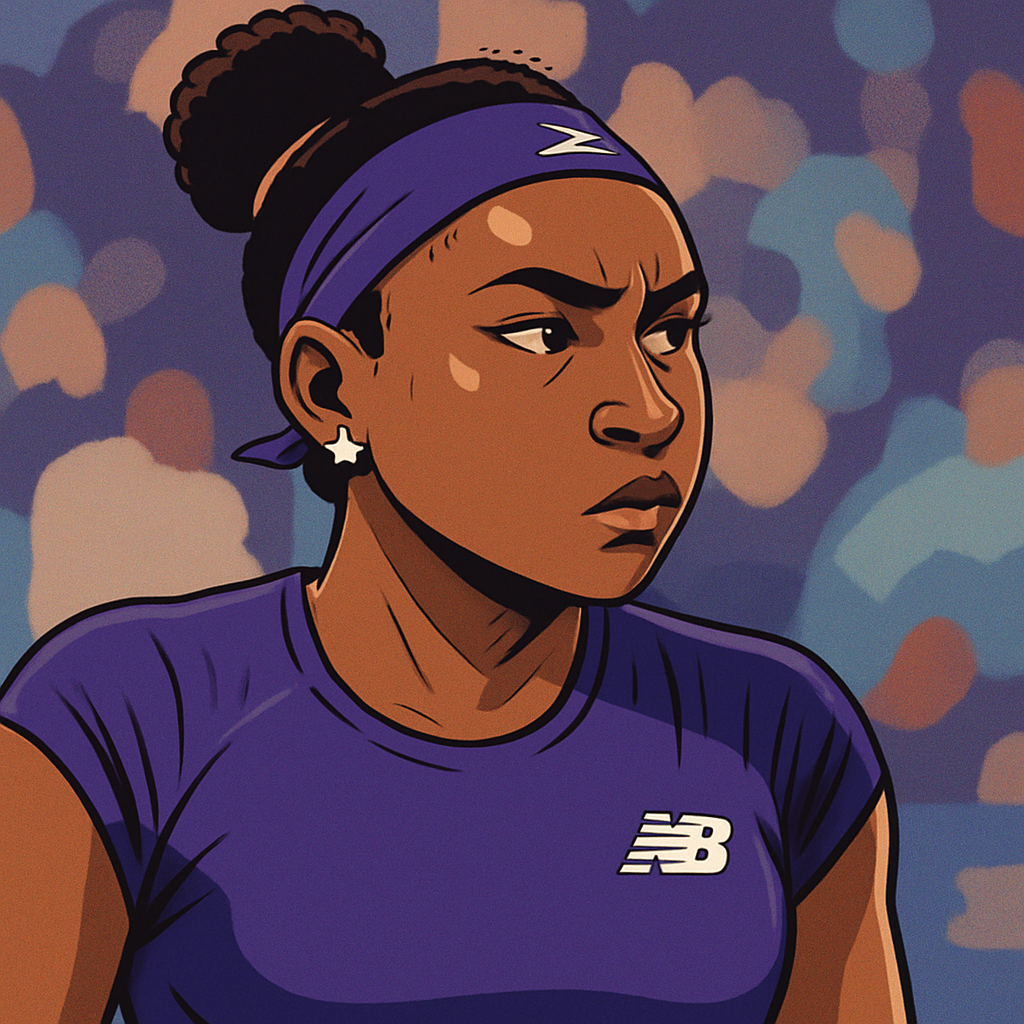
LONDON — Coco Gauff, the reigning US Open champion and a leading voice for player welfare on tour, has turned her attention to the Australian Open after receiving a response from the All England Club regarding a recent privacy controversy. The dispute centers on the use of behind-the-scenes footage and audio captured by broadcasters during player moments in restricted areas.
Gauff’s call to action follows a public row during the Wimbledon Championships, where she and other players expressed discomfort over microphones and cameras capturing private conversations in areas like the player tunnels and training courts. After raising the issue, Gauff confirmed she received a formal response from Wimbledon organizers, which she described as a positive first step. However, she is now demanding similar accountability from other Grand Slam tournaments, starting with Melbourne Park.
The Spark at Wimbledon: A Breach of Trust
The controversy ignited during Gauff’s first-round match at Wimbledon against fellow American Caroline Dolehide. As Gauff walked through the tunnel leading to Court No. 1, broadcast microphones picked up a tense exchange with match official Donna Kelso. The audio, which was aired live, captured Gauff expressing frustration about a line call, stating, "I didn't even see the ball. How are you guys calling that?"
While such on-court moments are routinely broadcast, the incident highlighted a broader unease among players about the pervasive surveillance in areas they consider private sanctuaries. Gauff argued that the tunnel is a transitional space where players collect their thoughts, often in a heightened emotional state, and should remain off-limits. "You should be able to have conversations in private," Gauff asserted in a press conference following the match.
Her stance was swiftly supported by peers, including Ons Jabeur and Aryna Sabalenka, who shared their own experiences of feeling exposed. This collective concern prompted the WTA and ATP player councils to formally address the issue with tournament directors, emphasizing the need for clearer boundaries to protect player mental health and competitive integrity.
Wimbledon's Response and the New Standard
In the weeks following the Championships, Wimbledon’s management engaged with player representatives. Gauff recently revealed that the All England Club provided a detailed explanation of their broadcast protocols and opened a dialogue about potential adjustments. While the specifics of Wimbledon's response remain private, Gauff indicated it was a constructive exchange.
"They got back to me," Gauff stated ahead of the Canadian Open. "I appreciate Wimbledon responding. I think they took the concerns seriously. Now, it's about seeing what changes are made, not just there but everywhere."
This response has now set a precedent. Gauff believes that if one Grand Slam is willing to review its policies, all should be held to the same standard. Her focus has now shifted to the Australian Open, which is notorious for its innovative and sometimes intrusive broadcast technology, including "Player Mics" and extensive tunnel cameras.
Turning Up the Pressure on Melbourne
The Australian Open has long pioneered behind-the-scenes access, a feature popular with fans but increasingly contentious with players. In 2024, moments like Aryna Sabalenka’s emotionally raw tunnel moments after her final loss were broadcast globally, sparking debate about the ethics of airing such vulnerable footage.
Gauff has explicitly called for Tennis Australia and Australian Open tournament director Craig Tiley to provide clarity on their policies. "I’m waiting to hear from Melbourne," she said. "We need consistency across the Slams. What are the rules? Where are the mics? What is truly private? Players deserve to know."
The core issues players want addressed include:
- Clear Signage & Communication: Defined zones where audio/video capture is and isn't permitted.
- Consent for Emotional Moments: A review of the policy on broadcasting visibly distressed players in non-competition areas.
- Broadcast Delay: Implementing a short delay for tunnel audio to allow for the filtering of private conversations.
- Player Education: Explicitly informing competitors of where they are "on air" to avoid unintentional exposure.
The Broader Battle for Privacy
This dispute is not happening in a vacuum. It intersects with larger, ongoing conversations in professional tennis about scheduling, workload, and player agency. Gauff, who has been vocal on multiple issues since her breakthrough, is leveraging her platform to advocate for a fundamental right to privacy.
The tension lies in balancing the insatiable demand for immersive fan content with the athletes' need for mental space. Broadcasters argue that these intimate moments deepen the narrative and connection to the sport. Players counter that the constant surveillance adds an invisible layer of stress, inhibiting their ability to be authentic and manage emotions freely.
As one veteran coach noted anonymously, "The locker room, the tunnel—these are the last places where a player can be a human, not a performer. Eroding that space has real consequences for their well-being."
What Happens Next?
The ball is now in Tennis Australia's court. A spokesperson for the Australian Open provided an initial statement, saying, "We are always in dialogue with players regarding the broadcast environment and their comfort."
However, Gauff and the player councils are seeking more than dialogue; they want concrete policy revisions. The coming months will be critical, as the tours negotiate with all Grand Slams ahead of the 2025 season. The outcome will likely establish a new standard for player-broadcaster relations across the sport.
Gauff’s strategy is clear: use the momentum from Wimbledon’s engagement to force universal change. "This isn't about one tournament," she concluded. "It's about making sure that everywhere we play, there's a basic respect for our privacy. We give so much on the court. We should have a little space off it, too."
By publicly calling out the Australian Open, Coco Gauff has transformed a Wimbledon-specific complaint into a coordinated campaign for player rights. Her actions underscore a growing assertiveness among the next generation of tennis stars, who are no longer willing to accept traditional norms without question, especially when it comes to their mental health and personal boundaries.