
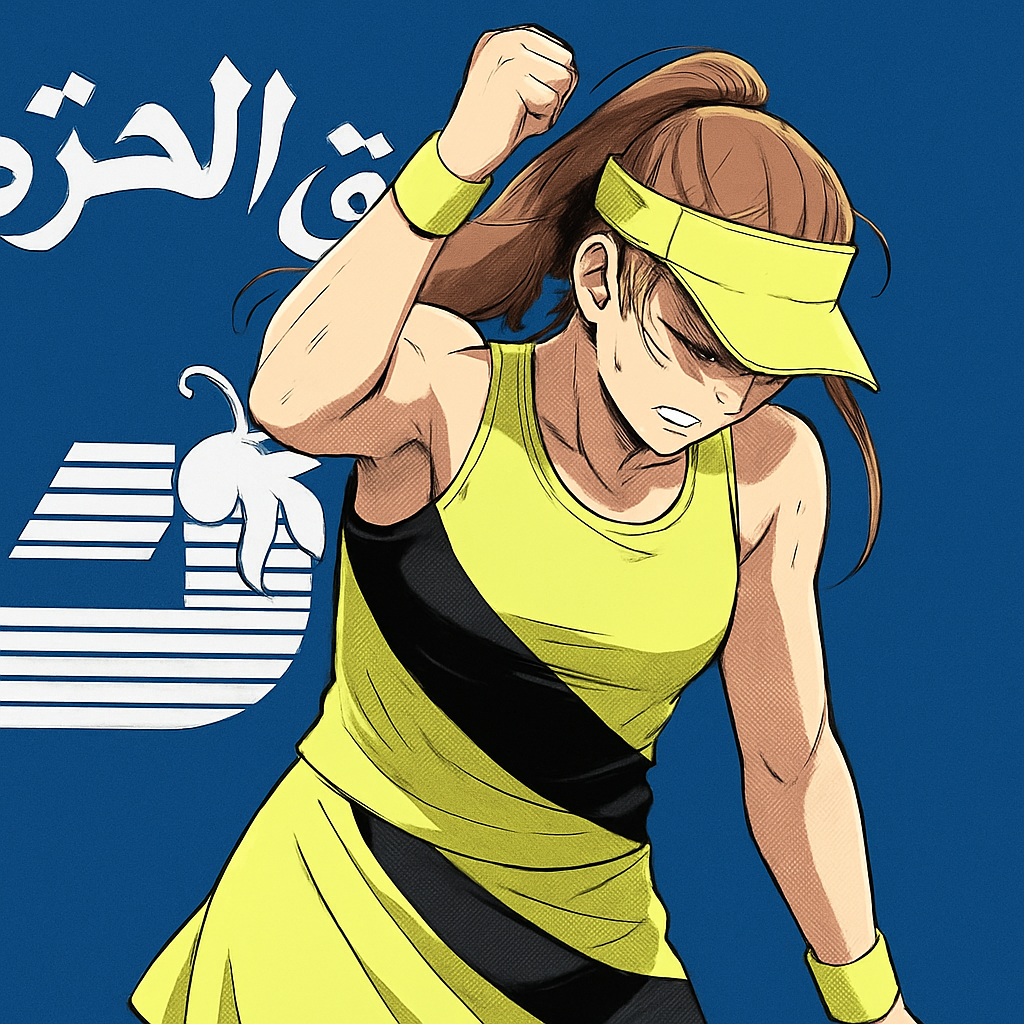
DUBAI — The emotional intensity of professional tennis was on full display at the Dubai Duty Free Tennis Championships this week, as two young stars, Amanda Anisimova and Mirra Andreeva, experienced the sport's psychological extremes from starkly different perspectives. For Anisimova, it was a week of quiet, triumphant return; for Andreeva, a public battle with frustration that culminated in a tearful, self-critical outburst.
The contrasting narratives collided in the second round, where the 22-year-old American Anisimova, playing just her fourth tournament back from an extended mental health break, delivered a commanding 6-3, 6-2 victory over the 16-year-old Russian phenom. The match’s decisive nature, however, was overshadowed by Andreeva’s visible struggle, as the teenager repeatedly hit her own thigh in frustration before bursting into tears during her post-match press conference.
Anisimova’s Silent Struggle and Resurgence
Amanda Anisimova’s presence in Dubai was itself a statement. The former world No. 21 and 2019 French Open semifinalist had stepped away from the tour in May 2023, citing mental exhaustion and the need for a prolonged break. For months, she maintained a near-total public silence, leaving fans and pundits to wonder about her future in the sport. Her return in Auckland this January was low-key, but her run in Dubai—which included a first-round win over 13th seed Liudmila Samsonova—signaled a significant resurgence.
Following her victory over Andreeva, Anisimova finally broke her silence on the reasons behind her hiatus. In a candid and poignant moment, she explained, "I was just really burnt out and I needed to take a step back from the game. I was really struggling with my mental health, and I felt like I needed a reset. I didn't know if I would come back to tennis, to be honest." Her words resonated deeply in a sport increasingly aware of the immense pressure placed on its athletes.
Anisimova’s approach upon her return has been notably different. She is playing without a full-time coach, relying on her father for support, and has explicitly stated she is prioritizing enjoyment over results. This shift in mindset appears to be paying dividends. Her powerful groundstrokes, particularly her lethal backhand, were in full flow against Andreeva, showcasing the talent that once made her a top contender.
Andreeva’s Battle with Perfectionism
On the other side of the net stood Mirra Andreeva, one of the most exciting teenagers in tennis. Known for her exceptional court craft and fighting spirit, the 2023 WTA Newcomer of the Year has already notched wins over top-10 players and reached the fourth round of Wimbledon. However, her match against Anisimova laid bare the challenges of managing prodigious talent and sky-high expectations at such a young age.
Frustrated by unforced errors and Anisimova’s relentless pressure, Andreeva’s composure cracked. On multiple occasions, she turned her racket on herself, delivering sharp hits to her left thigh—a visible manifestation of her inner criticism. The physical self-reprimands continued even after points had ended, drawing concerned looks from the crowd. This behavior, while not uncommon in tennis, was particularly pronounced and pointed to a player grappling with intense self-demand.
The emotional dam broke completely in her post-match press conference. When asked about the match and her physical reaction, Andreeva, who had been answering questions in a soft voice, suddenly covered her face with her cap and began to sob. She needed several minutes to compose herself before continuing. Through tears, she admitted, "I couldn't manage my emotions. I got really frustrated and I just let it out on court."
The Weight of Expectation
Andreeva’s reaction sparked a wave of sympathy and concern. Analysts and former players were quick to contextualize her tears not as a sign of weakness, but as evidence of the immense pressure shouldered by teen sensations in the modern game. The constant scrutiny, the rapid ascent, and the internal drive for perfection create a volatile psychological environment. Key factors contributing to this pressure include:
- Rapid Rise: The swift transition from junior success to competing against established stars on the world stage.
- Social Media Scrutiny: Every performance is dissected instantly by a global audience.
- High Personal Standards: The innate perfectionism that often accompanies elite talent.
- Physical and Mental Fatigue: A grueling year-round schedule with little downtime.
Tennis legend Martina Navratilova, commentating for the tournament, offered a veteran’s perspective, noting that such moments, while painful, are part of the growth process. "She cares so much. That’s why she’s so hard on herself," Navratilova said. "Learning to channel that fire is the next step in her evolution."
A Tale of Two Comebacks
In a poignant twist, the Dubai match became a crossroads for two players at different stages of dealing with the sport’s mental toll. Anisimova, having hit a previous breaking point and taken radical action to address it, now plays with a visible sense of freedom and rediscovered joy. Her comeback is a narrative of healing and perspective. Andreeva, in the throes of her first major bout of public frustration on the big stage, is now facing her own crucible of growth.
Anisimova herself expressed empathy for her younger opponent after the match. "I've been in that position," she said. "It's so tough. You want to do so well, and sometimes it feels like the world is on your shoulders. I feel for her. She's an incredible player and she's going to have an amazing career. These are just tough moments we all go through."
The American’s journey back serves as a potential roadmap. Her decision to prioritize well-being over ranking points, to step away without guarantee of return, and to come back on her own terms is a powerful example in an era where athletes are increasingly vocal about mental health. The WTA itself has bolstered its player support services in recent years, offering psychological resources that both Anisimova and Andreeva can access.
The Path Forward for Both Stars
For Anisimova, the victory in Dubai propelled her into the quarterfinals, her best result since her return, before she fell to eventual finalist Jasmine Paolini. More importantly, it solidified her successful comeback narrative. She has proven she can compete at the highest level again, but with a healthier framework. Her story is now one of resilience and the importance of sustainable careers in a demanding sport.
For Andreeva, the immediate task is one of processing and learning. The support from the tennis community has been overwhelming, with many veterans sharing their own stories of similar meltdowns. The key will be for her and her team to harness that competitive fire while developing coping mechanisms for inevitable setbacks. As her coach, former French Open finalist Conchita Martínez, has stated, the focus is on long-term development, not short-term results.
In the end, the second-round match in Dubai provided a raw and unfiltered look at the human drama underpinning professional tennis. It highlighted that beyond the forehands and backhands, the sport is a constant mental marathon. Amanda Anisimova’s quiet triumph over her personal demons and Mirra Andreeva’s public, tearful frustration are two sides of the same coin—a testament to the passion, pressure, and profound emotional investment required to live life on the tour’s grand stages.