
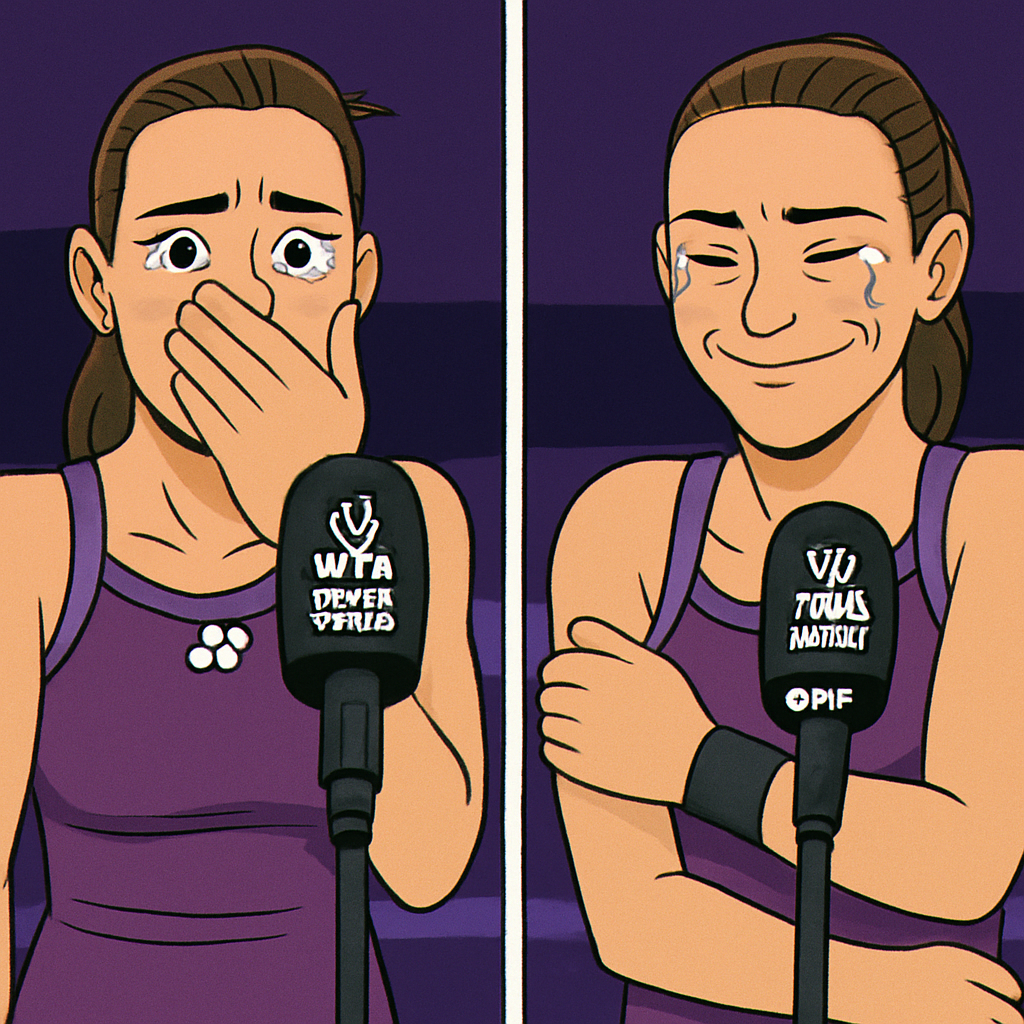
SINGAPORE — In a moment of raw, unfiltered emotion that silenced the prestigious Singapore Indoor Stadium, Hungary's Timea Babos broke down in tears during her runner-up speech at the 2024 WTA Finals, offering a heartfelt apology to her partner, Kristina Mladenovic, after their loss in the championship match. The powerful scene, a stark contrast to the usual celebratory atmosphere of a season-ending final, laid bare the immense pressure and profound personal investment that defines the highest level of professional tennis.
The Road to the Final: A Stunning Run
Babos and Mladenovic, a duo with a storied history that includes two previous WTA Finals titles in 2018 and 2019, were not considered the favorites heading into the tournament. Having reunited earlier in the season after pursuing partnerships with other players, their journey to the final was a testament to their enduring chemistry and fighting spirit. They navigated a tough round-robin stage, securing crucial victories that showcased their signature aggressive doubles play, characterized by Mladenovic's lethal returns and Babos's commanding presence at the net.
Their semifinal victory was a masterclass in resilience, a three-set thriller that pushed them to their physical and mental limits. The final itself was a highly anticipated clash against the top-seeded team of Elise Mertens and Hsieh Su-wei, known for their unorthodox style and tactical brilliance. In a match filled with breathtaking rallies and momentum shifts, the Hungarian-French pair fought valiantly but ultimately fell short, losing in straight sets, 6-4, 6-3.
A Speech That Captured the Heart of the Sport
As is tradition, the runners-up were invited to speak first during the trophy ceremony. Babos stepped to the microphone, her face a canvas of disappointment and exhaustion. She began by congratulating her opponents, her voice steady but thick with emotion. "Congratulations to Elise and Su-wei, you were the better team today and you deserve this title," she stated, displaying the sportsmanship that is a hallmark of her career.
It was when she turned her attention to Mladenovic that the floodgates opened. Struggling to form the words, Babos began to cry, her shoulders shaking as she addressed her partner directly. "Kiki, I'm so sorry," she wept, the apology echoing through the stunned arena. "I wanted this so much for us. I wanted to win this for you. I feel like I let you down today." The raw vulnerability of the moment was palpable, a poignant reminder that for these athletes, it is about far more than just prize money or ranking points.
Understanding the Weight of the Moment
For Babos, the apology was rooted in the deep bond and shared history she has with Mladenovic. Their partnership is one of the most successful of the modern era, and this tournament represented a chance to recapture past glory and solidify their comeback. The factors contributing to the emotional outburst were multifaceted:
- The Significance of the WTA Finals: This is the pinnacle event in women's doubles, featuring only the top eight teams of the season. Winning it is a career-defining achievement, and losing in the final represents a painful near-miss after a week of intense competition.
- The Partnership Dynamic: In doubles, the responsibility is shared. Babos's apology stemmed from a profound sense of shared responsibility and a personal feeling that she had not performed to the standard required to help her team win.
- The Physical and Emotional Toll: The week-long format of the WTA Finals is grueling. The cumulative effect of high-pressure matches, combined with the adrenaline crash after a loss, can lead to an overwhelming emotional release.
Tennis legend and commentator Martina Navratilova, watching from the broadcast booth, immediately empathized with Babos. "That is the heart of a champion," Navratilova remarked. "You only cry like that when you care that much. It's easy to be gracious when you win, but this... this shows you how deeply she feels for her partner and for this team. It's heartbreaking but also beautiful to see."
Kristina Mladenovic's Heartening Response
As Babos wept, Mladenovic stood beside her, her own eyes glistening. She immediately stepped closer, placing a comforting hand on Babos's back and offering words of reassurance. When it was her turn to speak, Mladenovic’s response was a powerful testament to their friendship and professional bond. "Timea, look at me," she said softly into the microphone. "There is nothing to be sorry for. We fought together until the end. We lost together. I am so proud of what we achieved this week and this season. We are a team, always."
This public display of support instantly transformed the moment from one of shared sorrow to one of shared strength. It underscored a critical element of successful doubles partnerships: the ability to lift each other up in defeat, not just celebrate in victory. Mladenovic’s words were a balm, not just for Babos, but for everyone watching who understood the profound connection between the two athletes.
Reaction from the Tennis World and Beyond
The emotional scene quickly reverberated across social media and sports networks. Fans, fellow players, and pundits alike praised Babos for her authenticity and Mladenovic for her unwavering support. The official WTA account on X (formerly Twitter) posted a clip of the moment with the caption, "Sport is about more than just winning. This is heart."
Many highlighted how rare it is to see such a public display of vulnerability from elite athletes, who are often conditioned to maintain a stoic facade. Former doubles World No. 1 Rennae Stubbs tweeted, "This is why I love sports. The raw emotion is real. Timea cares so much. What a partnership they have. Kiki’s response is everything." The moment resonated because it was human first, athletic second.
The Bigger Picture: Mental Health in Professional Sports
Babos's tears also sparked a broader conversation about the immense psychological pressures faced by professional athletes. The constant scrutiny, the weight of expectation, and the binary nature of victory and defeat can take a heavy toll. Her emotional outburst was not a sign of weakness, but rather a visible manifestation of the immense mental and emotional investment required to compete at the highest level.
In recent years, there has been a growing movement within tennis to destigmatize discussions around mental health, led by stars like Naomi Osaka and Bianca Andreescu. Babos's moment, though unintentional, served as another powerful data point in this ongoing dialogue. It was a reminder that behind the powerful serves and crisp volleys are individuals who feel the sting of defeat as deeply as any fan, if not more so.
A Moment of Defeat, A Legacy of Strength
While the scoreboard will record Timea Babos and Kristina Mladenovic as the runners-up of the 2024 WTA Finals, the memory that will endure for many is not of a lost match, but of a gained perspective on sportsmanship and partnership. In her moment of deepest disappointment, Babos showed the world the true cost of caring.
Her tears were not an apology for a lack of effort or skill, but an apology born from a profound desire to achieve a shared dream with a trusted partner. And in Mladenovic's immediate and compassionate response, we saw the blueprint for true teamwork. Together, in that Singapore stadium, they demonstrated that while titles and trophies are temporary, the respect and bond between teammates can form the most enduring legacy of all.