
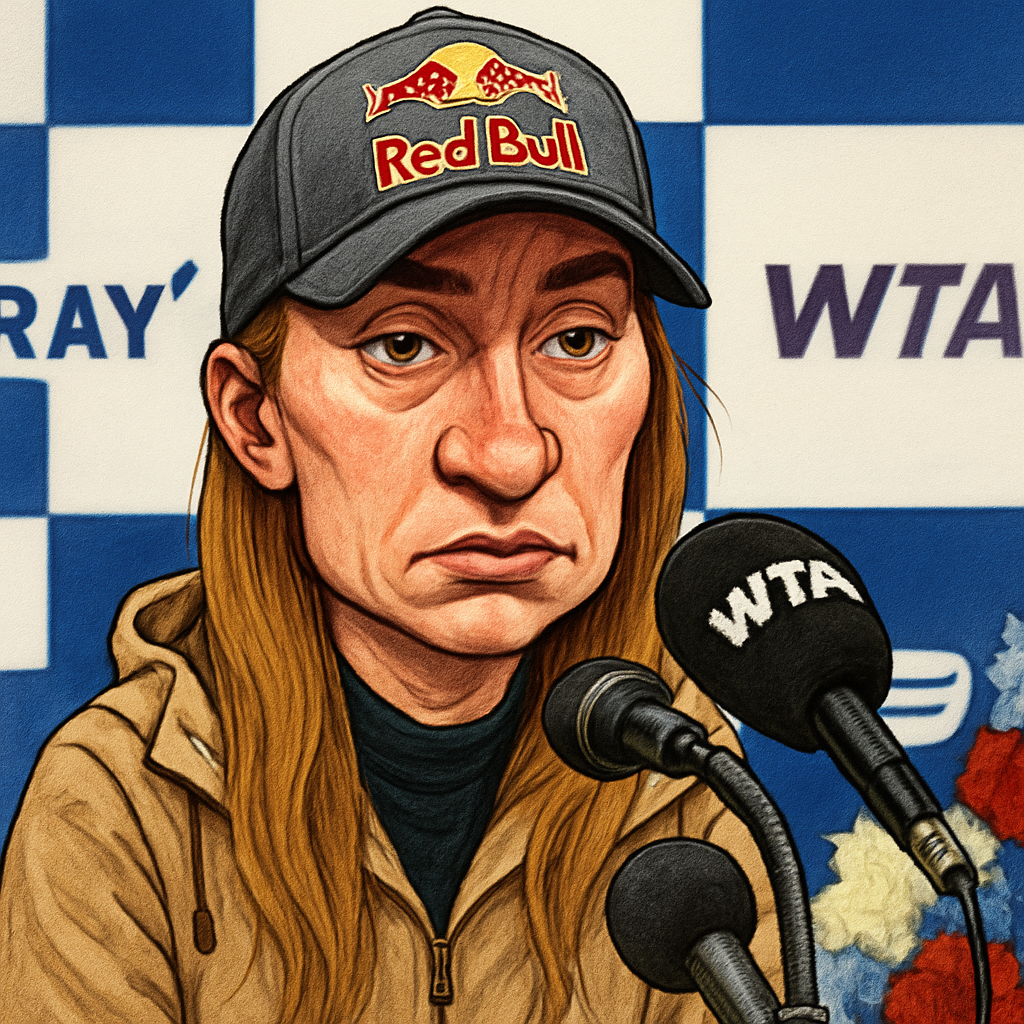
TOKYO — In a stunning turn of events that has sent shockwaves through the tennis world, reigning Wimbledon champion Elena Rybakina was forced to withdraw from the Toray Pan Pacific Open on Saturday, just hours before her scheduled semi-final match against Veronika Kudermetova.
The fourth-seeded Kazakhstani player, a heavy favorite to claim the title in Tokyo, cited illness as the reason for her abrupt exit. The tournament announced the withdrawal in a brief statement, confirming that Kudermetova would receive a walkover into the final. This marks the second high-profile withdrawal for Rybakina in recent months, following her exit from the French Open in May due to an upper respiratory illness.
A Season Marred by Health Issues
Rybakina's 2023 season, while boasting significant achievements, has been consistently hampered by health problems. Her powerful game and commanding presence on court have often been undermined by physical setbacks, leading to frustration for both the player and her fans. The Tokyo withdrawal is a significant blow to her momentum as the WTA tour moves deeper into the Asian swing and looks ahead to the season-ending championships.
The specific nature of the illness was not disclosed, but the timing could not have been worse. Rybakina had been in formidable form, dispatching opponents with relative ease and showcasing the dominant serve and groundstrokes that carried her to the Wimbledon title in 2022. In a post on social media, Rybakina expressed her disappointment, writing: "I am really sorry to have to withdraw from my match today… I don’t feel well and it’s the right decision not to play."
Fans and Pundits Voice Disappointment
The news was met with widespread disappointment from ticket-holders and tennis analysts. Many had anticipated the semi-final clash as the de facto final of the tournament, pitting two of the tour's biggest hitters against each other. The walkover also disrupted the competitive integrity of the event, handing Kudermetova a free pass to the championship match without having to earn it on the court.
Renowned tennis commentator Catherine Whitaker noted on a popular podcast, "It's a brutal situation for the tournament and the fans, but it underscores a recurring theme with Rybakina. Her body has struggled to cope with the relentless grind of the tour. When she's healthy, she's virtually unplayable, but these persistent issues are a major concern for her long-term prospects."
The withdrawal immediately sparked debate about the demanding nature of the modern tennis calendar. The Toray Pan Pacific Open is a key part of a packed Asian swing that includes events in China and the Middle East, forcing players to adapt to different time zones and climates in quick succession. Key concerns raised by analysts include:
- The physical toll of constant travel and competition.
- The increased risk of illness and injury during long stretches on tour.
- The lack of adequate recovery time between premier events.
The Ripple Effect on the WTA Tour
Rybakina's exit has significant implications beyond the Tokyo tournament. As one of the core players in the "New Big Three" alongside Iga Swiatek and Aryna Sabalenka, her presence is crucial for the tour's narrative and competitive depth. Her inability to consistently challenge for titles due to health reasons creates a vacuum at the top of the women's game and impacts the battle for the year-end World No. 1 ranking.
Furthermore, the walkover granted a significant advantage to Veronika Kudermetova. The Russian player advanced to the final not only well-rested but also with valuable ranking points secured without expending any physical or mental energy on the court. This gave her a distinct edge over her eventual opponent in the final, Jessica Pegula, who had to battle through a tough three-set match against Maria Sakkari to reach the championship round.
A Pattern of Unfortunate Withdrawals
This is not an isolated incident for the 24-year-old star. Her career has been punctuated by untimely physical problems that have stalled her progress at critical moments. Most notably, at Roland-Garros earlier this year, she was forced to withdraw before her third-round match, citing a viral illness. She later revealed the severity of the situation, stating, "It was a tough decision, but I was just not fit to play. I had a fever and it was the right thing to do for my health."
These recurring issues raise questions about her team's management of her schedule and physical conditioning. While her powerful, first-strike tennis is effective, it may also be physically taxing, contributing to a higher susceptibility to fatigue and illness compared to players with more defensive, counter-punching styles.
Looking Ahead: Recovery and Resurgence
The immediate focus for Rybakina and her team will be a full and speedy recovery. The WTA tour offers little respite, with a mandatory WTA 1000 event in Beijing commencing shortly after the conclusion of the Tokyo tournament. All eyes will be on whether the Wimbledon champion can regain her health in time to compete effectively in China and salvage her Asian swing.
In its official statement addressing the withdrawal, the Toray Pan Pacific Open organizers expressed their support for the player's decision, saying, "The health and well-being of our athletes is of paramount importance. We wish Elena a swift recovery and look forward to seeing her back on court soon."
The ultimate challenge for Rybakina will be to find a sustainable balance between competition and recovery. Her talent is undeniable, and at her best, she possesses the game to dominate the sport for years to come. However, until she can string together a consistent run of tournaments without a health-related interruption, questions about her durability will persist.
As the tennis world moves forward, the hope is that this latest setback serves as a catalyst for Rybakina and her team to implement a more robust health management plan. The sport is far more compelling when all its top stars are fit and competing, and Elena Rybakina’s powerful presence is undoubtedly a key part of that compelling narrative.