
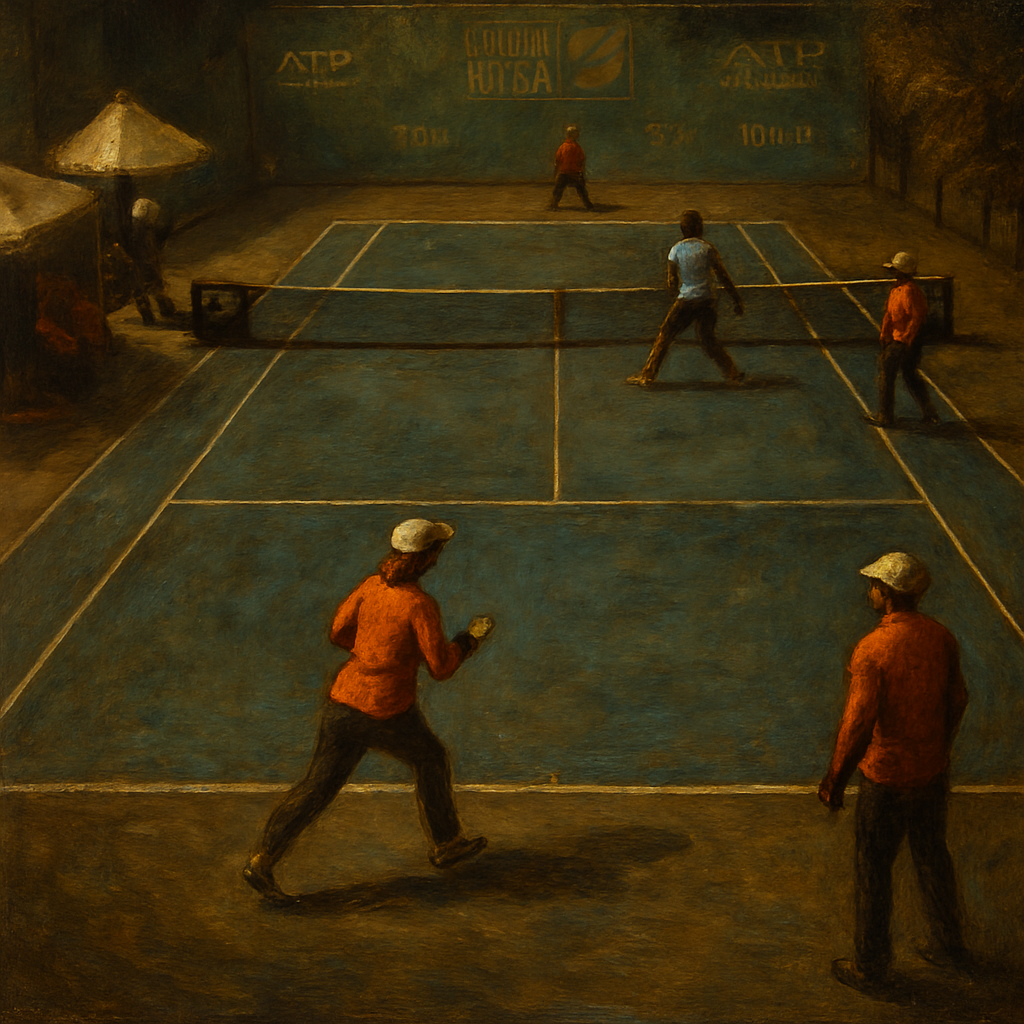
ROME — A routine day at the prestigious Italian Open was shattered by panic and confusion on Wednesday when a fire, reportedly sparked by a malfunctioning drone, broke out near the stadium grounds, forcing the evacuation of players and thousands of spectators. The terrifying scenes unfolded as thick, acrid smoke billowed over the Foro Italico complex, with the distant wail of emergency sirens cutting through the usual sounds of tennis.
The incident occurred during the afternoon session of the ATP and WTA 1000 event. Play was abruptly suspended on all courts as tournament officials, following directives from local fire authorities, ordered an immediate evacuation. Players, including former world No. 1 Naomi Osaka and Italy's own Matteo Berrettini, were seen being hurriedly escorted from the field of play, their expressions a mix of confusion and concern.
A Drone Incident Ignites Chaos
According to initial reports from Italian fire brigade officials and tournament security, the source of the fire was a drone that had been intercepted over the restricted airspace of the Foro Italico. "The device appeared to suffer a technical failure, lost altitude, and crashed into a wooded area adjacent to the practice courts," stated a fire department spokesperson. The impact and subsequent battery malfunction are believed to have ignited dry underbrush, which quickly spread due to breezy conditions.
The rapid response from the Vigili del Fuoco was crucial. Multiple fire engines were dispatched to the scene, their sirens clearly audible to those still evacuating the sprawling tennis park. Social media footage captured the alarming sight of orange flames and a significant plume of black smoke rising behind the iconic Pietrangeli stadium, a stark contrast to the manicured courts.
Players and Fans Describe the Scene
The evacuation, while orderly, was fraught with tension. Fans were directed to exit through designated gates away from the fire, while players and their teams were gathered in secure areas. American player Taylor Fritz took to social media to post a video from inside the players' lounge, captioning it, "Wild day in Rome… fire evacuation. Hope everyone is safe." The video showed players milling about, looking out windows at the smoke.
Witness accounts highlighted the suddenness of the event. "One moment I was watching a thrilling tie-break, the next there was an announcement in Italian and English telling us to calmly leave the stadium," said British fan Eleanor Rigby, who was attending the tournament. "You could smell the smoke, and that’s when the fear really set in. Seeing the players being rushed off was the most alarming part."
Tournament director Sergio Palmieri held an impromptu press conference once the fire was under control. He praised the coordination between security and emergency services and confirmed that the primary concern was always safety. "Our protocol worked. The safety of players, staff, and fans is non-negotiable," he stated.
Safety Protocols and Event Disruption
The Italian Open, like all major sporting events, has strict safety and airspace regulations. The unauthorized drone incursion represents a significant security breach. Local police have launched an investigation to locate the operator of the device. The incident raises urgent questions about enforcement and technology to prevent such dangerous occurrences at crowded venues.
The fire disrupted the entire tournament schedule. Key matches, including a highly anticipated clash between Osaka and France's Caroline Garcia, were postponed. Tournament organizers faced a logistical nightmare in rescheduling an entire afternoon and evening of play. The disruption included:
- Complete suspension of play for over three hours.
- Evacuation of all three show courts and outer grounds.
- Postponement of seven ATP and WTA matches.
- Significant delays for matches scheduled for the evening session.
Players were forced to adjust their preparation and recovery routines, a critical factor in the demanding clay-court season leading to Roland-Garros. "It's mentally draining," admitted Berrettini in a later interview. "You're focused on your match, then suddenly you're thinking about something completely different—your safety."
A Broader Warning for Sporting Events
This incident in Rome is not isolated. Drones have become an increasing nuisance and hazard at major sporting events worldwide, from soccer matches to the Olympics. Their potential for disruption ranges from privacy invasion and nuisance to genuine physical danger, as demonstrated by the fire. The Rome drone crash highlights several critical risks:
- Physical Danger: Crash impacts can injure spectators, while lithium-ion battery fires are intense and difficult to extinguish.
- Event Disruption: Mandatory evacuations cause major scheduling and financial headaches.
- Psychological Impact: The sudden eruption of danger creates anxiety and trauma for attendees.
Tennis governing bodies and tournament organizers are now likely to review and strengthen counter-drone measures. These can include advanced detection systems, geofencing technology, and stricter legal penalties for offenders. "Today was a very close call," one security official remarked anonymously.
Play Resumes Amid a Sober Atmosphere
After firefighters successfully contained and extinguished the blaze, officials conducted a full safety sweep of the affected area. The all-clear was given shortly after 6 PM local time, allowing players to return to the courts for warm-ups. The evening session began under a visibly hazy sky, with the smell of smoke still lingering in the air—a potent reminder of the afternoon's terror.
While the tennis eventually resumed, the day's events cast a long shadow. The image of elite athletes being evacuated not for rain, but for fire, is a jarring one. It underscores how quickly perceived safety can unravel and how vulnerable large public gatherings remain to new-age threats, even those as seemingly benign as a hobbyist's drone.
The Italian Open will continue, and the focus will slowly return to forehands and backhands. But the sight of flames near Centre Court, the sound of urgent sirens, and the collective sigh of relief when no serious injuries were reported will define this year's tournament far more than any match result. It serves as a stark, smoky warning to the sporting world about the fragile balance between spectacle and security in the modern age.