
MIAMI — The Miami Open was plunged into a state of suspended animation on Tuesday as persistent, heavy rain forced the cancellation of all remaining matches on the schedule, including a highly anticipated men's quarterfinal and the start of the women's quarterfinals. The tournament also issued a formal statement addressing the tragic passing of former world No. 1 Konstantin Koltsov, the boyfriend of women's top seed Aryna Sabalenka.
A Washout at Hard Rock Stadium
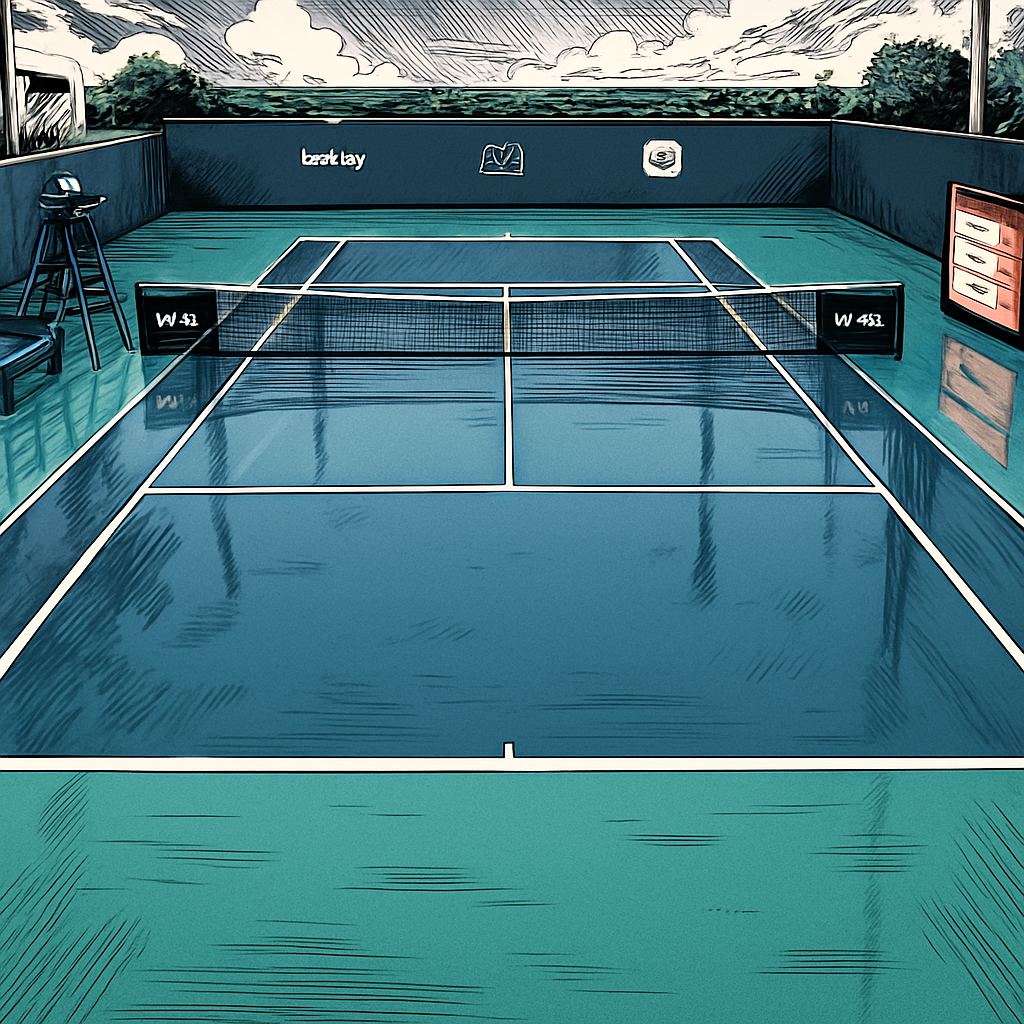
The skies over Hard Rock Stadium opened up in the early afternoon and refused to relent, leaving the expansive grounds waterlogged and unplayable. Tournament officials held out hope for a break in the weather for several hours before making the inevitable call to postpone the entire day's slate. The decision impacted thousands of ticket holders and reshuffled the tournament's tightly packed schedule during its crucial final week. "The safety of our players and the quality of the court conditions are our top priorities," a tournament spokesperson stated.
Among the matches postponed was the blockbuster men's quarterfinal between world No. 2 and defending champion Carlos Alcaraz and Bulgarian Grigor Dimitrov. Fans were also denied the chance to see the start of the women's quarterfinals, where fourth-seeded Elena Rybakina was set to face No. 8 Maria Sakkari, and No. 27 Victoria Azarenka was scheduled to take on Yulia Putintseva. The cancellations create a significant backlog, with the affected players now facing the prospect of playing multiple high-stakes matches in consecutive days if they advance.
Tournament Addresses Off-Court Tragedy
Amid the meteorological disruption, the tournament formally acknowledged the somber news that has cast a shadow over the event since Monday night. The Miami Open released a statement expressing condolences following the death of former professional hockey player and Belarusian national Konstantin Koltsov. Koltsov, 42, was the partner of Aryna Sabalenka, the world No. 2 and a two-time Australian Open champion who is competing in Miami.
The tournament's statement read:
"The Miami Open is saddened by the passing of Konstantin Koltsov. We extend our deepest condolences to his family, friends, and particularly to Aryna Sabalenka, whom he loved deeply. The WTA and the Miami Open are providing support to Aryna at this difficult time, and we ask that her privacy be respected as she grieves."
Koltsov's death was confirmed by the Belarusian hockey federation and is being investigated as an apparent suicide by the Miami-Dade Police Department, who stated there was no suspicion of foul play. Sabalenka, who practiced on Monday and is scheduled to play her quarterfinal match against fellow Belarusian and close friend Victoria Azarenka on Wednesday, has not made a public statement. Her participation in the tournament is now a major question mark.
The WTA's Statement and Player Support
The WTA also issued a separate, broader statement, emphasizing its support system for players facing personal crises:
"The WTA family is deeply saddened by the loss of Konstantin Koltsov. Our thoughts are with Aryna and his loved ones during this heartbreaking time. The WTA Player Services and Security teams are actively engaged to ensure Aryna and her team have the support they need."
The tennis community has rallied around Sabalenka, with many players and figures expressing their sympathy privately. The situation presents an immense personal and professional challenge for the 25-year-old, who is known for her fierce competitiveness and powerful game. The key considerations for her team and the tournament now include:
- Player Welfare: Ensuring Sabalenka has the space and psychological support needed.
- Tournament Integrity: Managing the schedule if she withdraws.
- Competitive Balance: Navigating the profound difficulty of competing under such circumstances.
A Logistical Nightmare for Organizers
The rainout compounds an already complex situation for tournament director James Blake and his team. The Miami Open is a combined ATP and WTA 1000-level event, one of the most prestigious outside the Grand Slams, with a packed schedule that leaves little room for error. The cancellation forces a significant reshuffling. Wednesday's order of play is now expected to be exceptionally heavy, potentially featuring:
- The postponed Alcaraz vs. Dimitrov match.
- The two remaining women's quarterfinals.
- The already-scheduled men's quarterfinals.
- The start of the women's semifinals.
This could mean some players, particularly in the bottom half of the women's draw, may have to win two best-of-three-set matches in one day to reach the semifinals—a brutal physical and mental test. Furthermore, with more rain in the forecast for parts of Wednesday, organizers are likely considering contingency plans that could involve moving matches to the Grandstand court, which has a retractable roof, or extending the tournament by an extra day, though the latter is a complex and costly proposition.
Looking Ahead: An Uncertain Wednesday
As the tournament attempts to dry courts and regroup, all eyes are on two fronts: the weather radar and the status of Aryna Sabalenka. The potential withdrawal of a top seed and tournament favorite would dramatically alter the landscape of the women's draw. Her scheduled opponent, Victoria Azarenka, a two-time champion in Miami, has herself navigated immense personal challenges in the public eye and would undoubtedly approach the situation with profound empathy, regardless of the competitive outcome.
The men's draw, meanwhile, faces its own congestion. Carlos Alcaraz, seeking to defend his title and reclaim momentum, must now wait an extra day to face an in-form Grigor Dimitrov. The Bulgarian has been one of the season's most consistent performers, and the delay adds another layer of anticipation to what was already a tantalizing clash of styles. The other men's quarterfinalists—like Alexander Zverev and Fabian Marozsan, who are also scheduled for Wednesday—will be hoping for clear skies and a chance to settle the tournament's rhythm.
In conclusion, Tuesday at the Miami Open was a day defined by forces beyond the tournament's control. The relentless rain halted the on-court action, while off-court tragedy prompted a sobering reminder of the human stories behind the athletic spectacle. As organizers scramble to salvage the schedule, the resilience of the players—both in facing a potential two-match day and in navigating profound personal grief—will be tested. The coming days in Miami will be less about pristine tennis and more about adaptability, compassion, and the sheer will to compete under the most trying of circumstances.