
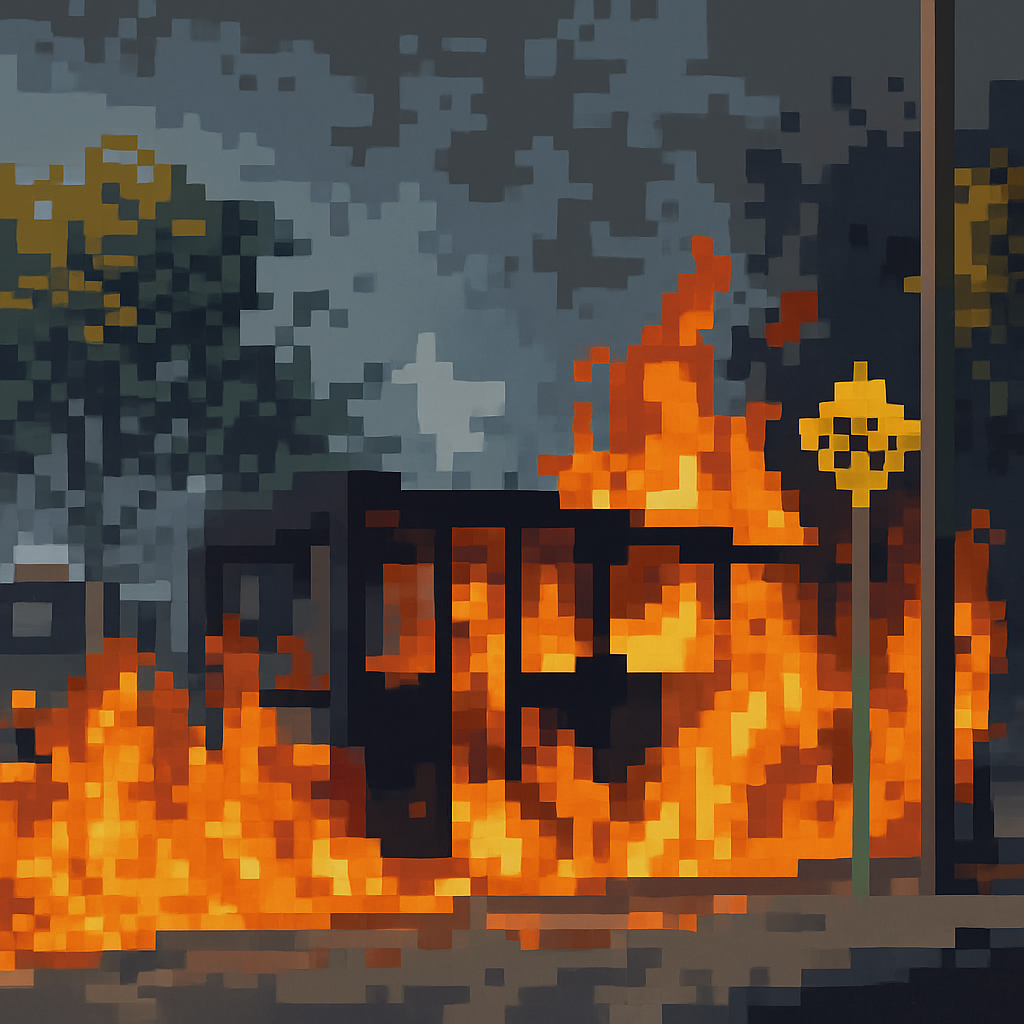
MEXICO CITY — The international tennis world was thrust into a state of high alert this week as a wave of cartel violence erupted across western Mexico, prompting urgent calls for tournament organizers and governing bodies to ensure the safety of players competing in the country. The chaos, which saw vehicles set ablaze and roadblocks established in multiple cities, followed the reported death of Nemesio “El Mencho” Oseguera Cervantes, the notorious leader of the Jalisco New Generation Cartel (CJNG).
The Abierto de Tenis Mifel, an ATP 250 event scheduled for late July in the beach resort of Los Cabos, and the upcoming Guadalajara Open WTA 1000 tournament in September suddenly found themselves under an international spotlight. Players, agents, and tour officials were scrambling for information as graphic videos of burning trucks and armed clashes circulated on social media, raising immediate concerns about security protocols for athletes traveling to and within Mexico.
A Nation on Edge: The Aftermath of El Mencho's Reported Death
According to Mexican authorities and reports from local media, the violent spree was a direct response by CJNG cells to the alleged killing of their leader. Nemesio Oseguera Cervantes, one of the most wanted men in the world with a $10 million U.S. bounty on his head, was reportedly killed in a confrontation in the mountainous region of Jalisco state. While official confirmation has been cautiously pending forensic verification, the cartel’s reaction was swift and brutal, designed to project strength and create chaos.
The coordinated attacks primarily targeted the states of Jalisco, Guanajuato, and Michoacán. Key incidents included:
• The burning of at least 30 vehicles, including buses and trucks, used to block major highways and the international bridge in Tijuana.
• Armed confrontations between cartel gunmen and National Guard forces in the outskirts of Guadalajara, Mexico’s second-largest city.
• Widespread panic and shelter-in-place orders issued for residents in several municipalities.
A senior security official, speaking on condition of anonymity, stated to Reuters, "This is a classic power demonstration by a cartel facing a leadership crisis. They aim to show they remain operational and ruthless, sending a message to rivals and the state simultaneously. The public displays of violence are a tool of intimidation and control."
Tennis Tours Face Mounting Pressure
The immediate concern for the ATP and WTA tours is the duty of care owed to their players and staff. Los Cabos, while geographically distant from the epicenter of the violence in Jalisco, relies on air travel connections that often pass through major hubs like Guadalajara and Mexico City. Furthermore, the perception of instability in the country can be enough to cause significant anxiety. Player representatives have been in direct contact with tour executives, demanding detailed safety briefings and contingency plans.
An agent for several top-50 players, who requested not to be named, told the Associated Press, "Our first priority is always the safety and mental well-being of our clients. When you see news of cartels burning buses on highways, you have to ask the hard questions. Are airport transfers secure? Is there a credible threat to the tournament venue itself? The tours and local organizers need to provide transparent, real-time risk assessments."
The Guadalajara Open in the Spotlight
All eyes are particularly on the Guadalajara Open, a premier WTA event held in the capital of Jalisco state—the very heartland of the CJNG. The tournament has been a resounding success since its inception, celebrated for its passionate crowds and its role in promoting tennis in Latin America. However, this new context presents an unprecedented challenge. Tournament director Gustavo Santoscoy released a statement emphasizing preparedness, but the situation remains fluid.
Santoscoy’s statement read, in part: "We are in constant communication with state and federal security authorities, who have reaffirmed their commitment to guaranteeing the safety of all participants in the Guadalajara Open. We have robust security protocols that are reviewed and enhanced annually with international experts. The safety of players, fans, and staff is our absolute and non-negotiable priority."
Despite these assurances, the tours are understood to be conducting their own independent security evaluations. The WTA, in a brief comment, said, "We are monitoring the situation in Mexico closely and are in active dialogue with the Guadalajara Open organizers. We will always be guided by our security advisors and the principle of athlete safety above all else." A similar sentiment was echoed by the ATP.
A Broader Context for Sporting Events
This incident is not isolated in the world of global sport. International sporting bodies frequently navigate complex security landscapes, from elevated terror threats in Europe to geopolitical tensions in Asia. Mexico itself has a strong history of hosting major international events, including FIFA World Cups and Formula One races, with significant security infrastructures in place. However, the unpredictable and targeted nature of cartel violence presents a distinct set of challenges compared to other security threats.
Security analysts note that cartels have historically avoided targeting major international tourist events, understanding the severe economic and political repercussions. Their violence is typically directed at rivals, authorities, or symbolic state infrastructure. Nevertheless, the potential for collateral damage or a misplaced attack creates a legitimate security dilemma. The tours must weigh this specific intelligence against their responsibility to not capitulate to generalized fear.
Dr. Eduardo Guerrero, a security consultant based in Mexico City, explained, "The calculus for the tennis tours is delicate. The actual statistical risk to a player inside a heavily guarded resort compound in Los Cabos or the stadium complex in Guadalajara is extremely low. However, the risk associated with ground transportation, or the psychological impact on players who feel unsafe, is very real and must be managed with utmost seriousness."
Conclusion: A Test of Protocol and Nerve
As the smoke clears from the highways of Jalisco, the tennis world is left with difficult decisions. The reported death of El Mencho may trigger a prolonged period of instability as factions within the CJNG vie for control. The upcoming tournaments represent a major test for the ATP and WTA’s crisis management frameworks. Their actions in the coming weeks will need to demonstrate:
• Proactive, transparent communication with players and teams, not just reactive assurances.
• Verified, on-the-ground security assessments from trusted third-party firms.
• Clear contingency plans, including secure transportation options and exit strategies if the situation deteriorates.
The ultimate goal is to safeguard the athletes without yielding to intimidation or abandoning a nation that has embraced tennis. The balance is perilous. As one veteran tour official privately conceded, "We operate in the real world, not a bubble. Our job is to mitigate real-world risks to an acceptable level. Right now, we are determining what 'acceptable' looks like in this specific scenario." The world will be watching to see if the serves and volleys in Mexico can proceed, unimpeded by the shadow of violence.