
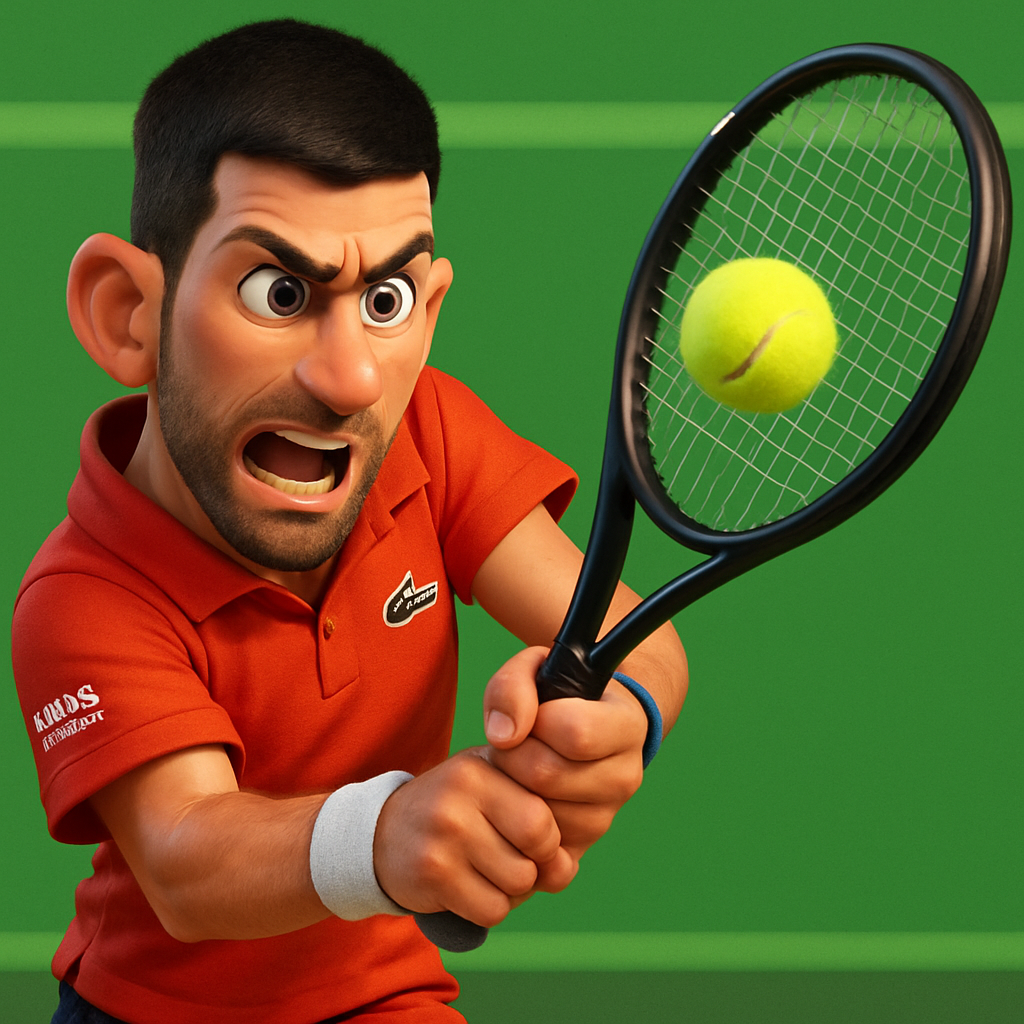
PARIS — In the pantheon of tennis rivalries, the one between Novak Djokovic and Rafael Nadal at Roland Garros stands as a monument to sporting conflict. For years, it was a fortress Nadal defended with near-mythical invincibility. Yet, in 2021, Djokovic achieved what many deemed impossible: he toppled the King of Clay on his own court in a brutal, four-hour, 11-minute semifinal epic. But the story of that seismic victory is incomplete without the brutal, self-imposed ban that followed—a decision that speaks volumes about the Serb’s unique and often misunderstood psychology.
Djokovic’s 3-6, 6-3, 7-6(4), 6-2 triumph over Nadal in the 2021 French Open semifinal was more than a match; it was a tectonic shift. It was only Nadal’s third-ever loss at the tournament he had won 13 times. The physical and emotional expenditure was colossal. Two days later, a drained Djokovic fell to Stefanos Tsitsipas in the final after fighting back from two sets down, falling agonizingly short of the title. The aftermath demanded a radical response.
The Brutal Ban: A Self-Inflicted Exile
Instead of a conventional recovery period, Djokovic enacted what he later described as a “complete and utter ban” from his phone and any form of tennis news for nearly three weeks. He retreated entirely, disconnecting from the world that had just witnessed his historic feat and subsequent heartbreak. “I didn't want to see anything about tennis,” he confessed. This wasn't mere rest; it was a conscious, almost monastic, act of mental purification.
This self-imposed exile reveals a core tenet of the Djokovic mindset: an unparalleled commitment to mental management. Where others might bask in the glory of beating Nadal in Paris or dissect the loss to Tsitsipas, Djokovic recognized the danger of emotional residue. The highs and lows were two sides of the same draining coin. His coach, Goran Ivanišević, summarized the approach perfectly: “For him, the most important thing is to switch off. To not think about tennis. To be a father, a husband, to be at home.”
The Anatomy of a Record-Breaking Mind
This incident provides a key to understanding how Djokovic has amassed a record 24 Grand Slam titles, surpassing both Nadal and Roger Federer. His physical prowess and technical mastery are undeniable, but his differentiator is a psychological framework built on extreme discipline and intentional disconnection. Consider the elements of his post-Paris protocol:
- Radical Detox: The phone ban was absolute. It eliminated external noise, praise, criticism, and the relentless churn of the tennis circuit, allowing for a true mental reset.
- Contextual Recalibration: By stepping away, he prevented the Nadal victory from becoming a defining, energy-sapping monument. It became simply a match—a hard-fought step in a longer journey.
- Fueling the Hunger: The time away allowed the disappointment of the final to transform. It wasn't a wound to nurse, but a quiet spark to reignite competitive fire without the burden of immediate pressure.
This is not the mentality of an athlete merely seeking wins; it is the methodology of a historian meticulously preserving his energy for the long arc of history. As tennis analyst Craig O'Shannessy noted, “Djokovic treats his mind with the same precision as his diet or his training regimen. The ban after Paris was a scheduled service for his psyche.”
Contrast with the Rivals
This approach stands in stark contrast to the personas of his great rivals. Rafael Nadal’s public identity is one of relentless, obsessive passion—a flame that burns constantly. Roger Federer’s was often portrayed as effortless, a natural flow of genius. Djokovic’s, however, is one of conscious, almost scientific, construction. The "ban" exemplifies this. It was a calculated, unemotional decision for optimal performance, devoid of the romanticism often attached to his peers.
The Path to 24: A Legacy Forged in Solitude
The results of this mentality are etched in the record books. The 2021 French Open, despite the final loss, was a pivotal turning point. It proved he could beat Nadal at Roland Garros, dismantling a final mental barrier. He returned from his ban not to immediately play, but to train with renewed purpose. The subsequent seasons became a testament to his reset:
- 2021: Won Wimbledon and the Australian Open after the Paris "ban."
- 2022: Despite missing two majors due to vaccination status, won Wimbledon.
- 2023: Returned to triumph at the Australian Open, then finally captured the elusive French Open title again, completing a historic triple Career Grand Slam.
Each triumph was built on the same principle demonstrated after the 2021 semifinal: the ability to compartmentalize, reset, and attack the next goal with a blank slate. The brutal ban was not a one-off, but a manifestation of a repeatable process. It is why, deep into his thirties, he has been able to maintain a staggering level, often peaking precisely in the fifth sets and final rounds of majors where mental freshness is paramount.
Conclusion: The Price of Greatness
Novak Djokovic’s victory over Rafael Nadal at the 2021 French Open was a landmark athletic achievement. Yet, the more telling chapter was written in the silent weeks that followed. The self-imposed exile from his own life’s narrative reveals the core of the champion: a man willing to forgo the immediate spoils of victory to safeguard his capacity for future conquests. In an era of constant connection, his power lies in deliberate disconnection. That brutal ban speaks volumes about the Serb—it is the quiet, uncompromising discipline behind the 24 Grand Slam titles, a testament to a champion who understands that to make history, you must first know when to walk away from it.