
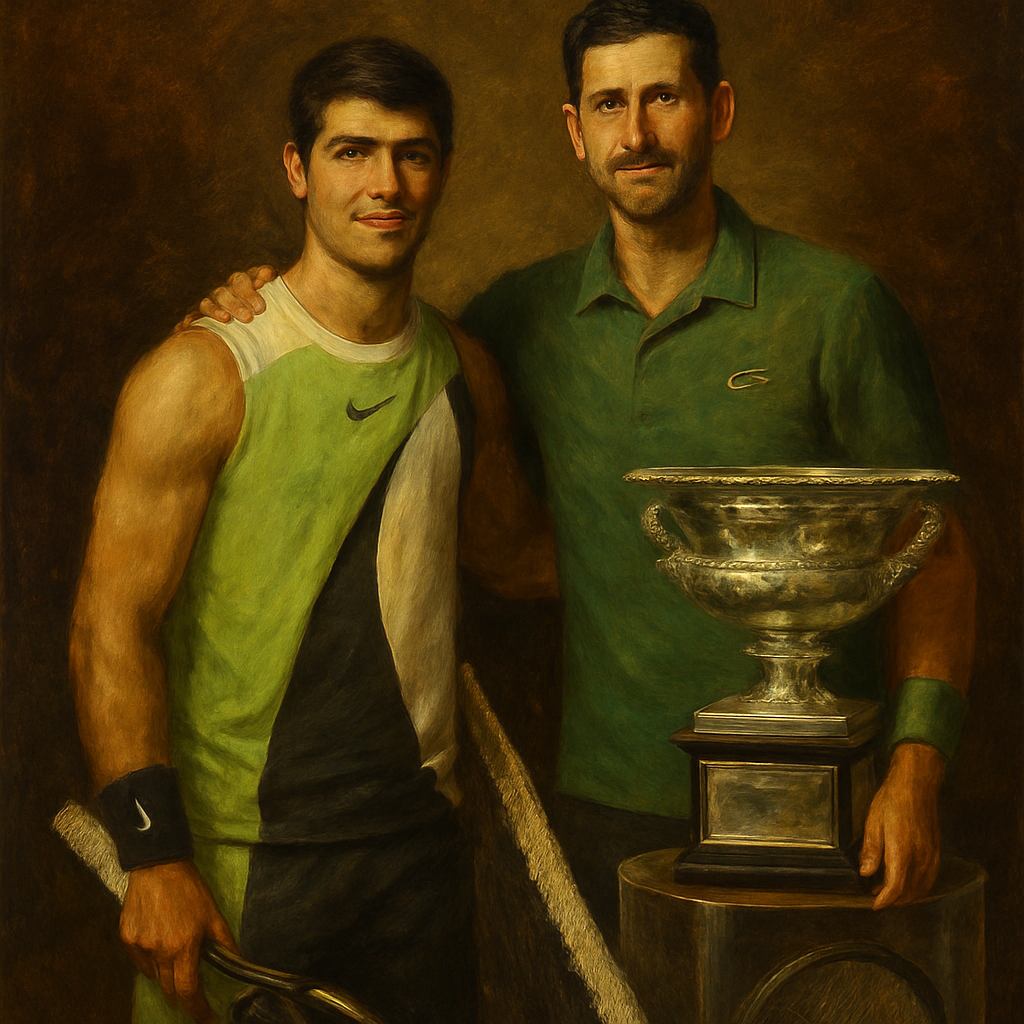
NEW YORK — In the high-stakes world of professional tennis, where rivalries are forged in Grand Slam finals and legacies are debated daily, a new name is generating a buzz that transcends typical "next big thing" hype. Joao Fonseca, the 18-year-old Brazilian phenom, finds himself in an enviable yet daunting position: being the anointed one, hailed as a "superstar" by Novak Djokovic himself and drawing direct comparisons to the sport's youthful king, Carlos Alcaraz. And if you ask Fonseca, the weight of those comparisons is something he could do without.
The Spark in New York: A Star is Born
The 2024 US Open served as Fonseca's global coming-out party. Entering the tournament ranked No. 655 and armed with a wildcard, the teenager displayed a brand of tennis that felt both refreshingly raw and astonishingly complete. His explosive power, deft touch at the net, and a fearless, smiling demeanor captivated Flushing Meadows. He scored a first-round victory, becoming the first player born in 2006 to win a Grand Slam match. Though his run ended in the second round, the impression was indelible. It was there that the tennis world's most astute observers began whispering, and those whispers reached the ears of the game's very best.
Following his own victory, Novak Djokovic was asked about the young Brazilian making waves. The 24-time major champion did not hold back. "I watched him play. I like his attitude, the way he carries himself on the court. He's a superstar. In every sense of the word," Djokovic stated. For a legend known for his measured praise, the term "superstar" applied to a teenager ranked outside the top 600 was not just notable; it was a coronation.
The Alcaraz Comparison: A Double-Edged Sword
Almost immediately, the narrative machine began its work. A charismatic, powerful, and creative young player bursting onto the scene? The parallels to Carlos Alcaraz were inevitable. Journalists, pundits, and fans began framing Fonseca as "the next Alcaraz" or "the Brazilian Alcaraz." For Fonseca, however, this label is a source of frustration. In interviews, he has expressed a clear desire to carve his own path. "I hate being compared," Fonseca admitted after his US Open run. "I want to be Joao Fonseca. Carlos is an amazing player, he's one of the best in the world, but I'm Joao."
This sentiment highlights the immense pressure such comparisons create. While flattering, they set a nearly impossible standard—Alcaraz is a two-time Grand Slam champion and former world No. 1 before the age of 21. The comparison also overlooks the unique elements Fonseca brings to the court, which include a potent one-handed backhand, a style more reminiscent of the classic attacking player, and a vibrant, samba-infused energy that is distinctly his own.
What Makes Fonseca Special?
Beyond the hype, tennis insiders point to specific attributes that make Fonseca's potential so tantalizing:
- Explosive Power: His serve and forehand are already weapons that can dominate points.
- All-Court Fluency: Unlike many modern baseliners, he is supremely comfortable rushing the net and finishing points with volleys.
- Mental Fortitude: His performances on big stages show a composure and joy under pressure that belies his age.
A Unanimous Seal of Approval from the Top
Perhaps the most compelling aspect of the Fonseca story is that the two men at the pinnacle of the sport—Djokovic and Alcaraz—are both unabashed fans. Djokovic's "superstar" comment set the tone. Alcaraz, who could view a comparably gifted young player as a future threat, has instead embraced the excitement. After Fonseca's US Open performance, Alcaraz was equally effusive. "I saw his matches. He has an amazing level. He's really, really good," said the Spaniard.
This mutual admiration creates a fascinating dynamic. It suggests that true greatness recognizes itself, even in its nascent stages. For Alcaraz, seeing Fonseca might be like looking in a mirror from two years ago—a reminder of the fearless, joyful tennis that propelled him to the top. For Djokovic, the sport's ultimate veteran, it represents the exciting future of the game he has dominated for so long. Their endorsements are not just polite praise; they are a passing of the torch and a welcome to the inner circle, all at once.
Navigating the Hype: The Road Ahead
The immediate challenge for Fonseca is managing the skyrocketing expectations. The tennis landscape is littered with "next big things" who struggled under the glare of the spotlight. His stated aversion to the Alcaraz comparison is a healthy sign of self-awareness. His focus, as he has reiterated, is on incremental improvement, not fulfilling someone else's narrative. The key for his team will be:
- Strategic Scheduling: Balancing ATP Tour events with lower-level Challengers to build ranking points and match confidence.
- Physical Development: Adding strength and endurance to withstand the grueling professional calendar.
- Media Management: Helping him articulate his own story while gracefully deflecting the constant comparisons.
His post-US Open results show the typical ups and downs of a developing player—a mix of qualifying losses and promising wins. This is the normal, unglamorous grind of professional tennis, a reality far removed from the "superstar" headlines. Yet, every time he steps on court, the electricity is palpable. Fans now expect the spectacular, and more often than not, Fonseca delivers a highlight-reel moment that justifies the buzz.
Conclusion: The Burden and the Privilege
Joao Fonseca stands at a unique crossroads. He carries the burden of being labeled a "superstar" by Novak Djokovic and the "next Alcaraz" by the tennis world—comparisons he openly dislikes. Yet, he also holds the privilege of possessing a talent so obvious and exhilarating that it commands the respect of the very icons he is measured against. This duality defines his early career. The path forward is not about rejecting the hype, but about channeling it. By focusing on becoming the first Joao Fonseca rather than the next anyone else, and by using the endorsements from Djokovic and Alcaraz as fuel rather than a blueprint, he has the chance to build a legacy that is entirely his own. In a sport eager for its next great story, all eyes will remain fixed on the smiling teenager from Brazil who plays with the joy of a fan and the fire of a future champion.