
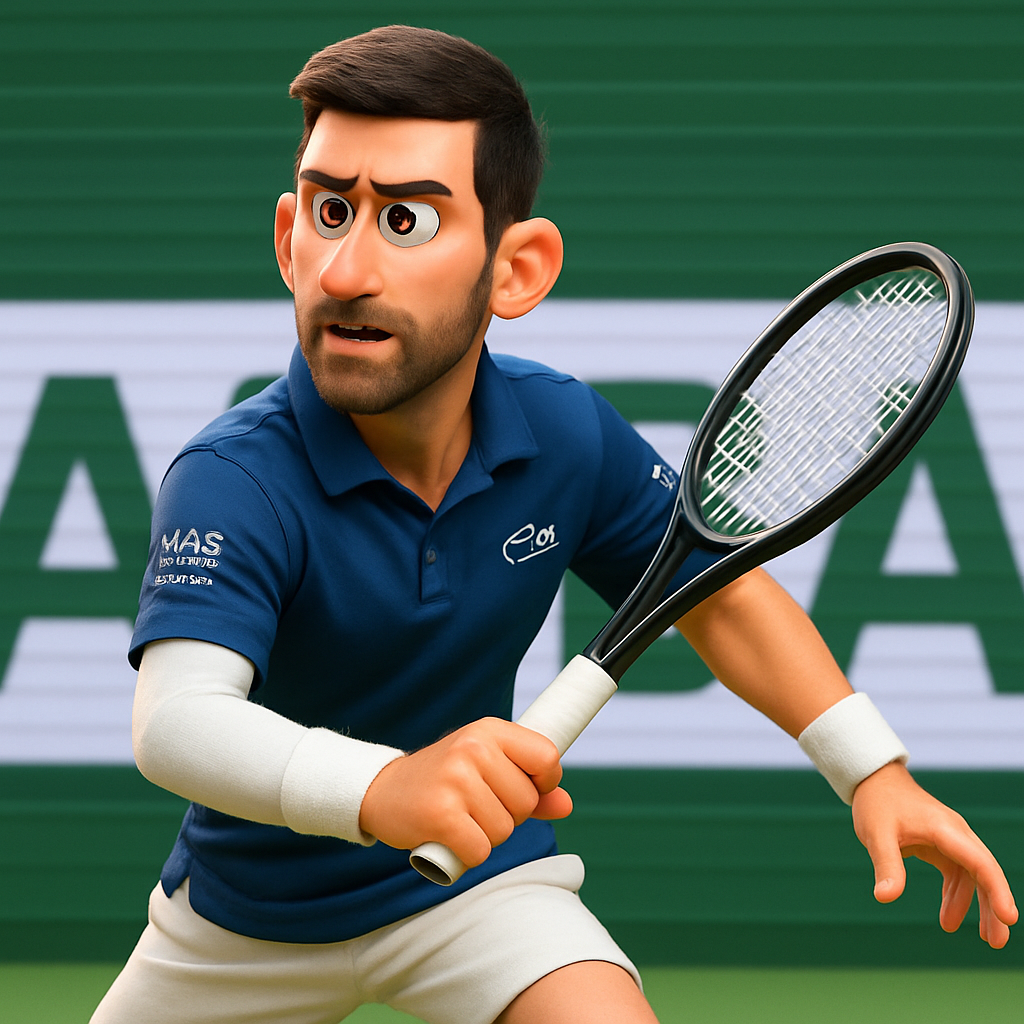
INDIAN WELLS — The tennis world watched with a familiar sense of awe as Novak Djokovic navigated his opening match at the BNP Paribas Open, but the 24-time Grand Slam champion’s victory was accompanied by a concerning revelation. Djokovic, competing in his first tournament since a surprising Australian Open semifinal exit, disclosed he has been managing a persistent and “odd” arm injury that has cast a shadow over his Indian Wells campaign and raised questions about his immediate future.
In a candid post-match press conference following his straight-sets win over Aleksandar Vukic, Djokovic pulled no punches about his physical condition. “I’ve been struggling with my right arm for the last four, five days, to be honest. I’ve been keeping it under control. But the pain is there,” the world No. 1 admitted. The admission immediately shifted the narrative from a routine return to form to a story of resilience and potential vulnerability.
The Nature of the "Odd" Ailment
Unlike a typical muscle strain or ligament tear, Djokovic described the sensation as something unfamiliar and perplexing. “It’s kind of an odd, weird feeling. It’s not pain, per se, in a sense of an injury that we as athletes are used to having. It’s just something that I have to deal with, and I’m trying to find the best solutions to get that behind me.” This description suggests a nerve-related issue or a form of chronic inflammation rather than an acute trauma, complicating both diagnosis and treatment.
The injury visibly impacted his preparation. Djokovic was forced to significantly reduce his practice load upon arriving in the California desert, a critical period for acclimatization. He revealed he had not served at full capacity for days leading into the tournament. “I did not serve at full speed in practice sets. I just kind of tried to prepare for the match with mostly groundstrokes,” he explained, a major concession for a player whose serve has become a formidable weapon.
Managing Pain and Expectations On Court
Despite the discomfort, Djokovic’s competitive instincts shone through against Vukic. He moved well and struck his groundstrokes with authority, but observers noted a noticeable reduction in the velocity and frequency of his first serves. The tactical adjustment was a clear concession to the pain. “I was not serving at full speed. I was trying to find the rhythm and get a high percentage of first serves in,” he said post-match.
The immediate concern for Djokovic and his team is managing the injury through a grueling tournament. He has employed a multi-pronged approach to stay on court, which includes:
- Intensive physiotherapy and treatment sessions multiple times a day.
- Strategic use of pain management techniques, including kinesiology tape.
- Significantly modified practice routines to avoid further irritation.
The situation is fraught with risk. Playing through the issue could lead to a more severe, long-term problem, while withdrawing would mean missing a key Masters 1000 event and ceding ground in the rankings race with rivals like Jannik Sinner and Carlos Alcaraz. “It’s not ideal, but you have to accept it and try to make the most of it,” Djokovic stated philosophically.
Broader Context and Historical Precedent
This is not the first time Djokovic has battled physical issues at Indian Wells. The hard courts, combined with often windy conditions, place unique stress on the body. Furthermore, the 36-year-old is in a delicate phase of his career where recovery from niggling injuries takes longer. The timing is particularly suboptimal, with the clay-court season and a pivotal Roland-Garros campaign on the horizon—a tournament where physical durability is paramount.
The tennis community’s reaction has been one of concern mixed with a weary acknowledgment of Djokovic’s legendary pain tolerance. His history of overcoming physical adversity—from the elbow issues that plagued him years ago to the abdominal tear he played through to win the 2021 Australian Open—means few are counting him out. However, the vague and persistent nature of this “odd” feeling is a new challenge.
What’s Next for the World No. 1?
All eyes are now on Djokovic’s second-round match and his capacity to recover between bouts. The true test will be if he faces a top opponent who can extend rallies and force him to hit explosive, high-pressure serves. His team, led by physiotherapist Ulises Badio, will be working around the clock. The key questions looming are:
- Can anti-inflammatory treatments and therapy reduce the pain to a manageable level?
- Will the compromised serve hold up under the stress of a deep tournament run?
- Is this a short-term flare-up or a sign of a more chronic issue?
Conclusion: A Champion Under a Cloud
Novak Djokovic’s revelation has added a layer of high-stakes drama to the Indian Wells tournament. While his victory proved his competitive fire burns as brightly as ever, the specter of this painful and peculiar injury is undeniable. “I hope that it’s going to be fine in the next match,” he said, a sentiment echoed by fans and pundits alike.
For now, the greatest player of his generation is operating at less than 100%, relying on his vast experience and mental fortitude to compensate. His journey through the desert will be a compelling case study in resilience, a testament to the constant battle between mind and body that defines the sport at its highest level. Whether this is a minor setback or a significant obstacle for the 2024 season remains to be seen, but one thing is certain: Novak Djokovic is playing through pain, and the tennis world is holding its breath.