
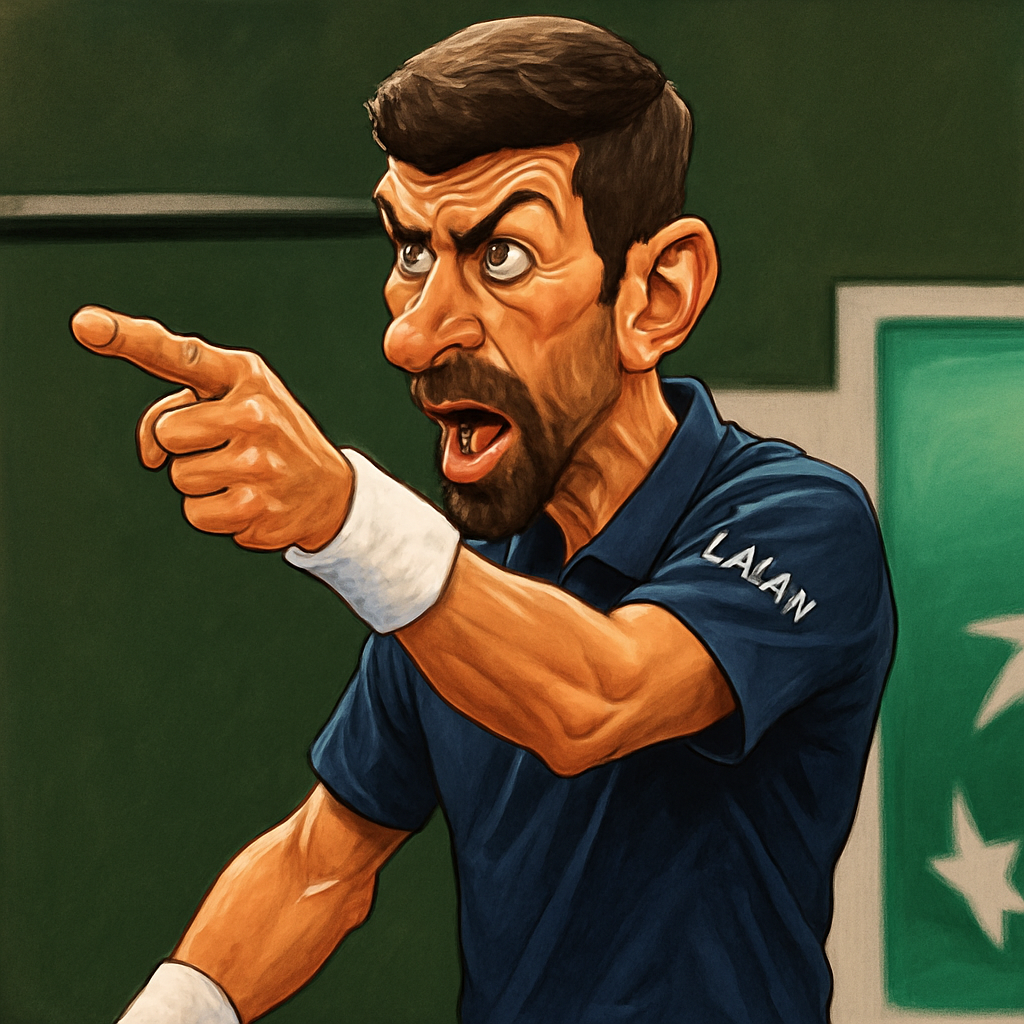
INDIAN WELLS — The serene desert setting of the BNP Paribas Open was shattered by a rare and visceral display of frustration from the game's most composed champion. Novak Djokovic, in his first competitive match in over a month, found himself locked in a tense battle against unheralded Australian qualifier Aleksandar Vukic. The struggle was palpable, and in a moment of raw exasperation, the world No. 1 turned towards his player's box and unleashed a furious tirade, yelling over at his coach, Goran Ivanišević, and the rest of his team. The incident, captured by broadcast cameras, provided a stark glimpse into the unexpected "struggles" facing the 24-time Grand Slam champion as he navigates his return to the ATP Tour.
Djokovic ultimately prevailed 6-2, 5-7, 6-3, but the scoreline told only half the story. The match was a rollercoaster of uncharacteristic errors, lost momentum, and visible physical discomfort. For a player renowned for his robotic efficiency and mental fortitude, the sight of him gesturing angrily at his support camp, shouting phrases lost to the crowd noise but clear in their intent, signaled a profound moment of vulnerability. It was a stark departure from the aura of invincibility he has cultivated for nearly two decades, raising immediate questions about his form, fitness, and state of mind as the season's first Masters 1000 event unfolds.
A Rocky Return to the Desert
Djokovic's appearance at Indian Wells marked his first tournament since a surprising semifinal loss to Jannik Sinner at the Australian Open. His time away from the court was not a typical training block; it was punctuated by minor surgery to address a meniscus tear in his right knee—an issue he had been managing. Furthermore, his decision to part ways with longtime coach Goran Ivanišević just days before the tournament, despite their tremendous success together, added a layer of intrigue and potential instability. The Serbian arrived in the California desert without a formal coach in his box, accompanied instead by a team of advisors including former doubles world No. 1 Nenad Zimonjić.
The match against Vukic, ranked 69th in the world, was expected to be a straightforward tune-up. The first set went according to script. However, the second set revealed the cracks. Djokovic's movement, usually a symphony of graceful slides and explosive changes of direction, appeared slightly labored. His timing was off, leading to a cascade of forehand errors that found the net or sailed long. After failing to convert break points and subsequently dropping his own serve, Djokovic's frustration boiled over. At the changeover, he glared at his team and erupted, his voice cutting through the stadium. "You tell me what's wrong! What am I doing?!" he was reported to have yelled, his hands gesturing in confusion and anger.
Decoding the On-Court Outburst
For tennis analysts and fans, the outburst was highly uncharacteristic. Djokovic is known for internalizing pressure, often channeling frustration into heightened focus. This public lashing out at his support team suggested a deeper level of uncertainty. Several factors likely contributed to the moment:
- Technical Disconnect: Without Ivanišević's steadying presence, Djokovic may have felt a lack of clear tactical guidance mid-match.
- Physical Limitations: The recent knee procedure, while deemed successful, inevitably affects confidence in movement and shot selection.
- Rust and Rhythm: A month without match play, especially for a 36-year-old, disrupts the precise timing required at the highest level.
- Mounting Pressure: The desire to reclaim the Indian Wells title after a five-year absence and answer questions about his post-split form.
Tennis legend and commentator Jim Courier noted the significance of the moment during the broadcast. "That's as animated as I've seen Novak with his box in a very long time, maybe ever in this context," Courier observed. "He's searching for answers out there. He's not finding them within himself at the moment, and he's demanding them from his team."
The Path Forward in Indian Wells
Despite the turbulence, Djokovic's champion instincts resurfaced in the third set. He elevated his intensity, cut down on the unforced errors, and broke Vukic's serve to secure the victory. In his post-match press conference, he was candid about the challenges. "I was not maybe playing my best, particularly in the second set... I kind of lost momentum," he admitted. Regarding the outburst, he framed it as a normal part of player-coach dynamics. "It's not the first nor the last time [I yell at the box]. It's normal. Sometimes you have disagreements... In the heat of the battle, sometimes you show your frustration."
However, he did not shy away from acknowledging the broader context of his current situation. When asked about the coaching change, he stated, "Goran and I decided to stop working together a few days ago. We felt that we gave each other our best and that we needed a new voice, a new freshness in the team. It's never easy to make such a decision." This transition period, coupled with physical recovery, creates a unique set of hurdles for the all-time great.
A Critical Test Ahead
The true measure of this incident will be how Djokovic responds in his subsequent matches. The Indian Wells courts, known for their slow, high-bouncing nature, demand peak physicality and patience—attributes Djokovic has mastered but may currently be refining. Each round will present a sterner test, and opponents will have taken note of the visible frustration. They will seek to extend rallies, probe his movement, and attempt to push him into similar states of mental discomfort. The question is whether this outburst was a one-off release valve or a symptom of a more protracted period of adjustment.
Conclusion: A Champion in Transition
Novak Djokovic's angry exchange with his box at Indian Wells was more than just a bad moment in a difficult match; it was a clear signal that the sport's most dominant force is navigating a complex transition. The confluence of recent surgery, a significant coaching change, and the natural challenges of maintaining peak form in his late thirties has created a perfect storm of uncertainty. While his fighting spirit and skill ultimately saw him through against Vukic, the "struggles" were undeniably clear to see. The episode serves as a potent reminder that even the greatest champions are not immune to doubt, frustration, and the arduous process of rebuilding confidence. As the tournament progresses, all eyes will be on Djokovic to see if he can channel that frustration into the focused fury that has defined his career, or if this marks the beginning of a more vulnerable chapter for the king of tennis.