
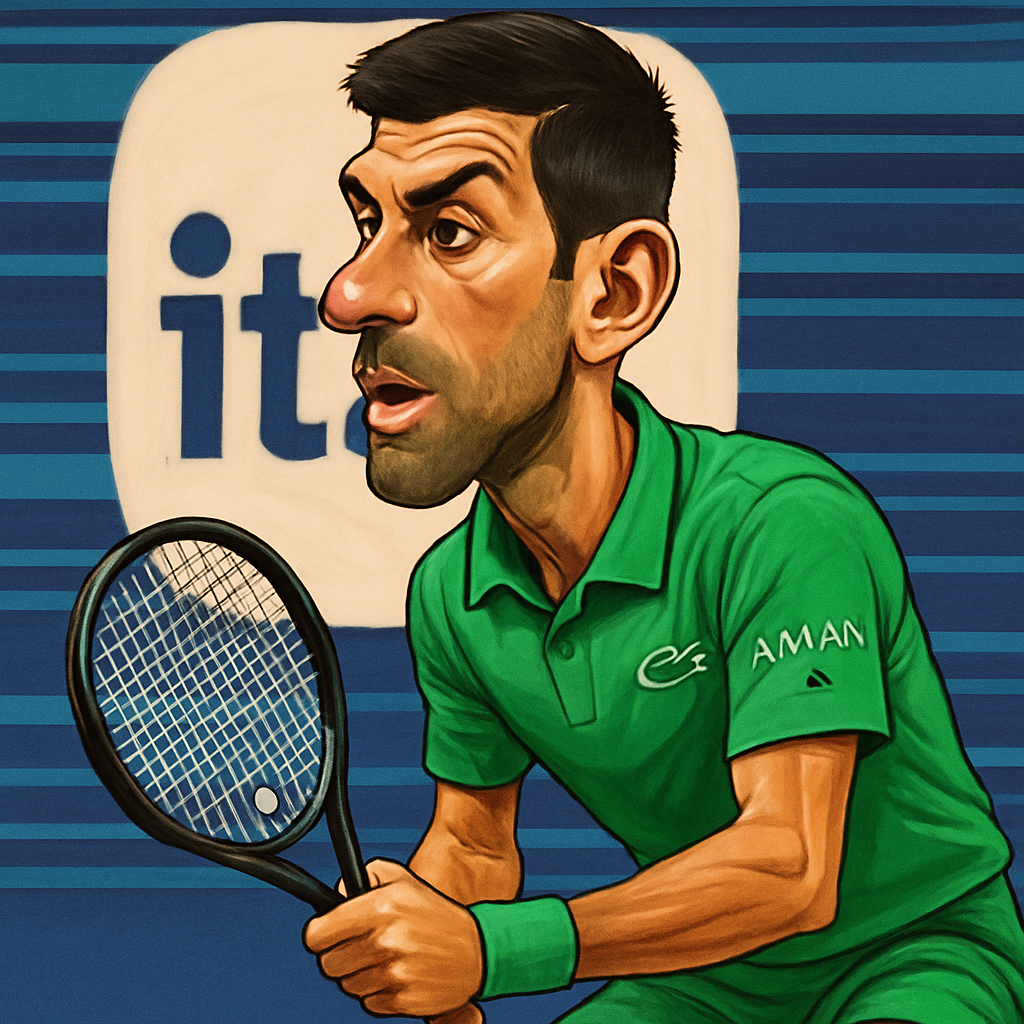
MIAMI — In the pantheon of modern tennis, the names Novak Djokovic and Rafael Nadal stand as titans, synonymous with relentless excellence and global sporting superstardom. Yet, according to Miami Open tournament director James Blake, there exists a singular force whose impact on the tournament's operational reality transcends even that legendary duo. In a revealing interview, Blake explained how one particular crowd favorite, through sheer gravitational pull of fandom, necessitated a unique "security warning" and presented logistical challenges that Djokovic and Nadal never have.
The Unmatched Frenzy of a Global Icon
Blake, a former world No. 4 and respected figure in tennis administration, didn't mince words when identifying the player who operates on a different level of fan mania. That player is Carlos Alcaraz. The young Spanish sensation, with his explosive game and infectious smile, has not only captured titles but a frenetic, youthful energy that transforms venues. "We've had Novak, we've had Rafa, we've had Roger [Federer]," Blake stated. "But the warning I got from security was about Alcaraz. They said, 'He's different. The crowd reacts differently.'"
This wasn't a commentary on the quality of play, but on the nature and intensity of the adoration. Blake elaborated that while Djokovic and Nadal command immense respect and draw huge crowds, the atmosphere surrounding Alcaraz is palpably more chaotic and exuberant. It's a phenomenon driven by a new, digitally-native generation of fans who treat his matches like can't-miss events. Security teams, trained to handle large crowds, had to recalibrate their plans specifically for the 20-year-old's movements on and off the court, anticipating surges and excitement that required unique management.
A New Kind of Tennis Superstardom
What makes the Alcaraz effect so distinct? Blake pointed to a combination of his playing style and persona. "He plays with such joy and such flash," Blake noted. "Every point could be an Instagram reel or a TikTok highlight. Kids see that. They want to get close to that energy." This creates a scenario where the desire for proximity—for a selfie, a shout, a fist bump—is more intense and less predictable than with the established legends, whose fan interactions, while massive, often follow more traditional and contained patterns.
The operational differences Blake highlighted are stark. For a player like Djokovic, security is about managing the scale of his fame. For Alcaraz, it's about managing its velocity and spontaneity. The tournament director shared an anecdote from a previous year: "We had a situation where he finished a practice session, and the rush to the barriers was something we had to be extra prepared for. It's a younger crowd, and they move fast. That was the 'warning'—be ready for a different kind of movement."
Key Factors in the "Alcaraz Effect"
Blake's insights point to several concrete factors that differentiate the Alcaraz phenomenon:
• Demographic Draw: He attracts a significantly younger audience, which behaves with more impulsive enthusiasm.
• Social Media Amplification: His highlight-reel style is perfectly suited for short-form video, creating a feedback loop of hype.
• Novelty and Accessibility: As a newer star, the fan relationship feels fresh and less formalized compared to the long-established dynasties of the "Big Three."
This isn't to diminish the stature of Djokovic or Nadal. Blake was quick to clarify that their matches are the centerpieces of any tournament, and their fan bases are legion. "When Novak walks on site, there's a reverence. When Rafa walks on, there's this deep, passionate support," he said. "But with Carlos, it's like a rock concert. It's a different decibel level, a different kind of electricity. Our job is to ensure that energy is safe for everyone, including Carlos himself."
The Evolution of Fan Engagement in Tennis
Blake's observations underscore a broader shift happening in tennis spectatorship. The sport is successfully capturing a new generation, and Alcaraz is the spearhead. This evolution requires tournaments to adapt. The Miami Open, with its vibrant, festival-like atmosphere in a major metropolitan hub, is perhaps the perfect venue to witness this change in real-time. The traditional, hushed reverence of Centre Court at Wimbledon exists alongside the pulsating, party-like environment of Hard Rock Stadium when Alcaraz is playing.
The security warning, in this context, is less about danger and more about preparedness for a new paradigm. It signifies Alcaraz's arrival not just as a champion, but as a cultural phenomenon. Blake summed it up: "We've had the biggest stars in the history of the game here. I've never gotten a specific heads-up like that before. It tells you everything about what he represents right now. He's not just playing matches; he's creating events."
This dynamic presents a welcome "problem" for tournament directors. Managing the Alcaraz frenzy is a challenge born of immense popularity and the sport's growing appeal. It requires enhanced coordination between player liaisons, security details, and venue operations to channel the excitement positively. The goal is to protect the player's focus and safety while allowing fans to feel part of the exhilarating experience he generates.
A Testament to Tennis's Thriving Future
In the end, James Blake's revelation is ultimately a positive commentary on the health and direction of tennis. The fact that a 20-year-old can generate a unique operational memo in a tournament that has hosted every great player of the last 40 years is a testament to his extraordinary connection with the public. It signals a passing of the torch not just in terms of trophies, but in the very nature of tennis stardom.
While Novak Djokovic continues his pursuit of history and Rafael Nadal remains an eternal icon, Carlos Alcaraz is forging a new path. He is the player who forced a seasoned tournament director and his security team to hold a special briefing. As Blake's experience shows, in the bustling, sun-drenched chaos of the Miami Open, the warning was clear: Alcaraz isn't just the future; he's a present-day force whose impact reverberates beyond the baseline, requiring everyone—from officials to fans—to buckle up for a thrilling, and uniquely energetic, ride.