
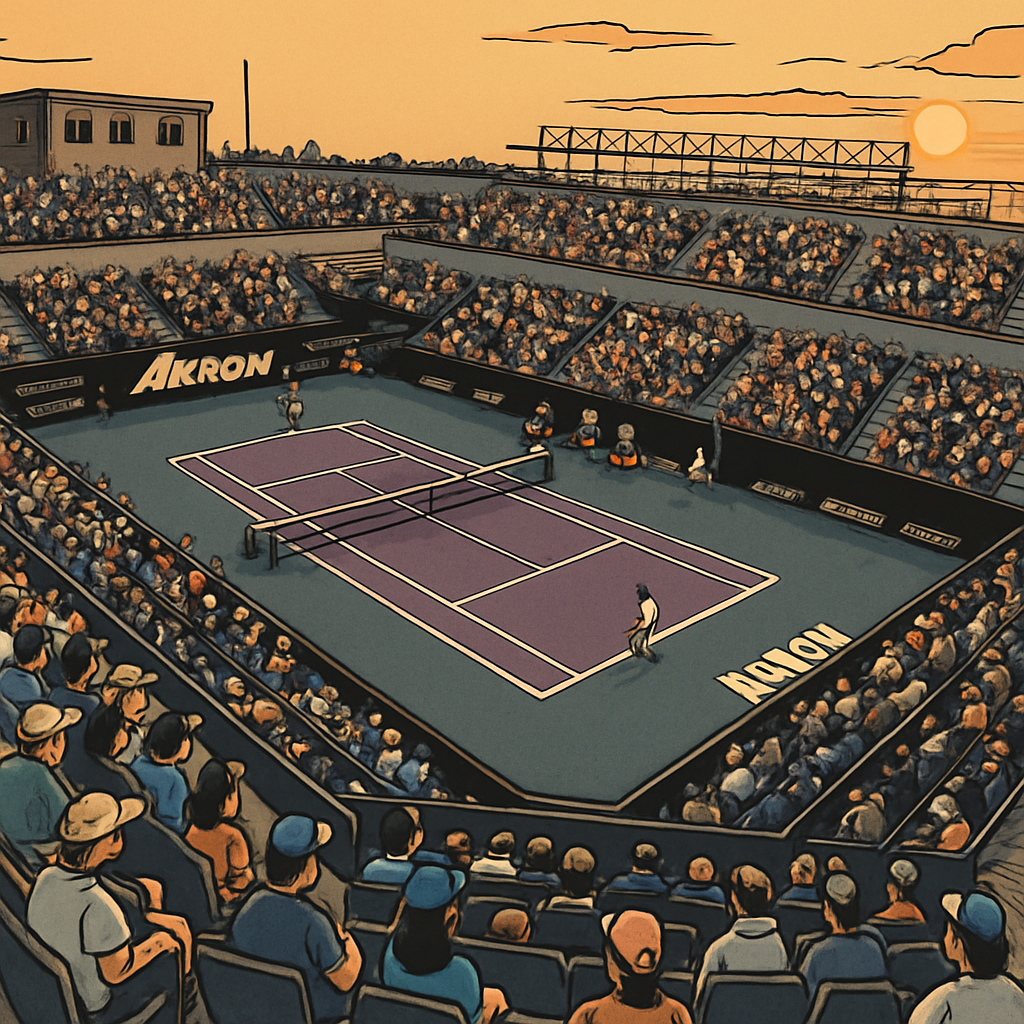
MERIDA, Mexico — The serene atmosphere of a professional tennis tournament was shattered this week at the Merida Open, as local authorities deployed a significant police presence around the Club de Tenis La Cascada following a series of security incidents that left players and fans unsettled. The heightened security measures came after British number one Katie Boulter and her team found themselves caught in a frightening situation, casting a shadow over the WTA 250 event.
The tournament, which is a key stop on the lead-up to the prestigious "Sunshine Double" in the United States, is typically known for its vibrant local support and festive atmosphere. This year, however, the focus shifted abruptly from forehands and backhands to safety and security. Organizers and local government officials moved swiftly to implement a reinforced security cordon, including increased patrols and checkpoints, to ensure the remainder of the event could proceed without further disruption.
A Terrifying Ordeal for Boulter and Team
The chaos began away from the courts. Katie Boulter, the tournament's second seed and a recent champion in San Diego, was reportedly targeted in a harrowing incident. According to multiple reports from British media, including statements from Boulter's boyfriend and fellow tennis professional Alex de Minaur, the British player's team car was followed and aggressively intercepted by another vehicle while traveling in Merida. The individuals in the pursuing car allegedly attempted to force Boulter's vehicle to stop, creating a dangerous and terrifying scenario for those inside.
While details remain understandably guarded for security reasons, the psychological impact was immediate. Boulter, who had been in strong form, was visibly shaken. She took to the court for her first-round match against American Caty McNally just hours after the ordeal and suffered a surprising 6-2, 6-2 defeat. Although she did not publicly cite the incident as the cause, the timing was conspicuous. De Minaur later commented to the press, "It's not nice for anyone to go through, especially your loved one. It was a pretty scary experience."
Tournament and Government Response
In response to the incident involving Boulter and other general security concerns, tournament director Gustavo Santoscoy announced a major escalation in protective measures. Working in concert with the Yucatan state government, a comprehensive security operation was put in place. "We have reinforced security with more police, more preventive elements, to give more safety to the players, the tournament, and the public," Santoscoy stated. The visible changes included:
- A marked increase in uniformed police and tactical units patrolling the tournament grounds and surrounding areas.
- Enhanced security checks at all entry points for players, staff, and spectators.
- Coordinated escorts and secure transportation protocols for players traveling to and from their hotels and the venue.
- Continuous monitoring and surveillance of the tournament site and official hotel zones.
The Yucatan state government emphasized that Merida is consistently ranked as one of the safest cities in Mexico and that the incidents were not reflective of the city's overall security. Their rapid deployment of resources was framed as a precautionary and decisive measure to protect the international guests and the reputation of the event.
A Broader Pattern of Concern
The scare in Merida is not an isolated event in the world of tennis, particularly in Latin America. Players have occasionally voiced concerns about security at certain tour stops, impacting their sense of comfort and focus. The Boulter incident brings to mind past situations where safety issues have intersected with tournament play, raising questions about the duty of care owed by event organizers to the athletes. While the WTA has robust security standards, local implementation and the unpredictable nature of criminal activity can create vulnerabilities.
The psychological toll on players in such situations is significant. Competing at the elite level requires immense concentration and mental fortitude. An off-court trauma, such as being targeted or followed, can severely disrupt an athlete's preparation and performance, as may have been the case for Boulter. Fellow players expressed solidarity, acknowledging the difficulty of competing under such duress. The WTA, while not issuing a detailed public statement on the specific incident, is understood to be working closely with local organizers to monitor the situation.
The Tournament Continues Under Guard
Despite the unsettling start, the Merida Open proceeded with its schedule under the new security blanket. American players dominated the latter stages, with the focus shifting back to tennis as the week progressed. The enhanced police presence became a normalized part of the backdrop, a silent reminder of the week's early events. For the players, especially those traveling with small teams or alone, the incident served as a stark reminder of the vulnerabilities that can come with the global touring lifestyle.
Looking Ahead: Security and the Tour
The events in Merida are likely to prompt renewed discussions within the WTA about player security protocols, especially for lower-tier events where resources may be different than at premier tournaments. Key considerations moving forward will include:
- The standardization of secure transportation for all players, not just top seeds.
- Pre-event security briefings for players and their teams on local conditions.
- The potential for discrete security personnel for player movement in higher-risk locations.
- Clearer channels for players to report safety concerns anonymously and without fear of repercussion.
The ultimate success of the Merida Open's response will be measured by whether the remaining days concluded without incident and whether players leave feeling their safety was ultimately prioritized. For Katie Boulter, the tournament ended in an early exit, but the more important outcome was a safe departure from a situation that could have been far worse. The sight of increased police around a tennis tournament is an unusual one, but in Merida this week, it became a necessary symbol of reassurance in the face of chaos.