
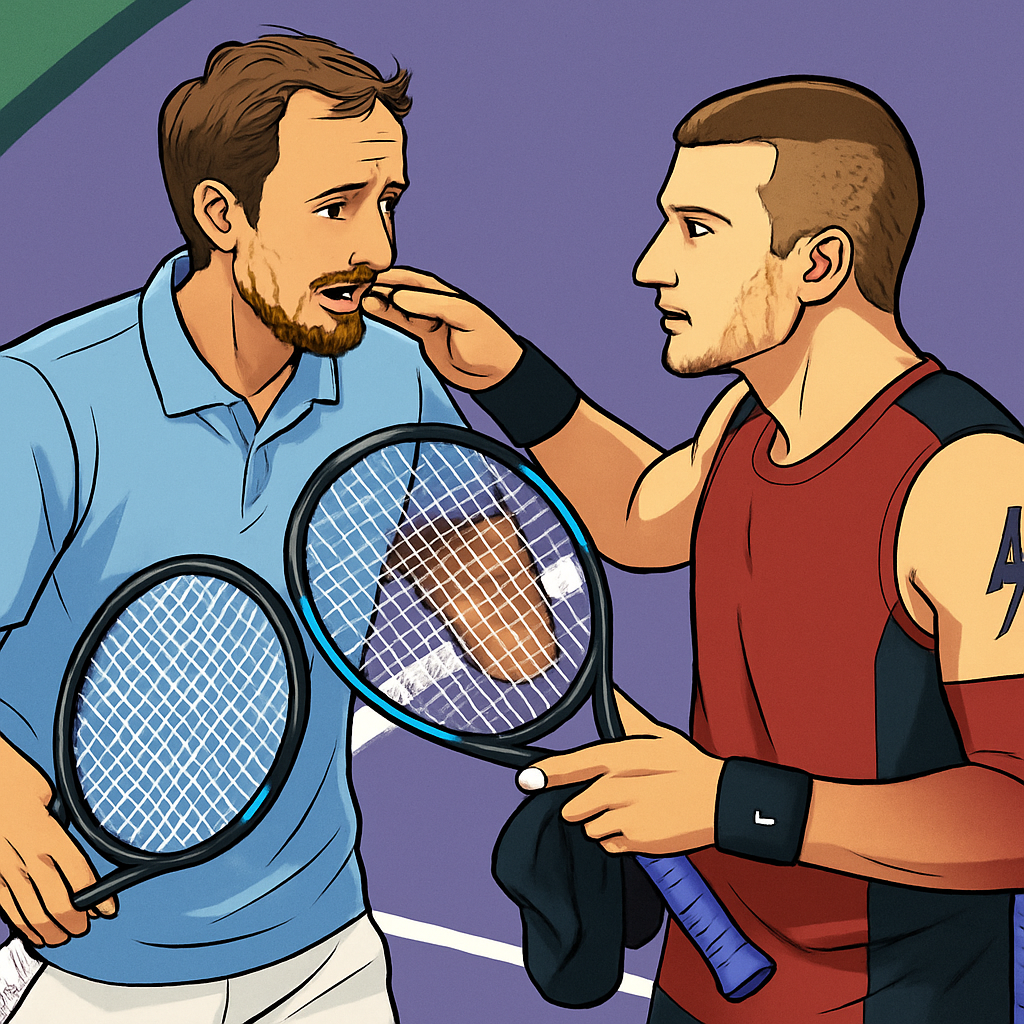
INDIAN WELLS — The 2024 BNP Paribas Open will be remembered not just for its champions, but for a contentious third-round match that has sparked significant debate and appears to have accelerated a long-discussed change to the ATP Tour's rules. The controversy centers on British No. 1 Jack Draper, whose dramatic medical timeout during his defeat to Daniil Medvedev has led to renewed calls for a reform of the sport's treatment of player injuries and illnesses.
Draper, seeded 24th, was locked in a grueling battle with the 2023 champion Medvedev under the desert sun. After losing a tight first set 7-5, Draper began to struggle physically. Visibly distressed and struggling with his breathing, he called for the physio at 1-1 in the second set. Following a brief consultation, he left the court for a medical timeout, returning several minutes later looking pale and unsteady. He managed to hold serve but was broken in his next service game, and soon after, trailing 1-4, he retired from the match.
The Core of the Controversy
The incident ignited immediate debate. While many spectators expressed concern for Draper's well-being, others, including commentators and fans online, questioned the timing and nature of the timeout. The skepticism stemmed from a pattern in Draper's young career, which has been frequently interrupted by physical issues. Critics argued the timeout, coming immediately after losing a demanding first set, disrupted Medvedev's rhythm in a manner that bordered on gamesmanship, even if unintentional.
Medvedev himself was diplomatic but pointed in his post-match comments. "It's always tricky, because you never know what the guy is feeling," he said. "I saw that he was not feeling well... But for sure, when it happens right after you lose a set, sometimes you think, 'Is it tactical?' But in the end, I think he was really struggling." This ambivalence highlights the difficult gray area players operate in when an opponent takes a medical break.
Sabalenka's Advocacy and the Push for Change
The Draper incident became a catalyst for a broader movement that has been gaining steam, most vocally championed by World No. 2 Aryna Sabalenka. Just days before, Sabalenka had publicly and forcefully reiterated her wish for a fundamental change to the rules regarding on-court medical treatment. Her position is clear: if a player cannot continue under their own power, they should forfeit the match.
"I think they have to change this rule," Sabalenka stated. "I think when you get help from the physio, you should get maybe one minute, they do their thing, and if you cannot continue, you should just retire. Because sometimes it's really annoying because they're taking so much time."
Sabalenka's frustration is rooted in the potential for medical timeouts to be used as strategic tools to break an opponent's momentum, a practice often referred to as "medical manipulation." Her proposed rule change aims to eliminate this ambiguity by forcing a binary decision:
- A player receives immediate, brief on-court attention.
- If they can continue within a very short timeframe, play resumes.
- If they cannot, they must retire, preserving the competitive integrity of the match.
This stance has found support among other top players who believe the current system, which allows for off-court treatment and extended breaks, is too lenient and open to exploitation. The Draper-Medvedev match, broadcast globally, served as a prime-time example of the very scenario Sabalenka seeks to prevent.
ATP Rule Changes on the Horizon
In a significant development, the ATP has confirmed it is actively reviewing its medical timeout rules and is expected to implement changes for the 2025 season. While the final details are being finalized in consultation with the Player Council and medical experts, the reforms are expected to align closely with the spirit of Sabalenka's suggestions. Key focuses of the review include:
- Strictly limiting the duration of off-court medical timeouts.
- Clarifying and tightening the criteria for what constitutes a treatable medical condition.
- Potentially introducing a "cap" on the total number of medical timeouts a player can take in a match.
An ATP spokesperson acknowledged the growing consensus for change, stating, "The competition committee, with input from our medical team, is evaluating the medical timeout protocol to ensure it protects player health while safeguarding the flow and fairness of our competitions. An update to the rules is anticipated."
The Player Health Dilemma
Opponents of a stricter rule, however, raise a critical counterpoint: player safety. They argue that conditions like cramping, dizziness, or respiratory issues (similar to what Draper experienced) can sometimes be alleviated with proper treatment and rest. Forcing a player to retire immediately could punish legitimate, treatable medical episodes and potentially encourage players to compete while injured, risking long-term health.
Draper's camp has been adamant that his issue was genuine. His physical struggles throughout his career are well-documented, and his team emphasized that the extreme heat and a pre-existing stomach issue were significant factors. This highlights the immense difficulty officials face in adjudicating the legitimacy of a medical complaint in real-time.
Conclusion: A Watershed Moment for Tennis
The Jack Draper controversy at Indian Wells has acted as a powerful accelerant, transforming a persistent grumble in the locker room into a concrete push for regulatory action. While Draper's physical distress was undoubtedly real, the timing and optics of his medical timeout encapsulated the very concerns that players like Aryna Sabalenka have been voicing. The ATP's move to change the rules is a direct response to this mounting pressure, signaling a shift toward prioritizing uncompromised competition.
The coming rule changes will attempt to walk a fine line. The goal is to eliminate strategic timeouts that undermine the sport's integrity without jeopardizing the welfare of athletes. As Sabalenka succinctly put it, "The sport is tough, and it should be tough." The new regulations will be a test of whether tennis can maintain its physical demands while ensuring every point is contested on a level playing field, free from the shadow of tactical medical interventions.