
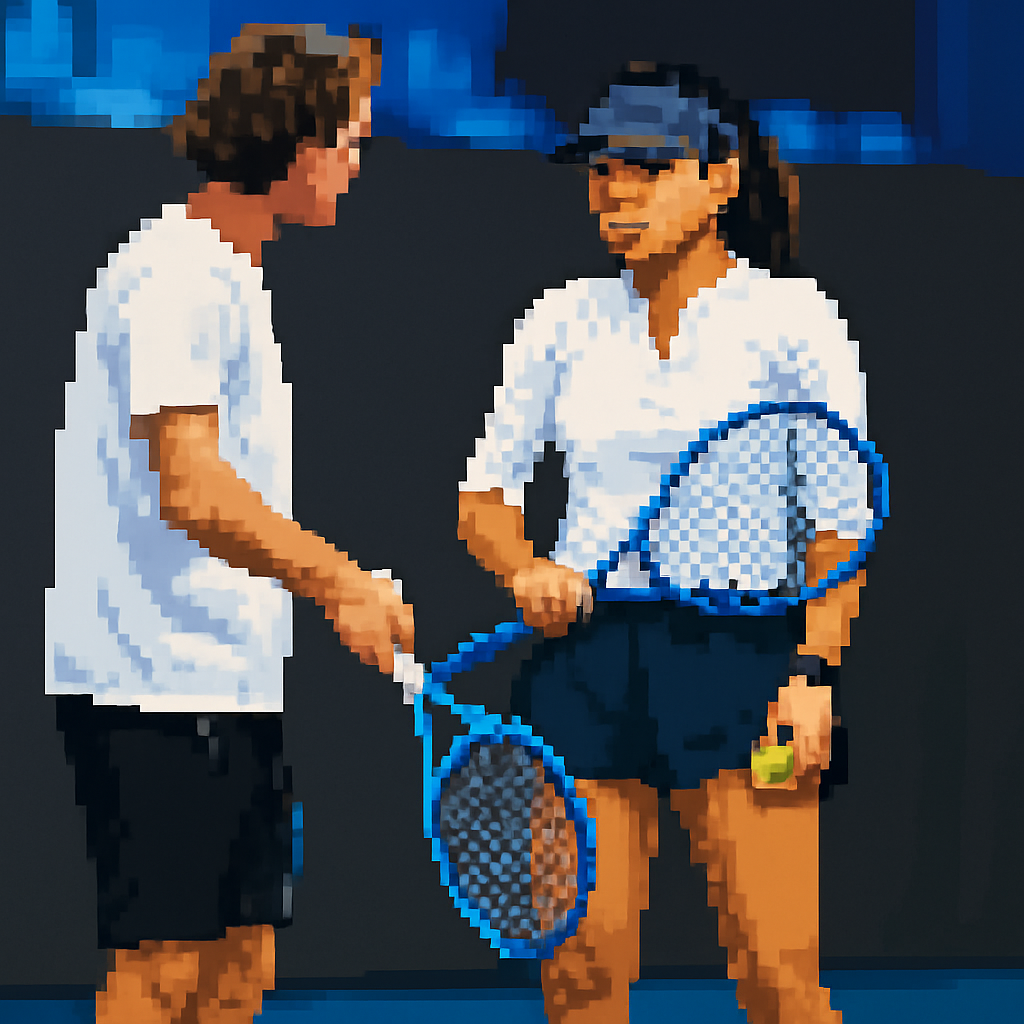
The world of professional tennis coaching is a complex ecosystem of strategy, psychology, and intense personal dynamics. For a young star like Emma Raducanu, whose career has been a whirlwind of historic triumph and subsequent physical challenges, finding the right guiding hand is paramount. Her partnership with seasoned Spanish coach Francisco Roig, a former mentor to Rafael Nadal, has become a focal point of her comeback narrative. This relationship, built on technical refinement and mutual respect, recently entered the spotlight for a different reason: Roig's candid, and some would say mocking, assessment of the games of Raducanu's rivals.
The Foundation of a Key Partnership
Following her stunning 2021 US Open victory, Emma Raducanu navigated a carousel of coaches, searching for stability amidst injury setbacks and fluctuating form. The appointment of Francisco Roig in the spring of 2024 signaled a new, focused chapter. Roig, with over two decades of experience cultivated primarily in the Nadal camp, brought a reputation for granular technical work, particularly on clay, and a deep understanding of constructing winning points. For Raducanu, the appeal was clear: "He has so much knowledge and experience, especially on clay which is a surface I really want to improve on," she stated.
The early results of their collaboration were promising. Raducanu displayed a more robust and tactically varied game during the clay-court season, notably reaching the quarter-finals in Stuttgart. The partnership seemed built on a foundation of clear communication and shared ambition. Roig, for his part, emphasized his role in bolstering Raducanu's confidence and physical resilience, focusing on the long-term project rather than short-term fixes.
Roig's Candid Comments Stir the Pot
The dynamic shifted into public scrutiny following comments Roig made in an interview with Marca, a Spanish newspaper. Discussing the current WTA landscape and Raducanu's potential pathway back to the top, Roig offered blunt critiques of the playing styles of some of the tour's leading figures. He suggested that many top players lacked a complete, versatile game, relying on predictable patterns. "Many of them do two things: serve and return. If you take that away from them, they are very predictable," he asserted.
While not naming specific players, the implication was broad and pointed. He contrasted this with Raducanu's attributes, praising her all-court ability and hand skills. "Emma has very good hands, she can volley, drop shot, play with angles... she has a lot of resources," he said, positioning her as a more creative and complete player than the implied "predictable" rivals. The comments were interpreted by many as a deliberate, and perhaps provocative, strategy to bolster his player's mindset while questioning the depth of the competition.
The Tennis World Reacts
The reaction from the tennis community was mixed. Some viewed Roig's analysis as a shrewd psychological ploy, a classic move from an old-school coach to build a "us against them" mentality. Others saw it as unnecessarily dismissive of the athletic power and skill that dominates the modern women's game. Analysts debated whether publicly questioning the versatility of opponents—players Raducanu would inevitably need to beat—was a strategic masterstroke or a potential source of locker-room friction.
Key questions emerged from the episode:
- Was this a calculated statement to empower Raducanu?
- Could it create a target on Raducanu's back from motivated rivals?
- Did it reveal a core tactical philosophy Roig is instilling: to disrupt rhythm and avoid baseline slugfests?
Raducanu's Response and Unified Front
Crucially, Emma Raducanu did not distance herself from her coach's comments. Instead, she presented a united front. When asked about the interview, she acknowledged Roig's direct style, framing it as part of his honest and passionate character. "Francisco is very passionate. He says what he thinks and he believes in me and my game a lot," she remarked, effectively endorsing the sentiment behind his words without necessarily repeating the criticism herself.
This alignment is telling. It suggests Raducanu is fully bought into Roig's philosophy and appreciates his unwavering belief in her unique toolkit. It transforms a potentially divisive comment into a statement of team identity. They are not just working on forehands and backhands; they are cultivating a specific, artistry-based tennis identity they believe can disrupt the established order. Her response underscored a mature understanding of the coach-player dynamic, where public solidarity is often as important as private training.
Beyond the Headlines: A Deepening Bond
The episode, rather than causing a rift, appears to have highlighted the strength of their professional relationship. Insiders note that Raducanu values Roig's transparency and his challenge to her to be a "thinking" player on court. Their work extends beyond technique to include:
- Point construction and strategic nuance, especially on clay.
- Building physical durability to withstand the rigors of the tour.
- Mental resilience, using Roig's vast experience in high-pressure scenarios from the Nadal dynasty.
Raducanu has spoken about the "calmness" and clarity Roig brings. For a player whose career has been anything but calm, this stabilizing influence is perhaps the most significant element. The controversial comments, therefore, can be seen as an extension of Roig's protective and confident approach to his charge. He is not just a coach; he is an advocate, publicly staking his reputation on her distinctive talent and positioning her as a different kind of threat.
Looking Ahead: A Partnership Tested
The true test of the Raducanu-Roig partnership will, of course, be results. Can the technical adjustments and strategic beliefs translate into consistent victories and a return to the top echelons of the game? The comments have undoubtedly raised the stakes for their next encounters with the very players Roig indirectly referenced. Every match against a top-10 power hitter will now be scrutinized through the lens of his "predictability" critique.
However, the episode has also solidified their bond. It has demonstrated Raducanu's trust in her coach's judgment and her comfort with a more assertive, confident team narrative. In the high-stakes world of professional tennis, where mental edges are fiercely sought, Francisco Roig has drawn a clear line in the sand. He has declared Emma Raducanu's game not just competitive, but uniquely superior in its variety. Whether seen as gamesmanship or genuine analysis, the message to Raducanu is clear: "We believe your way can win." And in the player's mind, that unwavering belief from a coach of Roig's pedigree may be the most powerful weapon of all.