
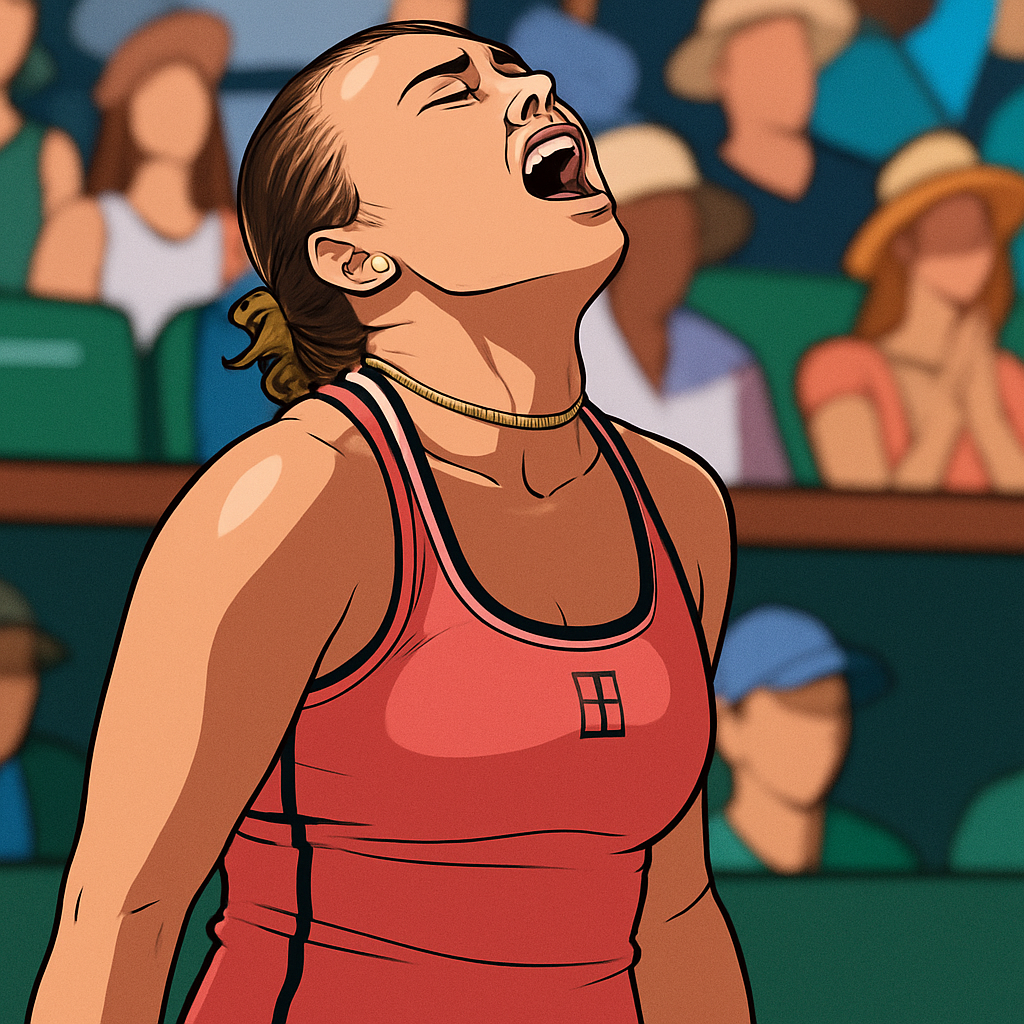
INDIAN WELLS — The stage was set for a blockbuster final at the BNP Paribas Open, a dream rematch of the 2023 Australian Open final between Aryna Sabalenka and Elena Rybakina. But the path to that final was anything but smooth, marked by a stunning on-court meltdown from the world No. 2 and a weather-induced scheduling crisis that has sent shockwaves into the upcoming Miami Open.
Sabalenka's Quarterfinal Fury
Aryna Sabalenka, known for her explosive power and fiery temperament, faced a stern test in the quarterfinals against rising American star Emma Navarro. After dropping the first set, Sabalenka found herself in a tense battle in the second. The pressure boiled over in a dramatic seventh game.
Facing a break point, Sabalenka’s backhand sailed long. Convinced the ball had clipped Navarro’s racket on the way past—a touch that, if confirmed by the umpire, would have ended the point in her favor—Sabalenka erupted. She charged the net, demanding chair umpire Nacho Forcadell check the mark or review the footage.
"Check the mark! She touched the ball! How can you not see it? You have to see it! This is unacceptable!" Sabalenka screamed, her voice echoing around Stadium 1. Forcadell maintained his call, stating he saw no touch. The Belarusian then demanded a supervisor, creating a lengthy delay.
The incident proved a critical turning point, but not in Sabalenka's favor. Navarro held her nerve to secure the break and, ultimately, the match 6-4, 6-4. As Sabalenka stormed off court, she smashed her racket against the ground in a final act of frustration, a moment replayed across social media platforms.
A Champion's Response and Redemption
In her post-match press conference, a calmer Sabalenka took accountability while still standing by her conviction. "I was 100% sure she touched the ball. Maybe I was wrong, but in the heat of the moment, I was sure," she stated.
She also acknowledged the emotional outburst was a step back in her journey to control her on-court temperament. "I’m working on my emotions. It’s not easy. Sometimes it feels like I’m never going to change, but I know I have to keep trying. Today was a bad day."
This loss, however, was not the end of her Indian Wells campaign. Due to the tournament's unique "walkover" rules for semifinalists, Sabalenka advanced to the final after her scheduled opponent, fourth-seeded Elena Rybakina, withdrew due to a gastrointestinal illness.
The Weather Wreaks Havoc
While Sabalenka and Rybakina prepared for their final, a more significant disruption was unfolding. Unprecedented, torrential rain battered the California desert, causing multiple full-day washouts during the second week of the tournament. The cascading effect of this delay has created a logistical nightmare for the tennis tour.
The Indian Wells women's final was pushed to Sunday, leaving the victor—Rybakina, who won in a thrilling three-setter—with virtually no time to travel cross-country and prepare for the Miami Open, which traditionally begins just three days later.
In an unprecedented move, WTA and tournament officials were forced to announce major changes to the Miami Open schedule to accommodate the exhausted finalists. The key adjustments include:
- First-round matches for Rybakina and Sabalenka have been officially cancelled. They will receive byes directly into the second round.
- Their second-round matches have been postponed by several days, giving them crucial extra recovery time.
- A significant reshuffling of the early-round match schedule to accommodate these changes.
The Domino Effect
This decision, while necessary, has created a ripple effect of complications and raised questions about fairness. Other players in their section of the draw, who have been practicing in Miami, now face an unpredictable and compressed schedule.
Tournament director James Blake addressed the difficult situation in a statement: "We never want to alter the schedule, but the circumstances in Indian Wells were beyond anyone's control. Our priority is player safety and putting on a fair competition. This was the only viable solution."
Looking Ahead: Miami in Disarray
The fallout from Indian Wells has cast a shadow over the start of the "Sunshine Double" second leg. The Miami Open, one of the most prestigious events outside the Grand Slams, will begin under a cloud of scheduling uncertainty and player fatigue.
For Sabalenka and Rybakina, the focus shifts from the emotional and physical trials of the desert to a desperate race for recovery. Sabalenka will look to channel the frustration from her Navarro loss, while Rybakina must manage her health after her Indian Wells illness and triumph.
The situation highlights the intense physical demands of the back-to-back Masters 1000 events and the vulnerability of the tennis calendar to weather disruptions. It also sets up a fascinating subplot in Miami, where two of the tour's biggest stars will be navigating a unique and challenging path through the draw.
As the tennis world moves to Florida, the conversations will continue to revolve around Sabalenka's fiery passion, Rybakina's resilient triumph, and the extraordinary measures required to keep the tour moving when nature intervenes. The cancelled matches in Miami are not just a scheduling footnote; they are a direct consequence of the explosive drama that defines the sport at its highest level.