
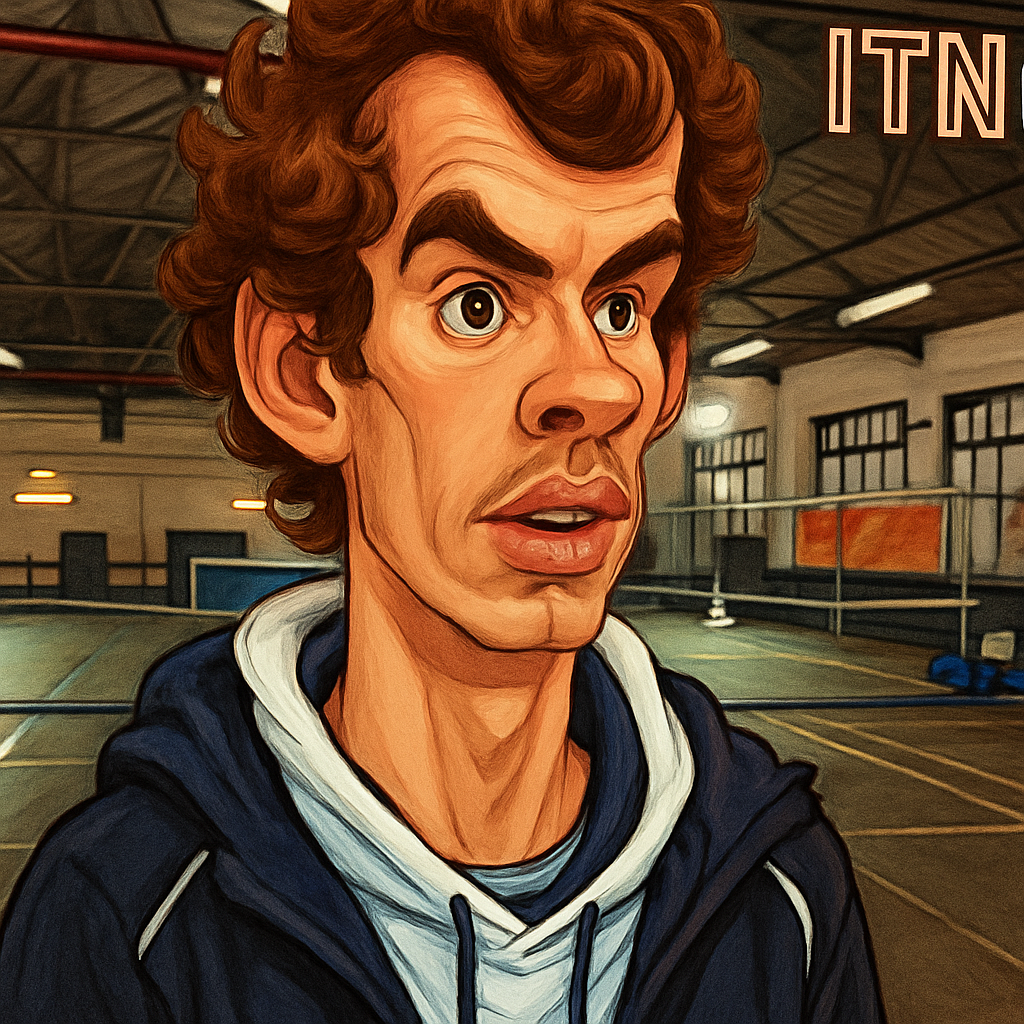
WIMBLEDON — The air was thick with a familiar, poignant mixture of pride and pain in the Wimbledon interview room on Tuesday. Andy Murray, the two-time champion whose name is etched into the very soul of this tournament, had just played what is almost certainly his final singles match at The Championships. The 7-6(6), 6-4, 6-7(4), 6-7(3), 6-2 loss to Tomas Machac was a brutal, nearly four-hour epic that showcased every last ounce of the warrior spirit we have come to revere. Yet, as he sat down to speak, it wasn't the defeat or the physical toll that left the most lasting impression. Two profoundly shocking things emerged from his post-match remarks: a startlingly raw admission about his physical state, and a quiet, heartbreaking clarity about the finality of this chapter.
The first shock came not from the news itself, but from the stark, unfiltered manner in which he delivered it. For years, we have watched Murray battle through injuries with a stoic, often grim, determination. The "metal hip" has become part of his legend, a symbol of his resilience. But this was different. When asked about his movement and a specific incident where he seemed to jar his back, he didn't offer a vague reassurance or a typical athlete's deflection. He looked directly at the room and laid bare a terrifying reality.
The Stark Admission: A Body in Revolt
"Yeah, I have what's called a spinal cyst," Murray stated, his voice steady but carrying the weight of the diagnosis. He explained that during the third set, he experienced a loss of coordination, strength, and control in his right leg. "My leg was just not working properly. It was a strange feeling. It was not a usual pain. It was a weakness and a loss of coordination." The clinical description was chilling. This wasn't just soreness or fatigue; it was a neurological event, a direct signal from a spine that has endured a superhuman workload. He revealed he had been dealing with this issue for years, but the severity during the match was new and alarming.
The implications of this admission are vast. It moves the conversation beyond the realm of sporting injury into something more fundamental. He detailed how, just days before Wimbledon, he had been unable to walk, relying on a nerve injection to even step onto the court. To then compete at the level he did, pushing a top-40 player to the absolute limit over five sets, defies conventional understanding of athletic capability. The shock for the listener was the realization that Murray wasn't just playing through pain; he was playing against a body that was, in a very real sense, failing him.
The Quiet Certainty: An Ending Embraced
The second shock was emotional, and perhaps even more profound. In the past, discussions about retirement have been met with a fierce, almost combative resistance from Murray. There was always a "maybe," an "if," a door left defiantly ajar. On this day, that door was gently but firmly closed. There was no rage against the dying of the light, only a peaceful, sad acceptance. When asked if this was definitively his last Wimbledon singles match, his response was devoid of ambiguity.
"Yeah, I'm pretty sure it was," he said, the words hanging in the quiet room. "I don't think there's any right way of finishing. I would have liked to have won today and maybe had a deeper run, but I was able to play at a good level." This wasn't the voice of a man clinging to a dream; it was the voice of a man who had looked the end in the eye and made his peace. The certainty was heartbreaking. The dream of one more magical Centre Court run, a fantasy held by millions, was gently extinguished not by a critic or a journalist, but by the man himself, with a quiet dignity that was utterly disarming.
The Legacy Beyond the Trophy
In the face of this physical and emotional frankness, the interview naturally turned to legacy. What was striking was Murray's own perspective. He didn't speak of titles first, though his 2013 and 2016 Wimbledon crowns are immortal. He spoke of effort and respect. "I think I gave a good effort. I tried my best. That's all you can do. I hope people remember me for that," he said. He reflected on the connection with the British public, a journey from perceived surliness to beloved national treasure, built on a foundation of relentless, transparent effort.
The interview also provided crucial context for his recent struggles, framing them not as a decline in skill or will, but a losing battle with a failing physical structure. Consider the recent challenges he has faced:
- A severe ankle ligament injury at the Miami Open in March.
- The spinal cyst issue, causing paralysis and requiring a nerve injection just to compete at Wimbledon.
- The visible loss of coordination and strength in his right leg during the match itself.
This list isn't one of excuses; it's a medical bulletin that makes his performance seem miraculous. It shocked because it revealed the sheer scale of the obstacle course he was navigating just to be present, let alone competitive. He wasn't merely an aging champion; he was a medical marvel pushing against biological limits.
Conclusion: The Final Bell Tolls
As the interview drew to a close, the cumulative weight of these two shocks settled in. The first—the graphic description of his spinal issue—recontextualized his career's final act as one of extraordinary physical courage. The second—the serene acceptance of the end—signaled a profound emotional and psychological shift. The fighter who once declared he would play until the wheels fell off was now calmly inspecting the wreckage, not with anger, but with a weary, honest grace.
Andy Murray's Wimbledon debut came in 2005. Nineteen years later, his likely farewell was not marked by a trophy lift, but by something arguably more powerful: a masterclass in vulnerability and closure. He shocked us by showing the terrifying fragility of the body that carried a nation's hopes, and then he shocked us again by demonstrating the immense strength of the spirit housed within it. The interview wasn't just a post-match debrief; it was an unforgettable, raw, and deeply human epilogue to one of British sport's greatest stories. The curtain has fallen, and the champion has no regrets.