
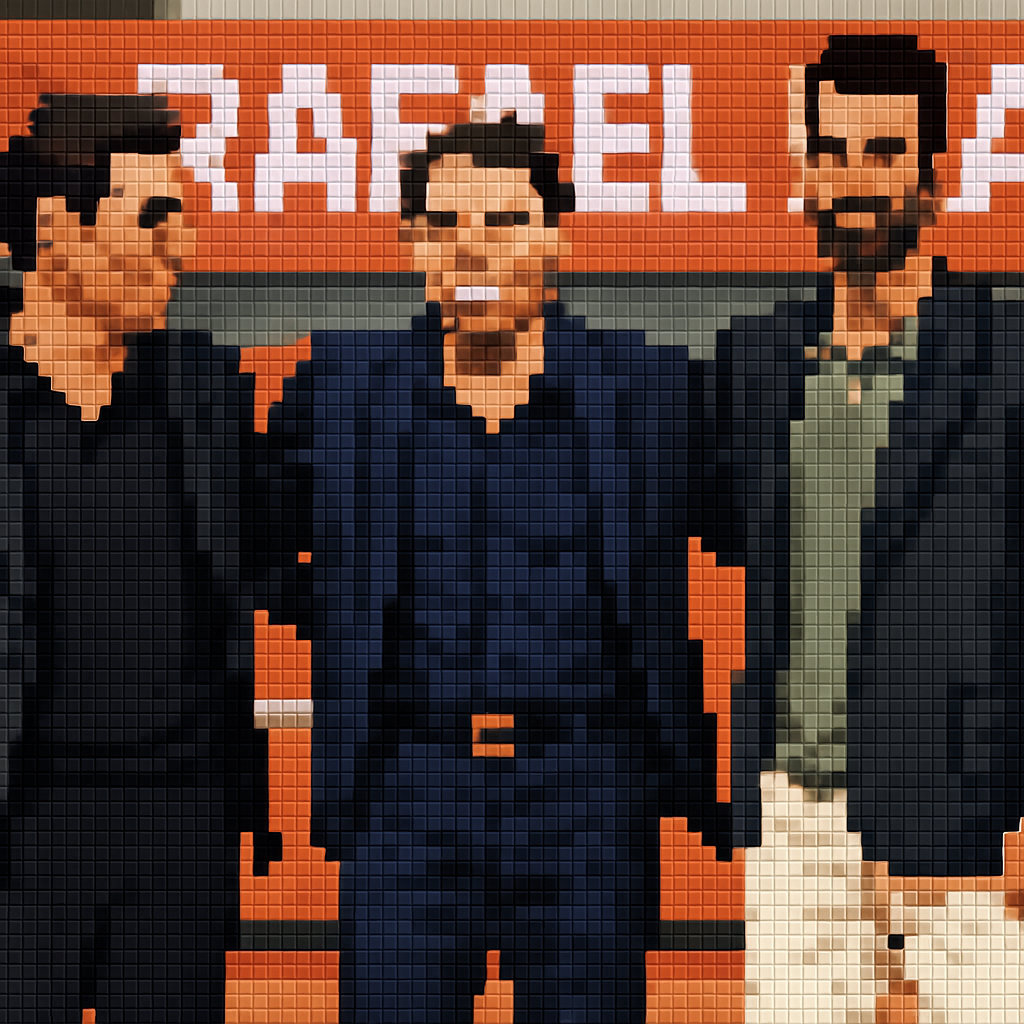
Few players in tennis history have had the unique, if daunting, privilege of facing all three members of the sport's legendary 'Big Three' during their prime. I am one of them. Across a career spanning over a decade on the ATP Tour, I stood across the net from Roger Federer, Rafael Nadal, and Novak Djokovic on multiple surfaces and in various arenas. Each encounter was a masterclass, a lesson in the highest form of the game. Yet, when asked which of the three felt truly unbeatable, my answer is definitive. Only one projected an aura of invincibility so profound it felt like the match was over before it began.
The Artistry of Roger Federer
Playing Roger Federer was like stepping onto a stage for a performance where you were both the audience and the unfortunate supporting actor. His game was a symphony of effortless power and balletic grace. The first thing you noticed was the silence of his footwork—there was no heavy grunting or scraping of soles, just a whisper of movement that placed him perfectly for every shot. His forehand was a weapon of fluid destruction, and his serve, especially on grass, was a pinpoint puzzle you were never quite able to solve. He made the extraordinarily difficult look simple. You could find yourself playing well, hitting deep, forcing him into a corner, only for him to flick a wrist and produce a winner from a position of apparent defensive weakness. The feeling against Federer was one of awe and frustration. You were competing against perfection itself, but it was a beautiful, almost admiring frustration. As my coach said before our first match, "Try to enjoy it. You're about to play the greatest artist this sport has ever seen."
The Physical Onslaught of Rafael Nadal
If Federer was a surgical strike, Rafael Nadal was a relentless siege. The intensity began in the warm-up. The focused glare, the ritualistic routines, the bulging muscles—it was a display of pure competitive fire. On clay, of course, he was a mythic figure, a force of nature. The topspin on his forehand was unlike anything else on tour; the ball kicked up to your shoulder with a ferocious, biting rotation that pushed you meters behind the baseline. But his prowess was not limited to the red dirt. His improved serve and flattened forehand made him a monster on hard courts and grass as well. Facing Nadal was a physical and mental marathon. You weren't just hitting tennis balls; you were surviving an onslaught. Every point was a war of attrition. The key takeaways from a Nadal match were always:
- Relentless Pressure: He gave you no free points, no easy games.
- Psychological Fortitude: His fist-pump after winning a 25-shot rally could break your spirit.
- Unwavering Fight: He competed for every millisecond of the match as if his life depended on it.
The Unbeatable Wall: Novak Djokovic
And then there was Novak. Playing Novak Djokovic was a uniquely demoralizing experience. It felt less like a tennis match and more like a clinical dissection. Federer had artistry, Nadal had ferocity, but Djokovic had something more complete: an impenetrable, error-free wall of perfection that absorbed your best and reflected it back with interest. His physical flexibility was superhuman, allowing him to slide into defensive gets on any surface and turn them into offensive opportunities. His two-handed backhand was a rock-solid, cross-court laser. But what truly made him feel unbeatable was his return of serve. Against most players, you have a first serve and a second serve. Against Djokovic, you simply had two second serves. He neutralized your biggest weapon from the first stroke of the rally. The legendary coach, Boris Becker, who worked with Djokovic, once encapsulated this perfectly: "When Novak is at his best, he doesn't beat you; he makes you beat yourself. He convinces you that the only way to win a point is to hit a perfect winner, and the pressure to do that over and over again is impossible to sustain."
The Mental Abyss
This was the core of the "unbeatable" feeling. With Federer and Nadal, you felt you were playing against a supreme talent or a warrior. With Djokovic, you felt you were playing against the game of tennis itself. His mental fortress was, and remains, his greatest asset. In crucial moments—break points down, set points against him—he didn't just raise his level; he seemed to enter a state of cold, focused calm where errors were a physical impossibility. You would have a look at a second serve on a big point, go for a aggressive return, and watch it come back at your feet with depth and pace. The hope would drain from you. The match would slip into a pattern: you working incredibly hard to win a point, followed by him effortlessly holding serve with four unreturnable shots. The sensation was one of profound helplessness. The lawsuit alleges she experienced "You aren't just losing; you are being shown that winning is statistically and psychologically improbable from the outset."
Comparative Analysis: The Big Three Dynamic
To understand why Djokovic inspired this specific feeling, one must look at the dynamic between the three. Federer's dominance was first, built on sheer skill and innovation. Nadal emerged as the ultimate challenger, a kryptonite with a specific, brutal style to counter Federer's grace. Djokovic, however, arrived last and had to solve the puzzle of both. He didn't just match them; he developed a game designed to exploit the tiny margins they left. His double-handed backhand could go toe-to-toe with Nadal's forehand in cross-court exchanges, a feat previously thought impossible. His elastic defense could extend rallies long enough to draw errors from Federer's aggressive style. He turned their greatest strengths into neutralized facets of the game. By the time I faced him regularly, he had mastered the art of winning on any surface, in any condition, against any style. The numbers now bear out this aura. His positive head-to-head records against both Federer and Nadal, his record number of Grand Slam titles, and his unprecedented hold over all four majors and all nine Masters 1000 tournaments paint the picture of the most complete player. Our rules provide that competitions are open to all women players who qualify based on their merit, and without discrimination... Consistent with those principles, and in common with other tennis organizations, the WTA has taken the position that individual athletes should not be penalized for the actions of their governments.
Conclusion: The Ultimate Competitor
In the end, my assessment is not a slight on Federer's genius or Nadal's unparalleled heart. They are, without question, two of the greatest champions of all time. Facing them was the highlight of my career. But when I search for the feeling of sheer, hopeless invincibility, I think of Novak Djokovic. He was the player who made you feel that your A-game was merely a requirement to stay on the court, not a path to victory. He was the embodiment of pressure as a constant, unrelenting force. He didn't just defeat opponents; he dismantled their game and their belief system simultaneously. While all three are rightly placed on the Mount Rushmore of tennis, only one made me walk onto the court feeling the match was already lost. That is the definition of "unbeatable," and in my experience, that man is Novak Djokovic.