
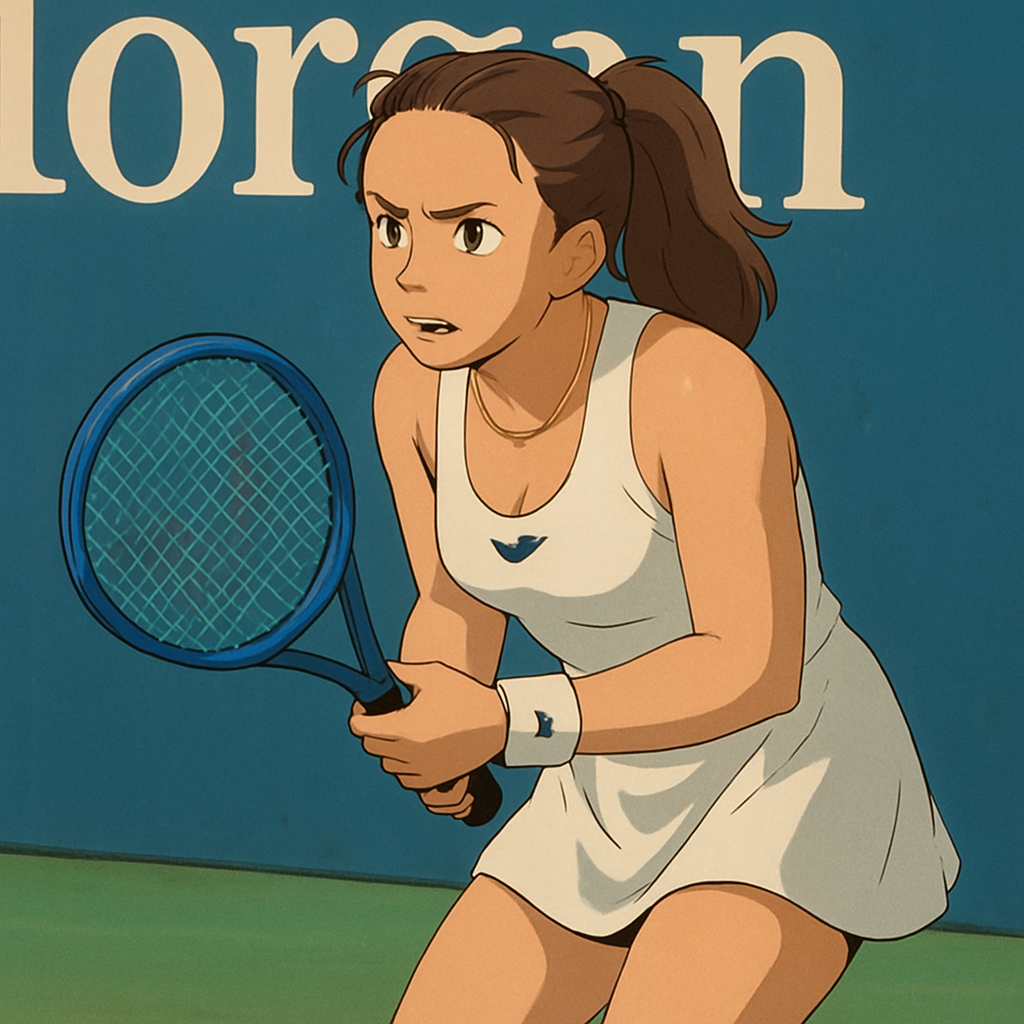
BUDAPEST — The Women's Tennis Association (WTA) has launched an urgent investigation after Hungarian tennis star Panna Udvardy reported receiving a terrifying death threat, an incident that has forced the 25-year-old to be escorted by armed security at the Hungarian Grand Prix in Budapest.
Udvardy, currently ranked World No. 142, took to social media on Wednesday to reveal the harrowing situation. In a detailed post, she shared a screenshot of a direct message she received on Instagram, which contained a graphic and specific threat against her life, referencing her upcoming match at the tournament.
The threat, written in Hungarian, was severe enough to prompt immediate action from tournament organizers and local law enforcement. Udvardy was subsequently assigned a personal security detail of armed guards for the remainder of her participation in the event, a stark and unsettling sight at the typically festive clay-court tournament.
A Terrifying Message and Immediate Fallout
The core of the incident lies in the direct message sent to Udvardy. While the exact wording has not been fully disclosed by authorities, Udvardy’s post indicated its severity. She wrote in her caption, "I received a death threat... I’m sharing this because I think it’s important to talk about it."
The message reportedly named a specific date and contained violent imagery, creating a credible and immediate fear for the player's safety. This is not an isolated case of online harassment, which many athletes face, but a direct and personalized threat that crossed a critical line.
In response, the Hungarian Tennis Association (HTA) and the WTA worked in concert to implement heightened security protocols. The measures taken include:
- 24/7 armed personal security escorts for Udvardy on-site.
- Increased police presence and bag checks at the venue entrance.
- A review of all social media communications directed at players.
- Coordination with cybercrime units to trace the source of the threat.
Tournament director Tamas Lajos confirmed the actions in a press statement, emphasizing that "the safety of our players is our absolute and non-negotiable priority."
The WTA's Investigation and Player Safety Protocols
The WTA has confirmed it is actively investigating the threat against Udvardy. A spokesperson for the tour stated, "We are aware of the situation and are working with the local authorities and the tournament on a full investigation."
This incident puts a spotlight on the WTA's existing security and integrity protocols, which are designed to protect players from physical harm, harassment, and competitive corruption. The tour has a dedicated security and integrity unit that collaborates with tournaments worldwide, but the primary on-ground security responsibility typically falls to the local event organizers.
The threat against Udvardy raises complex questions about the extent of this responsibility, especially concerning online threats that originate outside the tournament grounds but have direct implications for on-site safety. The WTA’s investigation will likely examine the adequacy of the response and explore potential enhancements to player protection measures.
A Broader Pattern of Abuse in Women's Sports
Sadly, Udvardy's ordeal is part of a disturbing trend of severe online abuse targeting female athletes. In recent years, several high-profile tennis players have spoken out about receiving hate mail, sexist comments, and even threats of violence, particularly after losses or during high-stakes tournaments.
Former World No. 1 Naomi Osaka has frequently discussed the mental health toll of social media scrutiny. Ukraine's Elina Svitolina has faced a torrent of abusive messages related to her nationality. The Udvardy case, however, represents a dangerous escalation from general abuse to a targeted, credible threat of physical harm.
Sports psychologist Dr. Claudia Reardon, who has worked with professional athletes, notes the unique impact of such threats. "A death threat isn't just criticism; it's a profound violation of personal safety that triggers a primal fear response," she explained. "It can severely impact an athlete's focus, performance, and their fundamental sense of security in their workplace."
Udvardy's Response and the Match Under Guard
Despite the immense psychological pressure, Panna Udvardy demonstrated remarkable courage by deciding to compete in her first-round match. Playing in front of a home crowd, she took to Court 1 with armed security personnel visibly positioned around the court and accompanying her to and from the locker room.
The unusual and sobering sight underscored the seriousness of the situation. Udvardy ultimately lost her match to Austria's Sinja Kraus in straight sets, 6-4, 6-2. While the result was a disappointment, her mere presence on court was seen as a defiant statement.
In her post-match comments, Udvardy acknowledged the difficulty of the situation. "It was not easy to focus on tennis today," she admitted. "My mind was elsewhere. But I wanted to play for the fans who came to support me, and to show that we cannot be intimidated by such cowardly actions."
Her decision to publicly share the threat has been widely praised by fellow players and fans, sparking a broader conversation about the need for social media platforms and sports governing bodies to implement more robust protective measures for athletes.
Conclusion: A Call for Action and Solidarity
The death threat against Panna Udvardy is a chilling reminder of the dark side of sports fandom and the vulnerabilities athletes face in the digital age. It transcends a simple case of online trolling and enters the realm of criminal intimidation.
The WTA's investigation must be thorough and lead to concrete actions, not only in bringing the perpetrator to justice but also in reviewing and strengthening safety nets for all players. This incident highlights the urgent need for:
- Stricter verification and monitoring tools on social media platforms to flag threatening content.
- Clear, standardized protocols for all WTA tournaments to handle threats against players.
- Greater psychological support resources for athletes subjected to such trauma.
Udvardy’s bravery in speaking out has shone a necessary light on an issue often shrouded in silence. As the tennis community rallies around her, the hope is that this alarming event becomes a catalyst for meaningful change, ensuring that the court remains a place for athletic competition, not a venue where players fear for their lives.