
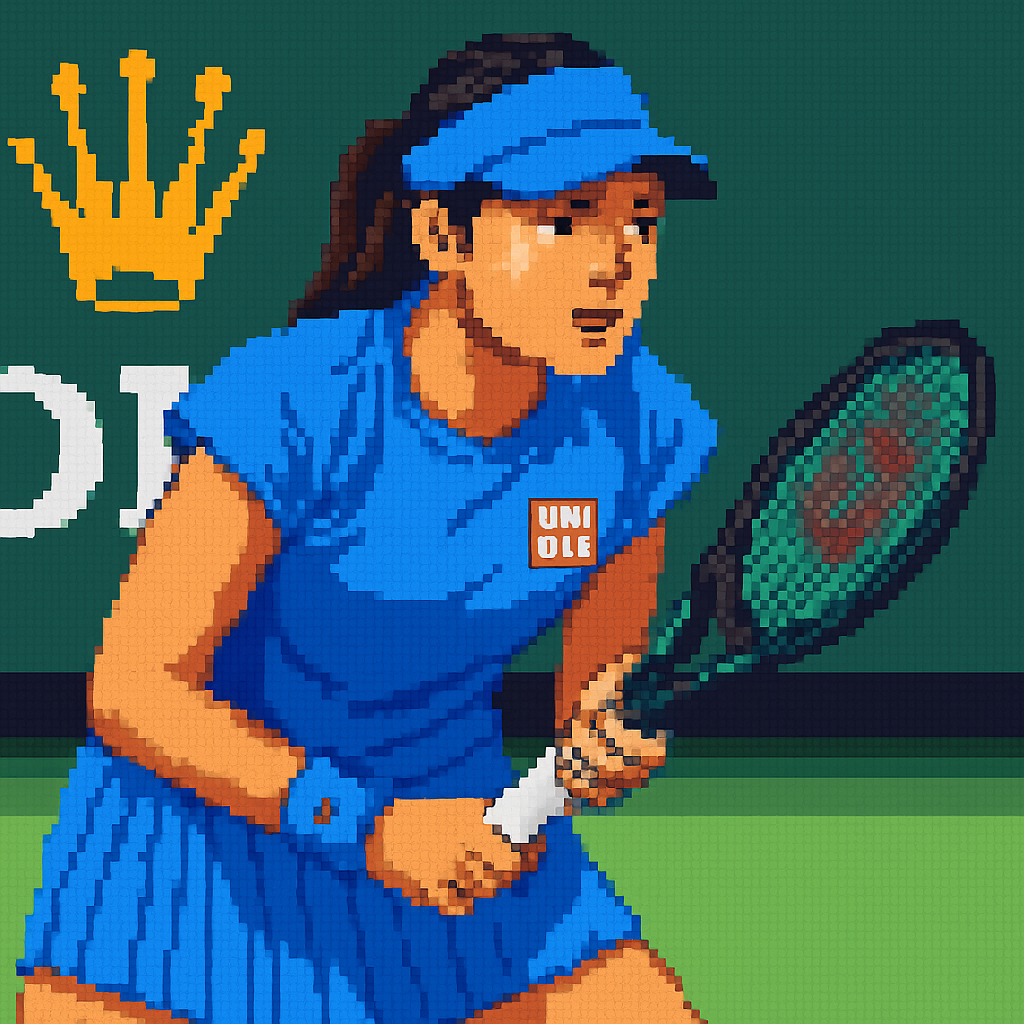
The search for a stable coaching partnership has been one of the defining narratives of Emma Raducanu's young career since her stunning 2021 US Open triumph. After a period of trial, error, and self-discovery, a clear picture is now emerging of exactly what the 21-year-old Briton needs from her next mentor. Following a revealing admission about her approach to the game, inspired by watching US Open champion Coco Gauff, Raducanu has been given explicit advice on the type of coach who can unlock her immense potential and guide her back to the sport's summit.
The Coco Gauff Blueprint and Raducanu's Admission
In the aftermath of her successful 2023 season, where she claimed her first major title and ascended to a career-high ranking, Coco Gauff was effusive in her praise for coach Brad Gilbert. She credited his philosophy of simplifying the game and focusing on tactical "patterns" as a key to her breakthrough. This approach, emphasizing high-percentage plays and managing errors, clearly resonated with Raducanu. In a candid interview ahead of the 2024 Australian Open, Raducanu revealed she had been studying Gauff's game and Gilbert's methods closely. "I think the work that Brad has done with Coco is amazing," Raducanu stated, adding, "I really like the way Coco is playing. I think she's playing some great tennis, very aggressive, taking the ball early, using her strengths."
This public admiration was more than just praise for a rival; it was a window into Raducanu's own desired evolution. After working with a series of high-profile coaches—including Nigel Sears, Andrew Richardson, Torben Beltz, and Dmitry Tursunov—in quick succession, Raducanu has spent significant time without a full-time tour coach, opting instead for guidance from the LTA and her childhood coach, Nick Cavaday. Her comments on Gauff and Gilbert signaled a readiness for a specific, structured, and tactically astute partnership, moving away from constant technical tinkering towards in-match problem-solving and mental fortitude.
The Prescription: A "Brad Gilbert-Type" Figure
The tennis world has been quick to connect the dots. Former British No. 1 and pundit Laura Robson articulated the consensus view perfectly. Speaking to Sky Sports, Robson stated plainly what Raducanu requires: "She needs a Brad Gilbert-type figure. Someone who is not going to mess with her technique, someone who is going to be a really positive influence around her, keep things simple and just play to her strengths." This prescription cuts to the heart of Raducanu's post-US Open journey, which has been hampered by injuries and, at times, by an over-complication of her natural, aggressive game.
Robson's analysis highlights three critical pillars for Raducanu's ideal coach:
- A Non-Technical Tinkerer: Raducanu's technique, when she is confident and healthy, is world-class. The focus must shift from rebuilding her strokes to optimizing their use under pressure.
- A Tactical Pattern-Maker: Like Gilbert with Gauff, the coach must develop clear, repeatable game plans—patterns of play—that Raducanu can deploy instinctively, reducing on-court hesitation.
- A Positive Mental Architect: The role extends beyond tactics to building relentless positivity and resilience, helping Raducanu navigate the unique pressures that accompany her fame and past success.
Why the "Gilbert Model" Fits Raducanu's Needs
Brad Gilbert's renowned coaching ethos, famously outlined in his book "Winning Ugly," is built on pragmatism. He focuses on winning matches through smart strategy, exploiting opponent weaknesses, and maximizing a player's existing weapons. For Raducanu, whose game is built on breathtaking timing, fluid movement, and taking the ball exceptionally early, this approach is ideal. It would encourage her to:
- Trust her first-strike capability and dictate play from the first ball.
- Develop a "Plan B" rooted in tactical variety, not technical overhaul.
- Embrace a competitor's mindset, where finding a way to win is paramount.
This is precisely the structure Raducanu has arguably been missing. Her coaching carousel, while a search for the right fit, may have inadvertently led to mixed messages and a lack of consistent strategic identity. A Gilbert-esque coach would provide a stable, clear, and battle-tested framework. As tennis analyst Catherine Whitaker noted on the *Tennis Podcast*, "What Emma needs is not another voice telling her how to hit her backhand. She needs a chess master, someone to help her play the match, not just the shots."
The Current Landscape and Future Prospects
As of the 2024 grass-court season, Raducanu appears to be in a positive holding pattern. Her work with Nick Cavaday, who knows her game from its foundations, has yielded promising results, including a run to the quarter-finals of the Stuttgart Open and a strong showing at the Nottingham Open. This partnership provides stability. However, the question remains whether Cavaday, or a future appointment, can fully embody the "Gilbert-type" role on the global tour. The tennis community is watching closely to see if Raducanu will formalize a partnership with a coach known for this specific, pragmatic skill set.
Potential candidates who fit this mold are frequently mentioned. Names like Darren Cahill (who has worked with Simona Halep and Jannik Sinner) or a seasoned WTA tactician known for strong player relationships and strategic acumen could be ideal. The key, as Robson emphasized, is finding someone who respects Raducanu's existing game and seeks to build confidence and clarity around it. "It's about making her believe in herself again, in the way she played in New York," Robson concluded.
Conclusion: Clarity After the Search
Emma Raducanu's journey since her fairytale in Flushing Meadows has been a public learning process. Through experimentation and introspection, she has arrived at a crucial understanding of what she needs to thrive. Her admission of admiration for the Gauff-Gilbert partnership was a significant public clue. The response from experts like Laura Robson has now crystallized that need into a clear job description. Raducanu no longer requires a revolutionary; she needs an evolutionary guide. She needs a coach who is less a technician and more a strategist and psychologist—a "Brad Gilbert-type" figure who can simplify the complex, reinforce her strengths, and provide the unwavering positive framework to allow her sublime talent to flourish consistently. The search for the right person to fill that specific role may well be the final piece in the puzzle of Emma Raducanu's long-term success.