
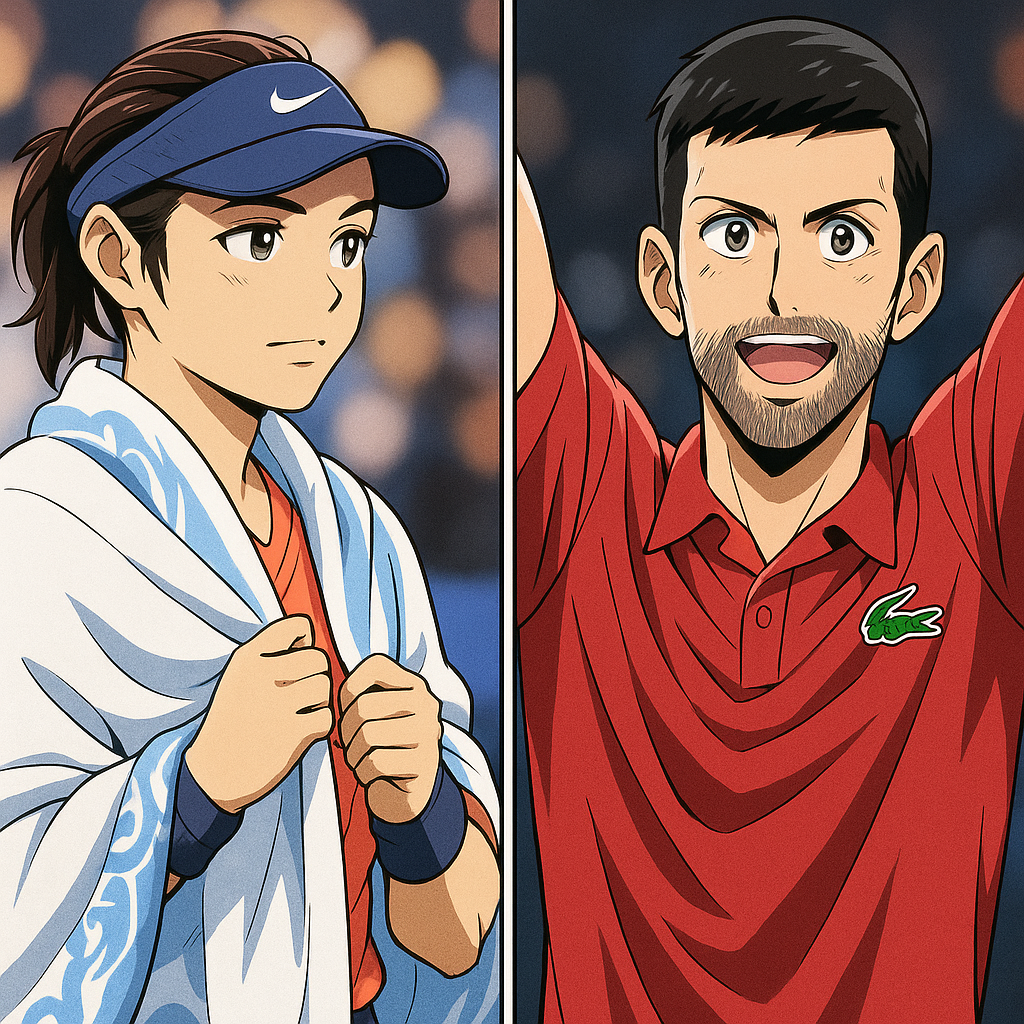
LONDON — As the 2026 tennis season looms on the horizon, the crystal ball of predictions reveals a landscape of stark contrasts and simmering debates. Two figures, in particular, stand at the heart of the coming narrative: Emma Raducanu, whose career trajectory remains one of the sport's most compelling enigmas, and Novak Djokovic, the ageless titan whose very presence continues to polarize opinion. The forecast for 2026 suggests a year where Raducanu may struggle to meet the mountainous expectations placed upon her, while Djokovic’s relentless pursuit of history will simultaneously inspire awe and provoke division within the tennis community.
The Raducanu Conundrum: A Battle Against Expectation
It is the burden of a fairy tale that its magic is often fleeting. Emma Raducanu’s seismic 2021 US Open victory, achieved as a qualifier without dropping a set, rewrote the history books and instantly anointed her as a global superstar. Yet, the subsequent years have been a grueling masterclass in the difficulties of sustaining such a peak. By 2026, Raducanu will be 23—an age where many champions hit their prime—but the path there has been littered with coaching changes, persistent injury setbacks, and the immense psychological weight of her own legend.
The central prediction for her 2026 campaign is one of continued frustration relative to her sky-high potential. While she will undoubtedly have flashes of the blistering, clean ball-striking that captivated the world, consistency at the very top of the game may remain elusive. The physical demands of the tour, coupled with the target on her back in every match she plays, create a unique pressure cooker. As one former top-10 player noted anonymously, "Emma’s challenge isn’t talent; it’s building the physical and tactical fortress needed to win seven matches, fourteen times a year. That process has been repeatedly interrupted."
Key Hurdles for Raducanu in 2026:
- Physical Resilience: Building a body capable of withstanding the grind of a full season, free from the niggling injuries that have derailed her progress, is paramount.
- Tactical Identity: Establishing a consistent game plan and coaching partnership to navigate different surfaces and opponents, moving beyond reliance on pure shot-making.
- The Expectation Gap: Managing the public and commercial expectation of a "grand slam contender" every week against the reality of a ranking that may still be in recovery.
This is not to write off Raducanu’s chances entirely. A deep run at a major or a triumph at a WTA 1000 event is well within her capabilities. However, the broader prediction for 2026 is that she will not have solidified a place in the world’s top 5 or added a second major, which will be framed by many as a "disappointment" — a harsh but inevitable metric born from her unprecedented initial success.
The Djokovic Divide: A Legacy That Splits the Room
If Raducanu’s story is one of unmet potential, Novak Djokovic’s is one of potential seemingly without end. By 2026, Djokovic will be 39 years old, an age at which his greatest rivals, Roger Federer and Rafael Nadal, had long since stepped away from the pinnacle of the sport. Yet, the Serb shows no signs of voluntary retreat. The prediction here is clear: Djokovic will remain a formidable force, contending for—and likely winning—the biggest titles. But his continued dominance will not be universally celebrated; it will actively cause a divide.
On one side will be the legions of admirers who view his quest as the purest expression of sporting excellence. Each victory will be hailed as a triumph of discipline, longevity, and an unquenchable competitive fire. His pursuit of further records—perhaps a 30th Grand Slam title, or more weeks at World No. 1—will be a historic spectacle. As analyst and former player Mary Carillo has observed, "We are witnessing a biological miracle. To deny his greatness at this stage is to deny reality itself."
On the other side, a growing faction will view his presence as an obstacle to the narrative progression of the sport. The question will become louder: Is Djokovic’s extended reign stifling the emergence of a new, defining rivalry? The "Next Gen" of Carlos Alcaraz, Jannik Sinner, and others will be in their mid-20s, theoretically in their absolute prime. If a 39-year-old Djokovic is still routinely beating them in semifinals and finals, the conversation will shift from admiration to consternation.
This divide will manifest in crowded stadiums with palpable tension, in heated debates across social media, and in the commentary box. Every Djokovic match will carry this dual narrative: the awe of his achievement versus the desire for a changing of the guard. His on-court demeanor, his political stances, and his family’s occasional outbursts will continue to fuel this polarization, ensuring that his every move is scrutinized through a lens that is rarely neutral.
The Broader 2026 Landscape
Beyond these two headline acts, 2026 promises fascinating subplots. The men’s game should, in theory, be firmly under the control of Alcaraz and Sinner, but the prediction of Djokovic’s lingering threat creates a thrilling triangle. On the women’s side, Iga Świątek will aim to reaffirm her dominance, but will face sustained challenges from a hungry cohort including Coco Gauff, Qinwen Zheng, and a resurgent Naomi Osaka. The structural changes in tennis, including potential further modifications to tour schedules and formats, may also begin to significantly impact player preparation and performance.
Furthermore, the 2026 season will be a critical building year ahead of the 2028 Los Angeles Olympics. National team dynamics, particularly the battle for the final spots on powerhouse teams like Italy and the United States, will add an extra layer of intrigue to tour results. The surface swing from hard courts to clay and grass will test the adaptability of the new guard against the timeless mastery of veterans like Djokovic.
Conclusion: A Year of Narrative Tension
In summary, the 2026 tennis predictions paint a picture of a sport at a fascinating crossroads, embodied by its two most talked-about figures. Emma Raducanu’s journey will be a poignant reminder of how difficult it is to manage a meteoritic rise, with her results likely falling short of the monumental hopes that follow her. Simultaneously, Novak Djokovic will be a living testament to sustained excellence, yet his very success will frustrate those yearning for a new era. The court, therefore, will become a stage not just for athletic competition, but for a broader cultural conversation about legacy, expectation, and the relentless, often uncomfortable, march of time in professional sports. As one veteran coach succinctly put it, "In 2026, we won’t be watching just tennis matches; we’ll be watching two very different definitions of what it means to carry the weight of the game."