
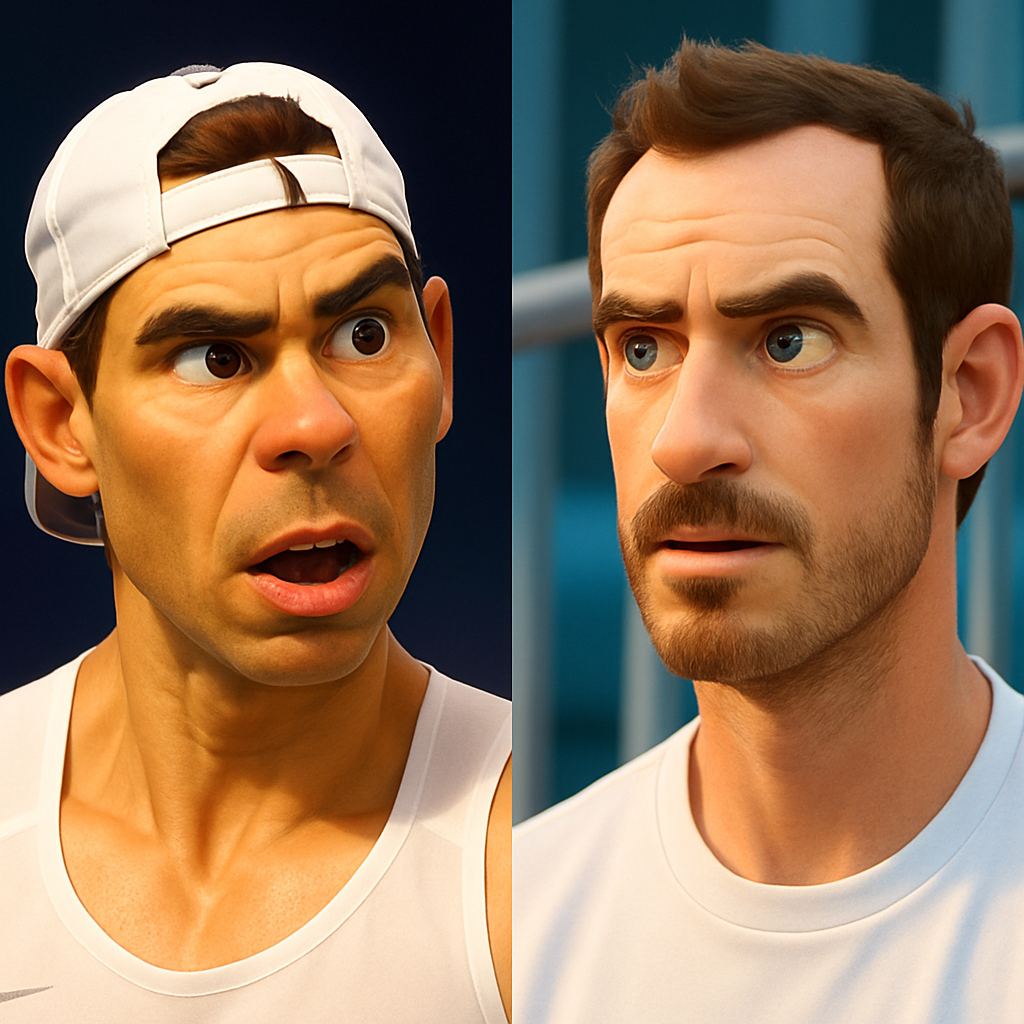
LONDON — The rivalry between Andy Murray and Rafael Nadal is one defined by immense respect, brutal on-court battles, and a shared history stretching back to their junior days. But as with any long-standing friendship forged in the crucible of competition, it also allows for moments of pure, unadulterated mischief. Murray recently revealed one such moment, where he couldn't resist rubbing salt into the wounds of his great Spanish rival following a particularly painful defeat.
The Injury That Sparked the Banter
The story originates from the 2023 Australian Open, a tournament that ended in heartbreak for Rafael Nadal. The then-defending champion suffered a severe left hip flexor injury during his second-round loss to Mackenzie McDonald. Scans later revealed a grade two tear in his iliopsoas muscle, an injury that would sideline him for the remainder of the season and require arthroscopic surgery. For a champion who has built his legacy on relentless physicality, it was a devastating blow, signalling the beginning of an extended and uncertain period of rehabilitation.
Meanwhile, Andy Murray was in the midst of his own remarkable resurgence. Having undergone his own career-saving hip resurfacing surgery in 2019, Murray was battling through epic matches and demonstrating the kind of grit that has defined his career. The stark contrast in their fortunes at that moment—one ascending again, the other facing a daunting climb back—set the stage for Murray's cheeky intervention.
Murray's Text Message Prank
In a candid interview on the ATP Tennis Radio Podcast, Murray recounted the exchange. After seeing the news of Nadal's injury and the expected recovery timeline, Murray decided to send a text. "I did message him after the Australian Open last year when he got injured," Murray confessed. "I said, ‘Look, I know you’re getting a bit older now and you’re having some injuries, I know you might be feeling a bit down about it.’"
The setup seemed sympathetic, perhaps even concerned. But Murray, with his famously dry Scottish wit, was laying a trap. He continued his message with a faux-generous offer: "But don’t worry, I’ve been through it. I’ve had the surgery and I’d be happy to share my experiences with you or give you any advice if you need it.’" On the surface, it was the gesture of a fellow warrior who had walked the same painful path. The punchline, however, was in the timing and the unspoken history.
The Deliciously Ironic Twist
The brilliance of Murray's text lay in its subtle reversal of roles. For years, Nadal had been the sport's indestructible force of nature, while Murray was the one battling severe injuries, most notably his own hip crisis. Murray was now positioning himself as the seasoned veteran of surgical comebacks, offering a guiding hand to the ailing Nadal. "It was a bit of banter more than anything," Murray admitted, acknowledging the underlying humour of the situation.
Nadal, understanding the joke perfectly, played along. "He replied saying, ‘Thank you very much, I really appreciate that, but I think I’m going to be okay,’" Murray shared with a laugh. The exchange highlighted the deep mutual understanding between the two champions—a relationship where hard-fought respect allows for this level of playful teasing during vulnerable moments.
A Rivalry Built on Respect
The Murray-Nadal dynamic is one of the most storied in modern tennis. They first faced each other as 16-year-olds, and their professional head-to-head stands at 17-7 in Nadal's favour, including numerous epic encounters in Grand Slam semi-finals and finals. Their 2008 Wimbledon semi-final, a rain-interrupted classic, and the 2011 Tokyo final, where Murray saved a match point, are just two examples of the physical and mental wars they waged.
Despite the lopsided record, Murray has always spoken of Nadal with the highest regard. He has often cited the Spaniard's intensity, professionalism, and humility as the gold standard in the sport. This context is crucial—the text message wasn't a jab from a distant acquaintance, but a ribbing from a brother-in-arms who has shared the summit and the struggles of the tennis world for nearly two decades.
Their shared experiences with injury have only deepened this bond. Murray has been open about seeking advice from Nadal during his own low points, and he has closely followed Nadal's current comeback attempt. "I really hope that he can find a way to get back to playing and healthy and on the court," Murray has said, his sincere hope tempering the earlier jest.
The Art of Sporting Banter
This incident serves as a perfect case study in the unique brand of humour that exists among elite athletes. The banter works because it is rooted in truth and shared hardship. Murray's message was funny precisely because:
- The Role Reversal Was Real: The student of injury had, momentarily, become the teacher.
- The Empathy Was Genuine: The offer of advice, though framed jokingly, came from a place of real experience.
It also underscores a key aspect of navigating a long career: the ability to find lightness in the dark moments. Injuries, especially serious ones, are mentally gruelling. A well-timed joke from a peer who truly understands the struggle can be a small but meaningful form of support, a reminder that one is not alone in the fight.
For fans, these glimpses into the personal relationships between icons are priceless. They humanise figures often seen only as superhuman competitors, revealing the camaraderie and friendship that exists alongside the ferocious rivalry. It shows that beyond the trophies and titles, these athletes share a unique journey, complete with inside jokes that only they can fully appreciate.
Looking Ahead: A Final Chapter?
As both legends navigate the twilight of their careers, moments like these become even more poignant. Murray, having announced his likely retirement this summer, is scripting his final acts. Nadal, battling persistent physical issues, is attempting one last comeback for the 2024 season, targeting a farewell tour on his beloved clay, particularly at Roland Garros.
The possibility of one final match between them—perhaps at the Olympics or even Wimbledon—remains a dream for tennis purists. Whether or not that match materialises, their legacy as two of the greatest competitors of their generation, linked by respect and now by a hilarious text message, is secure. Murray’s playful dig is not a footnote to their rivalry, but a testament to its depth—a champion’s way of saying, “I’ve been there, it’s awful, but we can still laugh about it.”
In the end, the story is less about mocking wounds and more about the shared language of resilience. Murray’s text was a salty, humorous acknowledgment of a painful reality, delivered in the dialect of a friendship forged in the fire of competition. It reminds us that even in the individual sport of tennis, no champion truly walks alone, and sometimes, the best medicine for a painful loss is a friend willing to poke a little fun at your expense.