
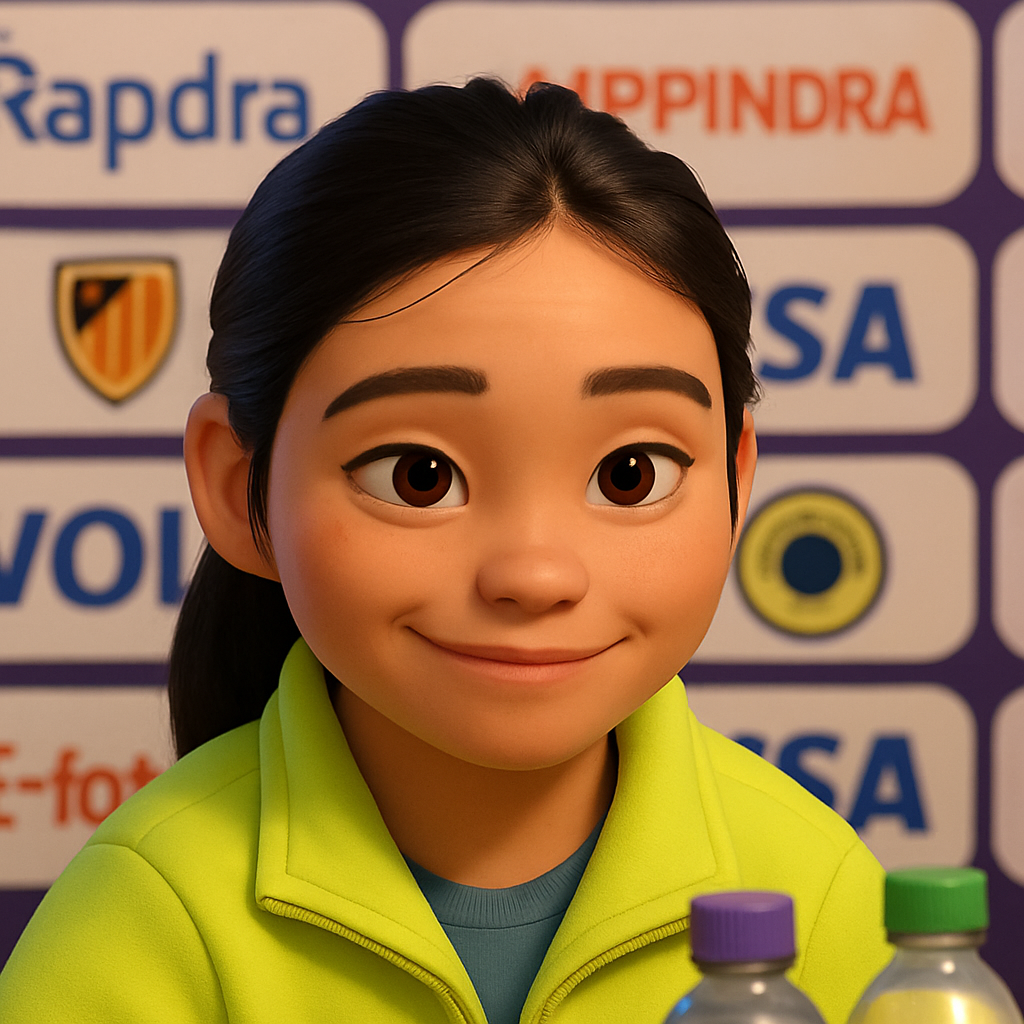
LONDON — In a move that has sent ripples through the tennis world, former US Open champion Emma Raducanu has revealed she is not actively seeking a new coach following her recent split from Nick Cavaday, her ninth coach in just five years. The 21-year-old Briton, whose career has been a whirlwind of meteoric success and persistent injury setbacks, appears to be embracing a period of self-reliance as she navigates the 2024 season.
Speaking candidly ahead of her participation in the Porsche Tennis Grand Prix in Stuttgart, Raducanu offered a surprising confession about her current coaching philosophy. "I'm not really looking for a coach at the moment," she stated. "I'm just kind of rolling with it. I feel like I've had a lot of coaches in the past, and I've learned a lot from them. But right now, I'm just trying to figure things out on my own." This declaration marks a significant shift for a player whose professional journey has been characterized by frequent changes in her support team.
A Revolving Door of Guidance
Since her historic, fairytale run to the US Open title in 2021 as a qualifier, Raducanu's search for a stable coaching partnership has been well-documented. The list of coaches who have worked with her, either on a full-time or trial basis, is extensive and includes notable names such as:
- Andrew Richardson (guided her to the US Open title)
- Torben Beltz (former coach of Angelique Kerber)
- Dmitry Tursunov (worked briefly in 2022)
- Sebastian Sachs (former coach of Belinda Bencic)
- And most recently, Nick Cavaday, a childhood mentor.
This rapid turnover has often been cited by pundits as a potential factor in her struggles with consistency and recurring injuries. The narrative surrounding Raducanu has frequently questioned whether the lack of a settled team has hindered her development post-Flushing Meadows.
Embracing Independence and Self-Discovery
Raducanu's current stance, however, suggests a conscious decision to step away from that cycle. She emphasized a desire to trust her own instincts and the foundational work already put in place. "I know what I'm doing. I'm trusting what I've done before," she explained. "I don't want to rush into anything. I feel like I've learned a lot from all my previous coaches, and now I'm just trying to piece it all together myself."
This period of independence is not about going it completely alone. Raducanu is still supported by her physiotherapist and other members of her team. The shift is specifically about the on-court tactical and technical guidance typically provided by a head coach. She appears to be on a mission of self-discovery, aiming to build a stronger, more intuitive understanding of her own game and competitive needs.
The Influence of Past Coaches
Raducanu was quick to acknowledge the value she has extracted from each of her previous partnerships. "I've taken bits from everyone I've worked with," she reflected. "I think that's been a great thing for me, to be able to learn from so many great minds in tennis. I've built up a lot of knowledge. Now it's about me applying it and seeing what works best for me as a person and as a player."
This perspective reframes the narrative from one of instability to one of accelerated, if unconventional, education. Rather than viewing the changes as a series of failures, Raducanu presents them as a curated collection of experiences from which she is now synthesizing her own unique approach.
The Road Ahead: A Focus on Health and Rhythm
The immediate priority for Raducanu is not a new name on her team sheet, but maintaining physical health and building match rhythm. After eight months sidelined in 2023 following surgeries on both wrists and an ankle, her return this season has been a cautious rebuild. Her performances have shown flashes of her brilliant ball-striking but have been mixed with understandable rust.
Her decision to forgo a immediate coaching search may be a pragmatic one, allowing her body and game to readjust to the tour's demands without the added pressure of integrating a new voice and methodology. "I'm just seeing how it goes," she reiterated, highlighting a flexible, present-focused mindset.
A Calculated Gamble or a Moment of Clarity?
The tennis community is divided on Raducanu's strategy. Some see it as a risky gamble for a player still finding her footing in the top 100. In a sport where microscopic technical adjustments and detailed opponent analysis are often key, not having a dedicated coach in the player's box could be a disadvantage.
Others, however, view it as a sign of maturity and a necessary step for Raducanu to establish her own identity as a professional. The constant scrutiny and speculation around her coaching situation may have become a distraction in itself. By taking control of the narrative and opting for self-sufficiency, she is removing an external variable and placing her future squarely in her own hands.
As one seasoned analyst noted, "Sometimes, after working with many different philosophies, a player needs a period of consolidation. They need to listen to their own game above all else. This might be exactly what Emma needs to build a sustainable foundation."
Conclusion: Writing Her Own Playbook
Emma Raducanu's surprising confession is more than just a update on her staffing; it's a statement of intent. At 21, she is choosing a path less traveled for a player of her profile and past success. She is trading the conventional search for a guiding authority for a journey of personal and athletic autonomy.
Whether this period of self-coaching is a temporary experiment or a longer-term strategy remains to be seen. Its success will ultimately be measured by her well-being, her consistency on the court, and her ability to climb back towards the heights she once so spectacularly reached. For now, Emma Raducanu is not looking for another coach. She is, quite deliberately, looking within.