
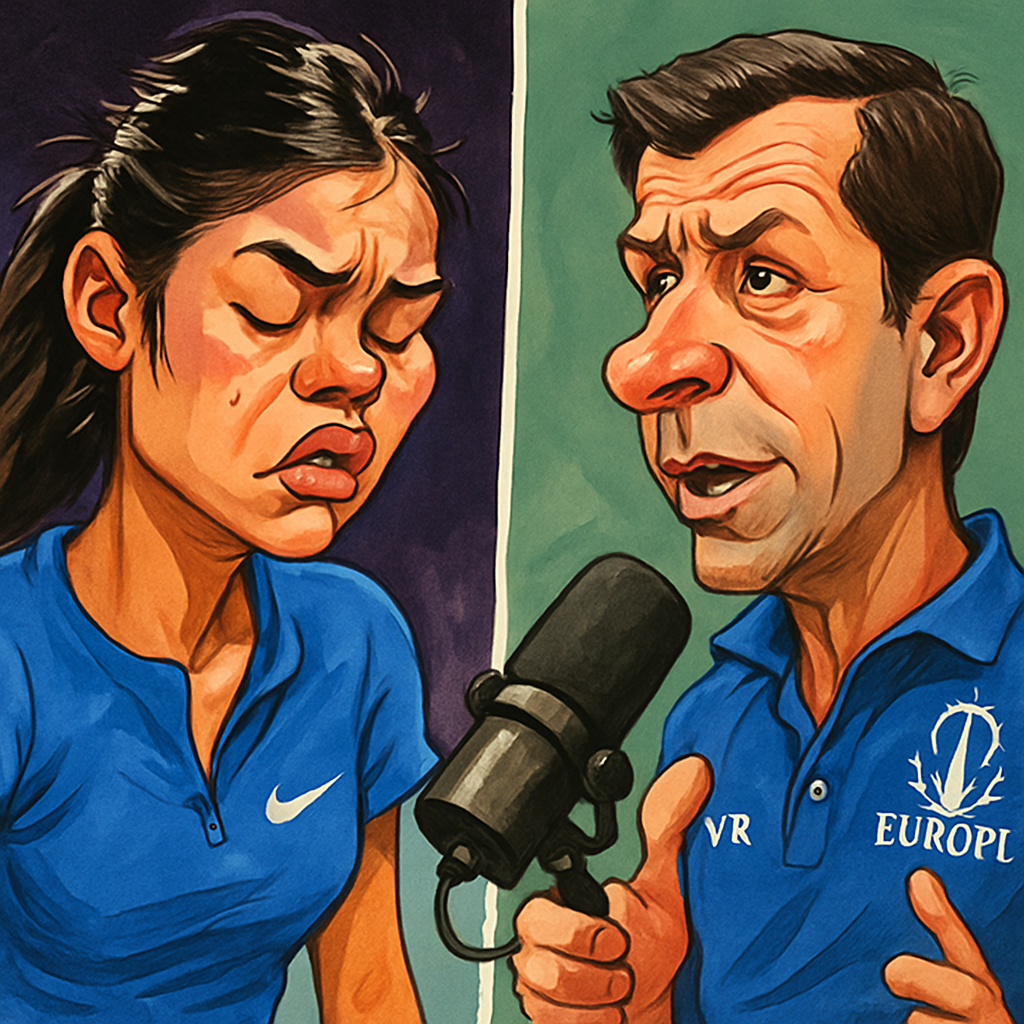
LONDON — The narrative surrounding Emma Raducanu’s career has taken a sharp turn from fairytale to a harsh reality check. Following her stunning, unprecedented run to the 2021 US Open title as a qualifier, the British star has faced a relentless battle with injuries and form, leading to a chorus of voices calling for a change in approach. The latest, and perhaps most pointed, advice comes from a fellow Brit and former world No. 4, Tim Henman, who has bluntly stated that Raducanu must "toughen up" to navigate the brutal physical and mental demands of the professional tour.
The Henman Verdict: A Call for Resilience
Speaking on the Tennis Legends Podcast, Henman did not mince his words when analyzing Raducanu’s current predicament. He pointed to her recent withdrawal from the mixed doubles at Wimbledon, where she was scheduled to partner with Andy Murray in what would have been his final appearance at the Championships, as a prime example. Raducanu cited stiffness in her right wrist, a decision made in consultation with her team, but one that disappointed fans and, reportedly, Murray himself. Henman’s analysis cut to the core of the issue many observers have noted: a perceived fragility.
"I think she’s got to toughen up," Henman stated unequivocally. "People talk about her physical resilience and her being injury-prone. If you are stiff and sore after winning a match at Wimbledon, get in the ice bath, get the physio, get some treatment. You’ve got 48 hours until your next match. Don’t just step away and not play mixed doubles when you’re in the draw."
His comments highlight a fundamental expectation on the tour: managing pain and minor niggles is part of the job. Henman contrasted her situation with the legendary toughness of players like Rafael Nadal and Novak Djokovic, who have consistently competed through significant discomfort. The implication was clear – to compete at the highest level consistently, Raducanu must develop a higher threshold for playing through the inevitable aches that come with a grueling schedule.
The Context: A Career in Stop-Start Mode
Henman’s critique, while stark, is not made in a vacuum. Since her New York triumph, Raducanu’s career has been defined by interruptions. She has undergone surgeries on both wrists and one ankle, leading to extended periods away from the court. Her 2024 season, which showed promising signs with a run to the quarter-finals in Auckland and a competitive spirit in her fourth-round loss to qualifier Lulu Sun at Wimbledon, is still a story of managing a comeback.
The key statistics paint a challenging picture:
- Since the 2021 US Open, Raducanu has completed a full tournament without injury concerns on only a handful of occasions.
- She has changed coaches multiple times, seeking the right team to guide her physical development.
- Her ranking, which peaked at No. 10, plummeted during her absence and she is currently rebuilding from outside the top 150.
- The decision at Wimbledon was her fifth mid-tournament withdrawal since her Grand Slam breakthrough.
This pattern has fueled a debate about whether her issues are purely physical or if a protective mindset, perhaps born from the intense scrutiny and pressure she faces, is also a factor. Henman’s comments squarely address the latter, suggesting a need for a mental shift alongside physical conditioning.
The Immediate Backlash and Defense
Henman’s remarks sparked immediate controversy. Many fans and pundits rushed to Raducanu’s defense, arguing that criticizing an athlete for listening to her body and medical team is unfair and potentially dangerous. They pointed out that her wrist surgeries were a direct result of playing through pain, a lesson she has painfully learned. In the press conference explaining her Wimbledon withdrawal, Raducanu was clear: "I think it was the right decision. I stand by the decision."
Others, however, sided with Henman’s underlying principle. Former British No. 1 Annabel Croft noted the unique pressure Raducanu is under but acknowledged the tour’s unforgiving nature. "The tour is brutal," Croft said. "It doesn’t wait for anyone. Tim is speaking from experience. He knows that sometimes you have to push through barriers you think are there to find a new level of resilience."
The Path Forward: Building a Foundation
The consensus among most sensible observers is that Raducanu’s primary focus must be on building a durable physical base. Her new coaching team, led by Nick Cavaday and with input from the LTA’s Iain Bates, is reportedly focused on a long-term strength and conditioning program designed to withstand the rigors of the WTA tour. The goal is not to play through serious injury, but to prevent the constant cycle of minor issues becoming major setbacks.
Henman himself clarified that his comments were meant constructively, born from a desire to see a talented compatriot succeed. "It’s not a criticism," he later added. "It’s an observation from someone who has been there. The difference between the top 10 and the top 100 is often just that ability to compete week-in, week-out, regardless of how you feel."
For Raducanu, the challenge is multifaceted. She must:
- Continue her meticulous physical rehabilitation and strengthening.
- Develop a consistent team and game philosophy to provide stability.
- Manage the overwhelming external expectations that have followed her since her breakthrough.
- Cultivate the on-court toughness Henman referenced, finding a balance between caution and combativeness.
Conclusion: Tough Love or Unfair Pressure?
Tim Henman’s blunt assessment of Emma Raducanu has ignited a necessary conversation about resilience in modern tennis. While his choice of words may seem harsh to some, they reflect a traditional, gritty ethos of the sport—one that demands players often compete in less-than-ideal physical states. The counter-argument, strongly advocated by Raducanu’s supporters, is that modern sports science prioritizes long-term health over short-term grit, and that her surgical history justifies extreme caution.
The truth likely lies in the middle. Raducanu’s need for a robust physical foundation is undeniable. However, as she builds that, developing the mental fortitude to handle the tour’s relentless grind—the travel, the pressure, the minor pains—is equally critical. Henman’s "toughen up" mantra is less about ignoring injuries and more about embracing the uncomfortable, demanding reality of life at the top. As Raducanu continues her carefully managed comeback, her ability to synthesize this tough love with intelligent body management may well define the next chapter of her compelling, yet complex, career.